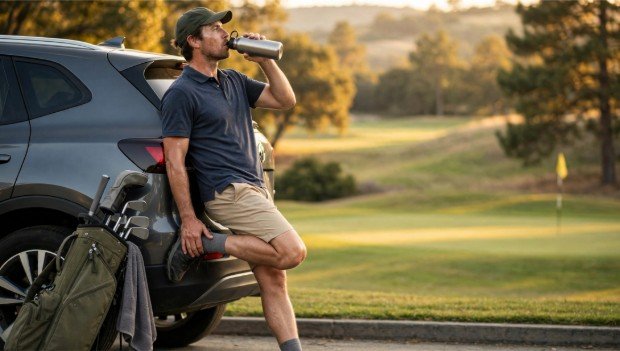
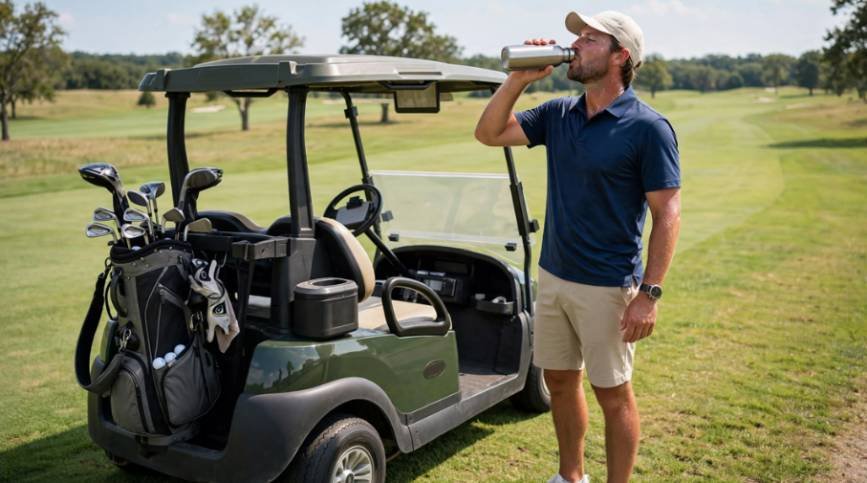
I used to treat hydration as something I handled when I reached the turn. By then, I was already thirsty, my mouth felt dry, and my concentration usually faded. Learning how to stay hydrated during a round of golf changed that habit completely.
An 18-hole round can keep me outside for roughly four to five hours. USGA pace-of-play examples show that full rounds commonly occupy about four hours or more, which makes golf a prolonged outdoor activity rather than a short burst of exercise.
My goal now is simple: start hydrated, drink steadily, adjust for heat and sweat, and never try to rescue the entire round with one giant bottle at the turn.
Why Golfers Need a Hydration Plan Before the First Tee

When I think about how to stay hydrated during a round of golf, I start several hours before my tee time.
Dehydration does more than make me thirsty. Fluid loss can increase perceived effort and place more strain on temperature regulation. Sports-medicine guidance commonly aims to limit exercise-related body-mass loss to less than about 2%.
Hot conditions make this more important. The CDC warns that people exercising in heat have a greater risk of dehydration and heat-related illness.
Hydration becomes even more important when the round carries extra pressure. If I want to play better in a golf tournament, I treat fluids, food, warm-up, and course strategy as part of the same pre-round preparation rather than leaving any of them to chance.
I therefore drink normally through the morning instead of arriving at the course dehydrated and trying to catch up.You should also incorporate healthy food in your breakfast to keep you energised throughout the game. You must aware of what to eat before a morning round of golf to stay focus and active instead of feeling full and stuffed.
My 18-Hole Golf Hydration Schedule

This is the simple framework I use for how to stay hydrated during a round of golf without spending the entire day thinking about water.
| Round stage | What I do | Main goal |
| Before tee time | Drink gradually before leaving and again near tee time | Start hydrated |
| Holes 1–6 | Sip regularly | Prevent an early deficit |
| Holes 7–12 | Continue fluids and assess sweating | Maintain fluid balance |
| Holes 13–18 | Keep drinking instead of waiting for thirst | Protect late-round focus |
| After round | Replace remaining fluid losses | Begin recovery |
Before the Round
I avoid chugging a huge bottle immediately before teeing off. Instead, I spread fluid intake across the hours before play.
ACSM guidance emphasizes beginning activity well hydrated and adjusting intake to personal sweat losses. One ACSM resource suggests roughly two cups of water in the hour before exercise as a practical starting point, while individual needs vary.
Holes 1–6
My first drink comes early, even if I feel fine.
That is important because thirst is a poor reminder system when I become distracted by scoring, pace of play, or conversation. I take several comfortable sips every hole or two rather than drinking a large amount at once.
Holes 7–12
This is where I check conditions.
If my shirt is soaked, the temperature has climbed, or I am walking a hilly course, I increase fluids gradually. If sweating continues for several hours, CDC/NIOSH guidance recommends considering drinks containing balanced electrolytes.
Holes 13–18
I never ration the last half of my bottle because I am worried about running out.
If the course has refill stations, I use them. Otherwise, I carry enough fluid from the start. Late-round hydration should be planned before the opening drive, not improvised on the 15th tee.
How Much Water Should You Drink While Playing Golf?
There is no perfect ounce target for every golfer.
That is one of the most useful things I learned about how to stay hydrated during a round of golf. Sweat rates can vary substantially between people, and heat, humidity, clothing, body size, walking speed, and acclimatization all affect fluid losses.
A practical golf-specific estimate often falls around several ounces at regular intervals. However, I prefer testing my own needs instead of blindly following a fixed number.
My personal “18-hole sweat check” is simple. I weigh myself before and after a round under similar conditions. If I finish noticeably lighter despite drinking during play, I likely need more fluid next time.
For example, a 180-pound golfer who loses 3.6 pounds during the round has lost 2% of starting body weight. That reaches the threshold sports-medicine guidance generally tries to avoid.
I also avoid the opposite mistake. Drinking far more fluid than I lose is unnecessary and can become dangerous during prolonged exercise. Current hydration guidance therefore favors individualized intake rather than forced overdrinking.
Electrolytes for Golf in Hot Weather
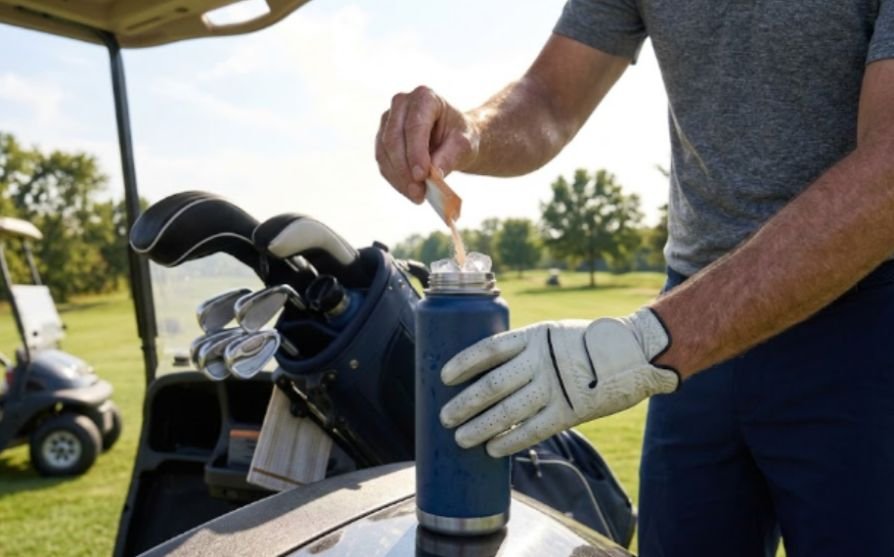
Electrolytes matter most to me during long, sweaty rounds.
Sodium is one of the major electrolytes lost in sweat. It also helps the body maintain fluid balance. ACSM notes that fluid and electrolyte strategies become particularly relevant during extended exercise and hot-weather activity.
That does not mean I replace every bottle of water with a sports drink.
Hydration planning also changes when temperatures begin to drop. Choosing the best golf gear for fall weather can help me manage cooler mornings, wind, and changing conditions without overdressing and sweating more than necessary.
For a mild-weather round with limited sweating, water plus normal meals may be enough. During a humid summer round in Florida, Texas, Arizona, or another hot climate, I am more likely to include an electrolyte drink.
That is why my answer to how to stay hydrated during a round of golf changes with the forecast rather than staying identical all year.
Hydrating Foods and Snacks That Help
Fluid does most of the hydration work, but food can support the plan.
I like bananas, oranges, melon, or apples because they provide fluid and carbohydrates without feeling heavy. When I am sweating heavily, I may pair fruit with pretzels, salted nuts, or another modest source of sodium.
Long-duration exercise can benefit from carbohydrate and electrolyte intake in circumstances where activity extends beyond an hour and in that case you should also prepare best snacks for walking 18 holes.
I still keep portions small. A massive meal at the turn often makes me feel slower rather than sharper.
Golf Hydration Mistakes I Avoid
The biggest mistake is waiting until hole nine to start drinking.
I also avoid using alcohol as my hydration strategy. CDC heat guidance advises avoiding alcohol during hot conditions, particularly when dehydration risk is already elevated.
I am also cautious with high-caffeine energy drinks and about what to eat before a morning round of golf. They are not the same as sports drinks, and ACSM advises against using energy drinks as an exercise-hydration solution.
Another mistake is copying somebody else’s intake. My playing partner may sweat half as much as I do. The bottle that works perfectly for him may leave me underhydrated.
That individual difference is central to how to stay hydrated during a round of golf effectively.
Signs You Need to Stop Playing
I never try to “tough out” symptoms that suggest heat illness.
Weakness, dizziness, headache, nausea, faintness, or unusual confusion deserve attention. The CDC advises stopping activity and moving to a cool location when a person feels faint or weak during heat exposure.
Confusion, collapse, worsening symptoms, or altered mental status can signal a medical emergency and require prompt medical evaluation.
A golf score is never worth ignoring those warning signs.
The Back Nine Shouldn’t Become a Survival Test
I used to blame late-round fatigue on my swing. Sometimes the problem started much earlier with what was—or was not—in my bottle.
My approach to how to stay hydrated during a round of golf is now deliberately boring: drink before play, sip early, keep drinking regularly, add electrolytes when sweat losses justify them, and carry enough fluid to finish.
My next-round tip is simple. Fill two bottles before leaving home. Treat one as my front-nine supply and the other as my back-nine supply. After the round, I note what was left and how I felt.
Three or four rounds of doing that tells me far more about my real hydration needs than copying a universal ounces-per-round rule.
Frequently Asked Questions
1. How much water should I drink during 18 holes of golf?
There is no universal amount; drink regularly and adjust intake to your sweat rate, weather, walking demands, and round duration.
2. Should golfers drink electrolytes during a round?
They can help during prolonged or heavy sweating, especially in hot weather, while water may be enough for cooler rounds with lower sweat losses.
3. How often should I drink water while playing golf?
I prefer small, regular drinks every hole or two instead of waiting until I become noticeably thirsty.
4. What is the best way to learn how to stay hydrated during a round of golf?
Track pre- and post-round body weight, fluid intake, weather, and how you feel so you can build a repeatable personal hydration plan.