

A wedge can have the right loft and still feel awful through the turf. The hidden reason is often bounce. In this wedge bounce explained for beginners guide, the key idea is simple: bounce helps the sole resist digging, and the right amount depends on your swing plus the ground beneath the ball.
For many new golfers, slightly more bounce is safer than too little because it gives small contact errors more room to survive.
What Wedge Bounce Actually Means
Bounce is the angle between a wedge’s leading edge and the lowest point of its sole when the club is in its designed position. More bounce generally raises the leading edge and makes the sole more likely to skid through turf or sand instead of cutting downward.
Titleist’s Vokey guidance groups low bounce at about 4–6 degrees, mid bounce at 7–10 degrees, and high bounce above 10 degrees.
| Bounce | Usually suits | Main risk |
| 4–6° | Firm turf, tight lies, shallow swings | Digging in soft ground |
| 7–10° | Mixed conditions, neutral swings | Less specialized |
| 10°+ | Soft turf, fluffy sand, steep swings | Can sit high on tight lies |
Low bounce gives the leading edge easier access under the ball on firm, closely cut turf. Mid bounce is the flexible middle ground. High bounce gives the sole more resistance to digging and often suits deeper divots or softer surfaces.
Why Turf and Sand Change the Answer
Course conditions are not fixed. Moisture, compaction, sand depth, grass density, and maintenance all change how a wedge interacts with the ground.
The USGA explains that drier bunker sand generally plays softer while moist sand tends to play firmer. Its bunker-sand selection guidance also notes that new sand often begins soft and firms as it settles.
The Golf Course Superintendents Association of America identifies drainage, moisture, sand shape, depth, and raking as factors affecting bunker playability. The University of Maryland Golf Course notes that fresh bunker sand can stay softer until it compacts. University of Minnesota Extension also explains how compaction and moisture influence turf behavior.
For golfers, the useful rule is simpler: softer, more yielding surfaces usually benefit from more protection against digging. Firm, tight surfaces often allow less bounce.
Your Divots Are a Free Wedge Fitting Clue

You do not need launch-monitor data to learn something useful. Look at the divots from ordinary wedge shots.
Deep Divots
A deeper divot usually suggests a steeper delivery. More bounce can help the sole resist burying. A sand wedge with roughly 10–14 degrees may be easier to use than an extremely low-bounce model.
Almost No Divot
A shallow player who brushes the grass can often use low-to-mid bounce effectively, especially on firm courses. That does not mean 4 degrees is automatically best; moderate bounce can still add forgiveness.
Divots All Over the Place
Beginners often change delivery from swing to swing. If that sounds familiar, avoid extreme specifications. Mid bounce around 8–10 degrees, with a little more in a sand wedge, is a sensible starting point.
The Stamped Bounce Number Is Only Half the Story
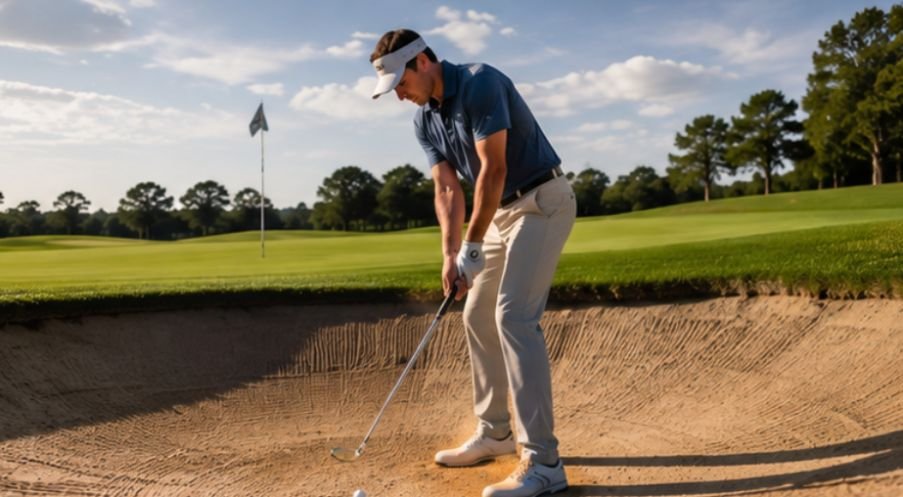
Two wedges marked “10°” can behave differently. Sole width, camber, heel relief, trailing-edge relief, and grind all affect how the club moves through the ground.
Think of the bounce number like a camera specification: useful, but not enough to predict the whole result. Configuration matters.
Opening the clubface generally presents more effective bounce. Strong forward shaft lean tends to present less.
A grind can remove material from parts of the sole so a wedge can open easily without feeling bulky. Since face control starts with how your hands are set on the club, beginners still working out the fundamentals may want to first confirm what hand to wear a golf glove on before layering in shaft lean and face angle adjustments.
This is why fitting matters. Titleist’s current wedge guidance emphasizes matching loft, bounce, grind, golf swing style, and course conditions rather than choosing from the bounce number alone.
A Five-Minute Bounce Test You Can Actually Use
Find two wedges with similar loft but different bounce. At a short-game area, hit five normal shots from a tight fairway lie, five from softer grass, and five from a practice bunker.
Judge the misses, not just the best shots. If the lower-bounce wedge repeatedly digs and produces heavy contact, more bounce may help. If the higher-bounce wedge repeatedly catches the ball thin from very tight turf, less bounce or a different grind may fit better.
Do not change your technique to rescue one club. The better wedge is the one that works with your normal motion and makes your common miss less damaging.
Where Beginners Commonly Get Bounce Wrong
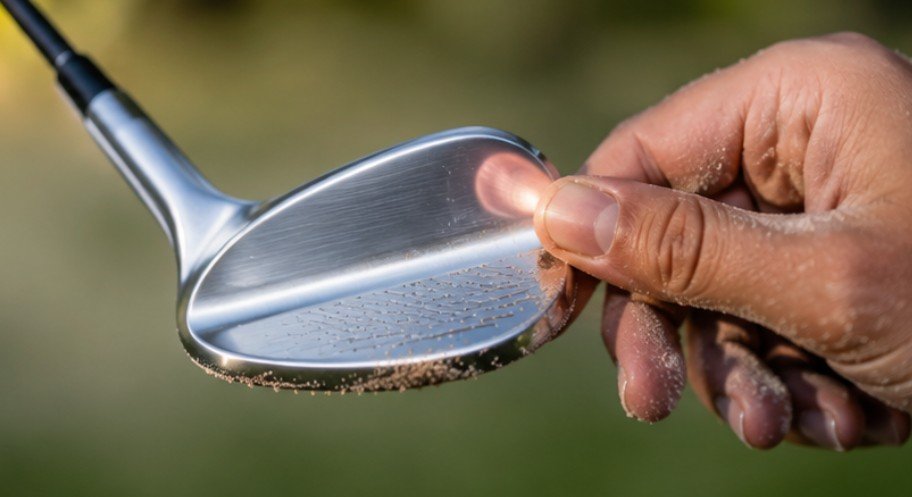
One myth is that high bounce automatically causes bladed shots. It does not. Thin contact can come from several delivery problems, and plenty of golfers play high-bounce wedges successfully from normal lies.
Blaming the club instead of the technique is a common example of practicing the wrong golf skills chasing equipment changes when the actual miss comes from delivery, not bounce.
Another mistake is giving every wedge identical bounce. Your 50-degree wedge may be used mainly for fuller approaches, while a 56-degree wedge handles bunkers and softer greenside lies. Different jobs can justify different soles.
Frequently Asked Questions
1. What is the best bounce on wedges for beginners?
Around 8–12 degrees is a useful starting range for many beginners because it provides forgiveness across normal turf and sand. Firmer conditions or very shallow swings may suit less.
2. Which is better for a wedge, a 10 bounce or a 12 bounce?
Ten degrees is usually more versatile on mixed or firmer lies. Twelve degrees gives extra resistance to digging on soft turf, fluffy sand, or steep swings.
3. What bounce should you have on wedges?
Use lower bounce for firm turf and shallow delivery, higher bounce for soft turf and steep delivery, and mid bounce when conditions or your swing vary.
4. How much bounce should my 50 degree wedge have?
About 8–10 degrees works for many players. Consider 10–12 degrees if you are steep or play soft courses, and less if you regularly play firm, tight turf.
Let the Sole Do Some of the Work
Bounce is not a magic number; it is a way of managing contact with the ground. The right amount gives your wedge a better chance to keep moving when your strike is slightly heavy, while the wrong sole can exaggerate a miss.
Start with two clues: how deep your normal divots are and how firm your usual courses feel — golfers who regularly play a links golf course often lean toward lower bounce for this reason.
Then compare a mid-bounce wedge with one lower or higher instead of buying from a spec sheet alone. Once you feel the difference, wedge bounce explained for beginners stops being equipment jargon and becomes a practical way to make short-game contact more predictable.