
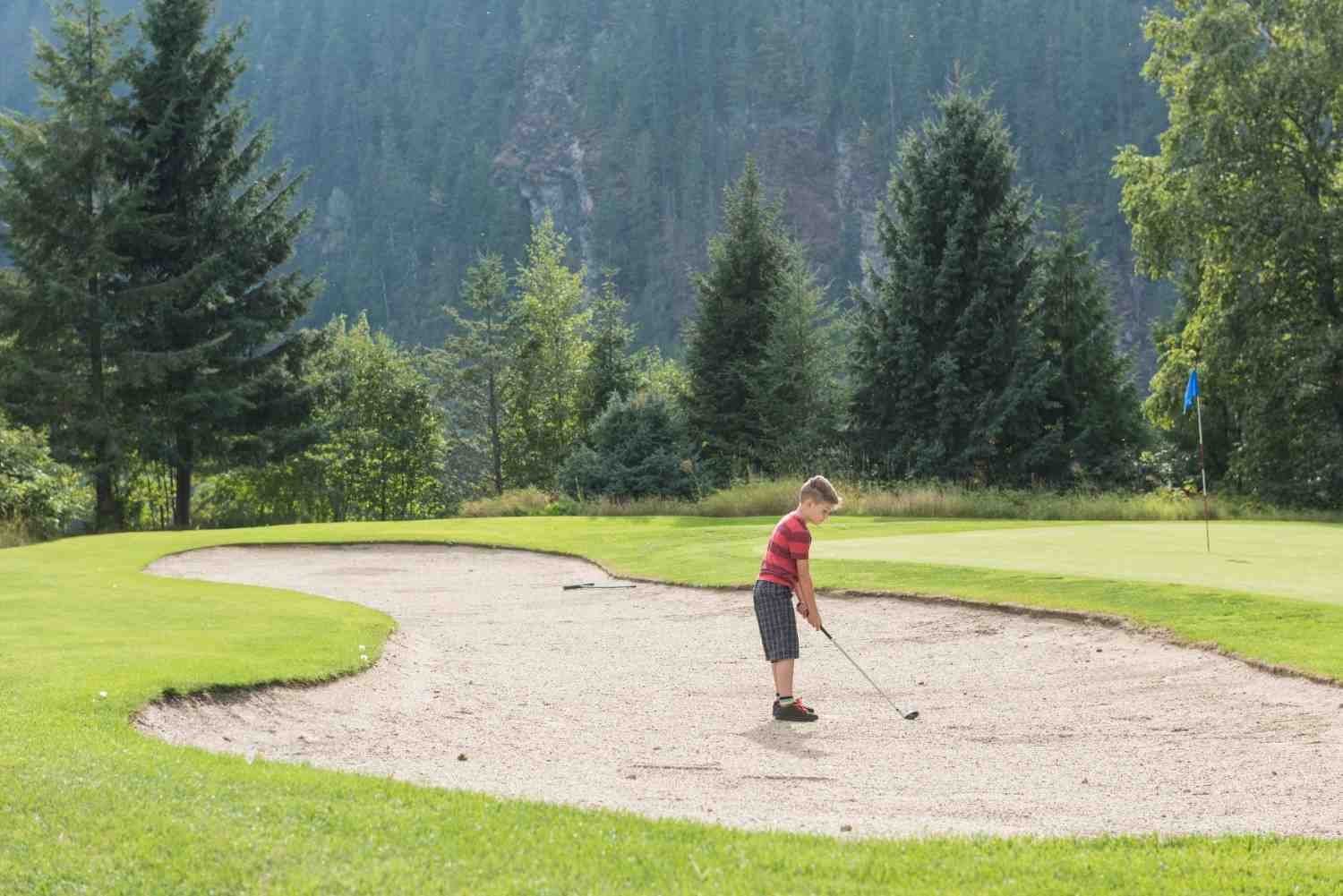
Four hours and fifteen minutes. That’s the number most golfers quote, most courses print on their tee sheet, and most beginners blow right past. The real answer is messier, more interesting, and actually useful once you understand what’s driving it. How long does it take to play 18 holes of golf depends on who’s in your group, whether you’re walking or riding, how busy the course is, and honestly, how decisive you are over a six-foot putt. This guide breaks it all down with real numbers so you can plan your Saturday tee time without a single surprise.
Average Time for 18 Holes of Golf: The Baseline Numbers
The average time for 18 holes of golf sits between 4 hours and 4 hours 30 minutes for a standard four-person group on a typical public course. That figure comes from data tracked by the USGA’s pace of play research, which has monitored round times across hundreds of American courses. But averages flatten out a lot of variation, so treat that range as a starting point, not a guarantee.
A two-player group playing the same course on a quiet weekday might finish in 3 hours flat. A packed Saturday with 144 starters can push rounds past five hours on a public track. The average time for 18 holes of golf changes dramatically based on context, and knowing the underlying variables makes you a smarter, less frustrated golfer.
Here’s a quick reference table built from publicly reported data and course operator averages:
| Group Size | Walking | Cart | Notes
|
|---|---|---|---|
| 1 player (solo) | 2 hrs 30 min | 2 hrs 00 min | Course permitting; fastest possible round |
| 2 players | 3 hrs 00 min | 2 hrs 30 min | Most efficient social format |
| 3 players | 3 hrs 30 min | 3 hrs 00 min | Often paired with single by starter |
| 4 players | 4 hrs 15 min | 3 hrs 45 min | Standard “acceptable” pace |
How Long Is a Full Round of Golf: What “Full Round” Really Means
How long is a full round of golf is a question that sounds simple but actually has a few valid answers. Eighteen holes is the universal standard, but what happens before your first drive and after your last putt adds time that most golfers don’t account for. Arrive fifteen minutes early for check-in, spend ten minutes on the putting green, add a bathroom stop on the back nine, and grab a beer at the turn. You’ve just added 45 minutes to a 4-hour estimate.
If you’re asking someone to pencil in “golf” on their schedule, the honest window is 5 to 5.5 hours door to door for a foursome at a busy public course, including driving to the course. Plan for that, and you’ll never blow up a family dinner. How long is a full round of golf for a serious amateur on a private club with a tee time at 7 AM? Closer to 4 hours total, including getting off the first tee. There’s a real difference.
How Long Does It Take to Play 18 Holes of Golf by Group Size
How Long Does 18 Holes Take for Two Players
How long does 18 holes take for two players is genuinely the sweet spot question. Two players, assuming they’re reasonably skilled and ready to hit when it’s their turn, can complete a round in about 3 hours walking. Add a cart and that drops to somewhere around 2 hours 30 minutes, sometimes less on a quiet weekday morning.
The twosomes I’ve played in always feel faster than a threesome with two good players, mostly because decision time halves. You’re watching one other person hit, not three. The mental overhead just shrinks. Using the best golf GPS watch for beginners can speed things up even further by giving quick yardages and reducing time spent searching for distance markers or second-guessing club selection.
How long does 18 holes take for two players also depends on whether the course puts another group ahead of you at the starter’s discretion, which is common on busy days and can add 20 to 40 minutes of waiting.
How Long Does 18 Holes Take for Four Players
How long does 18 holes take for four players is where most golfers live, and where pace of play conversations get heated. Four players, each averaging 90 shots, produce somewhere around 360 shots per round. Even if every shot takes 30 seconds of actual swing time, that’s only 3 hours of pure swing time. The other hour-plus is walking, cart travel, lining up putts, talking about that drive you hit on 14, and waiting for the group ahead.
At a well-managed course with 8-minute intervals between tee times, how long does 18 holes take for four players should land at 4 hours 15 minutes to 4 hours 30 minutes. At a course running 7-minute intervals, that same foursome often stacks up behind a slow group and finishes in 5 hours or more. Interval management from the course side matters just as much as what your group does on the course.
Walking vs Cart 18 Hole Time: Which Is Actually Faster?
The walking vs cart 18 hole time debate has a clear winner, and it’s the cart, but not by as much as you’d think on a busy course. The PGA of America’s pace of play guidance suggests a cart saves roughly 30 to 45 minutes on a full 18 compared to walking, assuming the cart is used efficiently and not driven five miles out of the way.
Here’s the catch: on a congested Saturday, neither walkers nor cart riders are moving much between tee shots because the group ahead is still on the green. The time advantage of a cart collapses when the course is backed up. Walking vs cart 18 hole time matters most on open courses with fast groups and least on packed public tracks where everyone’s crawling at the same speed regardless of transportation.
Personally, I’d walk any course under 6,800 yards on a cool morning with a small group. The cart is worth it on a 7,200-yard layout in July or when you have a back issue. Walking keeps you sharper mentally over 18 holes, in my experience, and you stop making the lazy errors that come from sitting between shots.
How Long Does Solo 18 Holes Take?
How long does solo 18 holes take is the question every golfer fantasizes about on a crowded Sunday. The answer is genuinely fast, sometimes shockingly so. A capable golfer playing solo with a cart can finish 18 holes in about 2 hours. Walking solo, plan on 2 hours 30 minutes to 2 hours 45 minutes.
How long does solo 18 holes take in practice also depends on whether the course allows singles, which many busy public courses don’t during prime time because they’ll seat you behind a foursome and you’ll wait on every hole. Early morning twilight rates, walking right as the course opens at dawn, are the single player’s best friend. Some courses actively market early single slots specifically because a solo player can ghost through 18 holes before the first full group has reached the turn.
The USGA has advocated for “Ready Golf” formats that benefit single and small-group play, specifically citing data showing solo rounds can be completed 40 percent faster than foursome rounds under the same conditions.
Factors Affecting Round Time: The Full List
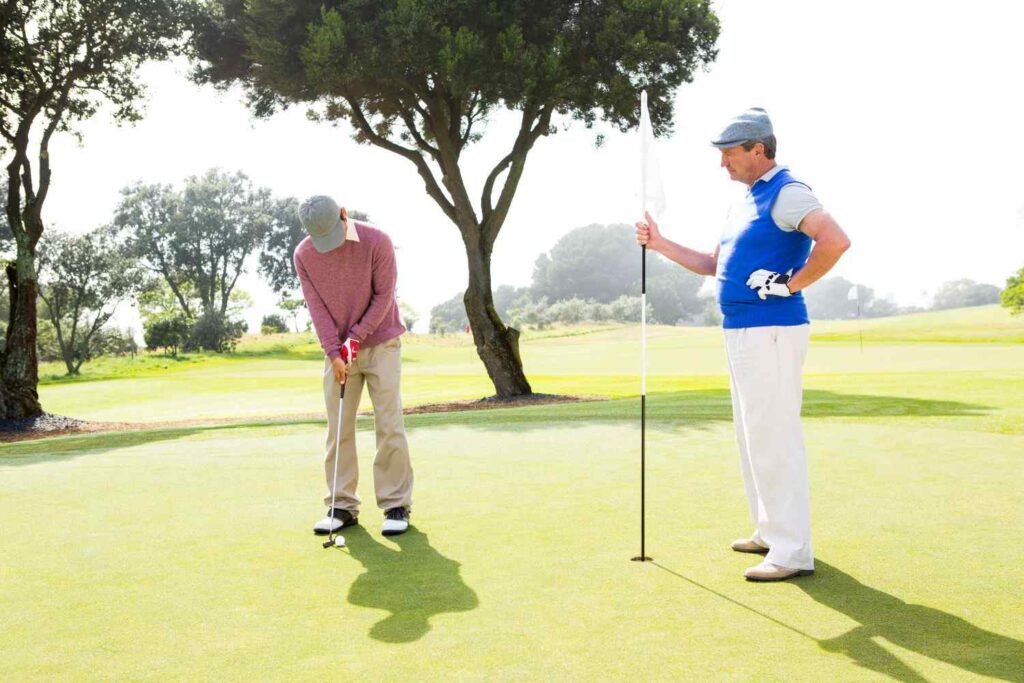
The factors affecting round time are more numerous than most golfers acknowledge, and blaming the group ahead misses most of the picture. Here’s an honest accounting:
- Group size. Each additional player adds roughly 20 to 30 minutes to a round under normal conditions.
- Skill level. Higher handicap players hit more shots and spend more time searching for balls. A group of 20-handicappers plays significantly slower than a group of 10-handicappers, all else equal.
- Course design. Wide fairways and short rough cut ball-search time dramatically. Tight tree-lined corridors are pace killers.
- Tee interval management. Courses that send groups off every 10 minutes instead of every 8 protect pace but reduce revenue. It’s a real tradeoff that course operators navigate.
- Weather. Rain slows everything. High heat causes more rest breaks. Morning dew on greens changes read time.
- Player pre-shot routines. One player with a 45-second routine adds roughly 45 minutes to a foursome round across 18 holes. That math is not exaggerated.
The factors affecting round time that golfers control entirely are pre-shot routine length, ball search efficiency, and readiness to hit. The factors they don’t control, course traffic, design, and tee intervals, are real but often overstated as excuses.
“Pace of play is primarily a player behavior issue. Courses that engage players directly and set clear time expectations from the first tee see measurably faster rounds.” — Pace of Play Research Summary, Golf Course Superintendents Association of America, widely cited in USGA educational materials
That observation is blunt but well-supported. The research consistently shows that informed players, people who know the target time per hole and check it, play faster without even trying hard. Just knowing that a par-4 should take about 14 minutes creates accountability that enforcement never fully replicates.
18 Hole Golf Pace of Play: What Courses Actually Expect
The 18 hole golf pace of play standard at most American courses is 4 hours 15 minutes for a foursome. That’s the number posted on most scorecards and enforced, loosely, by most marshals. At private clubs with pace of play committees, the expectation is often stricter: 4 hours flat is the target at many well-run private facilities.
The 18 hole golf pace of play guidelines from the USGA go further with what they call the “Tee to Green” model, which assigns time targets per hole based on par. A par-3 should take 12 minutes. A par-4 gets 14 minutes. A par-5 gets 16 minutes. On a standard par-72 course with four par-3s, ten par-4s, and four par-5s, the total works out to roughly 4 hours 4 minutes of active play time, and that’s built right into the math.
The Golf Digest breakdown of pace of play enforcement across major American markets found that only about 23 percent of courses actively enforce pace with any real consequence beyond a polite word from a marshal. That explains a lot about why Saturday rounds at public courses routinely run 5 hours.
Golf Course Pace of Play Rules: What You’re Actually Bound By
The golf course pace of play rules vary more than most players realize. The USGA’s Rules of Golf (Rule 5.6) state that players must play at a prompt pace and should make their stroke within 40 seconds after it’s their turn to play. That 40-second clock is often cited and almost never enforced at the recreational level, but it’s a real rule.
Under official tournament conditions, a player who exceeds the time par for a hole can receive a warning and then a one-stroke penalty on the following hole. Most recreational golfers will never face that consequence, but understanding it gives context for why tour players famously agonize over slow-play accusations.
The golf course pace of play rules that actually affect your Saturday round are the local rules posted by the course: mandatory cart paths in wet conditions (which slow play by adding walking distance), ball lost rules that allow a provisional from the fairway, and stroke-and-distance modifications like the local rule allowing a two-stroke drop instead of returning to the original spot. Each of these exists partly to manage pace.
The Preferred Lies or “winter rules” local rule, allowed by R&A and USGA under certain conditions, is another pace tool. Moving a ball in poor fairway conditions to a better lie takes less time than negotiating a bad lie, and it slightly reduces the mental load on high-handicappers who otherwise freeze over poor lies.
How to Play 18 Holes Faster: A Practical System
These aren’t vague suggestions. This is a concrete system called the “Forward Prep” approach that any group can use without formal training. Every item here targets a specific time leak in the average round.
On the tee box:
- Use “Ready Golf” on par-4s and par-5s. Whoever is ready hits first, regardless of honors. The USGA explicitly endorses this for casual play.
- Club selection starts while you’re walking from the cart or your bag, not when you arrive at the ball.
- Limit your pre-shot routine to two looks and one waggle. Anything beyond that is not improving your shot.
On the fairway:
- Never spend more than 3 minutes searching for a lost ball. Drop, take a penalty, and move. The time you lose hunting adds up to more than the strokes you save finding the ball.
- If you’re in a cart, drop your partner near their ball and drive to yours. Don’t make both players walk to one ball, then back to the cart, then to the next ball.
- Club up early and walk toward the green while your partner hits. You’ll be ready to go immediately after their shot.
On the green:
- Read your putt while others are putting, not when you step up to the ball.
- Mark, let the farthest player go, read while they’re putting. Your read time should be zero when your turn comes.
- After holing out, leave the green immediately. Record scores at the next tee, not on the green.
Using the Forward Prep system consistently, a foursome can realistically cut 25 to 35 minutes from their round without playing any faster between shots. The time savings come from eliminating dead time, not from rushing. That’s a critical distinction. How to play 18 holes faster is really about removing inefficiency, not reducing deliberation. And that means your actual shot quality doesn’t have to suffer at all.
Knowing how to play 18 holes faster also means understanding when you’re the bottleneck. If three people in your group are standing at their balls, ready to hit, and the fourth is still 40 yards behind finishing a long putt conversation, that’s a systems problem the whole group owns. Say something early, say it kindly, and the round gets better for everyone.
How Long Does It Take to Play 18 Holes of Golf on Different Course Types
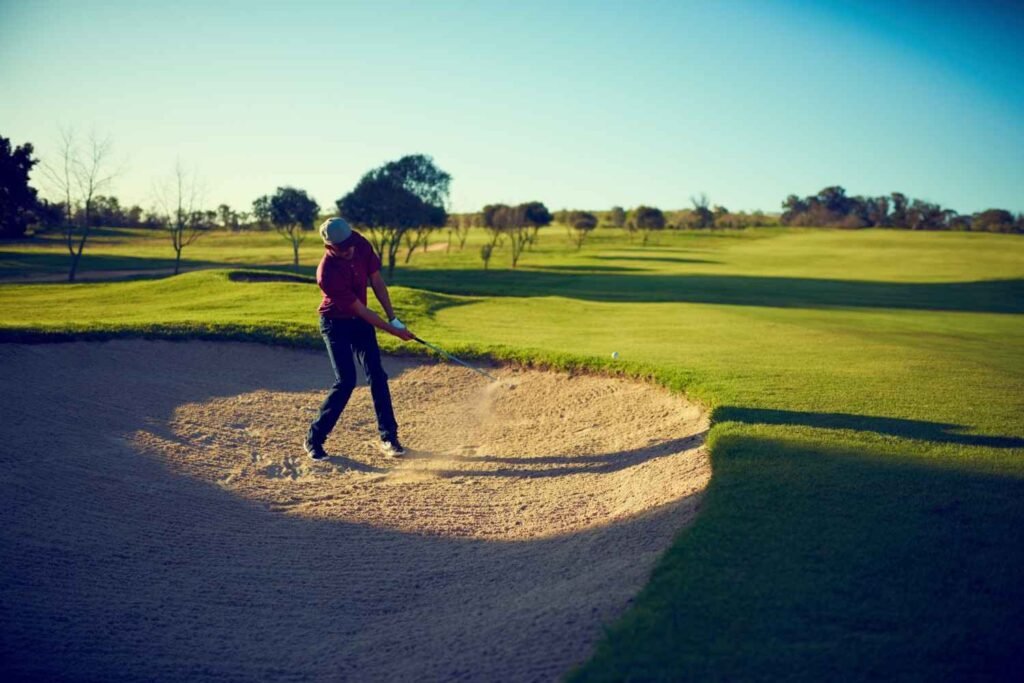
Not all 18-hole courses are created equal from a pace standpoint. The layout, length, and management philosophy all shape the experience.
A short executive course, typically 4,000 to 5,500 yards with a mix of par-3s and short par-4s, can be completed by a foursome in 2 hours 30 minutes to 3 hours. These courses are underrated as training grounds and perfect for weeknight rounds. A full-length championship course at 7,200 yards with forced carries, water on multiple holes, and a punishing rough can push the same foursome to 5 hours even at a reasonable pace.
Resort courses in destinations like Scottsdale, Hilton Head, or the Monterey Peninsula often run slower than local municipal courses, partly because golfers treat the round as an event, take more photos, and soak in the experience, which is entirely reasonable for a trip golfer, and partly because resort operators tolerate longer rounds because the experience is the product.
Trip golfers may also spend extra time testing unfamiliar equipment, including the best golf balls for slow swing speed, especially when course conditions differ from what they normally play at home. Understanding how long does it take to play 18 holes of golf on a resort course versus your home track helps you set realistic expectations before you book.
How Long Does It Take to Play 18 Holes of Golf: A Decision Guide
Use this to figure out how much time to block before your round:
You’re a solo player with a cart on a quiet morning: Block 2 hours 15 minutes for the round, 30 minutes for pre-round, 30 minutes for the drive. Total: 3 hours 15 minutes.
You’re in a twosome walking on a midweek afternoon: Block 3 hours for the round, 30 minutes pre-round, 30 minutes drive. Total: 4 hours.
You’re a foursome in carts at a public course on Saturday morning: Block 4 hours 15 minutes to 4 hours 30 minutes for the round, 45 minutes pre-round and at the turn, 30 minutes drive. Total: 5 hours 30 minutes, minimum.
You’re a foursome walking a private club at 7 AM on a Sunday: Block 4 hours for the round, 30 minutes pre-round. Total: 4 hours 30 minutes. Private courses with fewer starters and no cash-register mentality protect pace more reliably than public facilities.
The math on how long does it take to play 18 holes of golf always favors planning conservatively. Nobody’s upset when a round finishes 30 minutes earlier than expected. The opposite story is a different experience entirely.
The One Number That Changes Everything
Fourteen minutes per hole. That’s the single figure worth memorizing. On a par-72 course, 14 minutes per hole on average, accounting for shorter times on par-3s and longer on par-5s, produces a 4-hour-12-minute round. Check your time after hole 9. If you’re at 2 hours or under, you’re on pace.
If you’re at 2 hours 20 minutes, you’re behind, and the back nine usually runs slower as fatigue and course traffic build. For newer players using the best irons for beginners, keeping this pace in mind can also encourage simpler club choices and quicker decisions before each shot.
That one checkpoint, the nine-hole clock, gives your group actionable feedback at exactly the right moment. You still have half the round to adjust. Most groups only realize they’re slow when they’re on 15 with darkness approaching, and by then there’s nothing to do except apologize to whoever’s waiting for dinner.
Golf’s pace problem isn’t unsolvable. The players who understand the numbers, respect the rhythm of the course, and play with genuine awareness of their group’s habits are the ones who consistently have fast, enjoyable rounds. Your time on the course is a gift. Protect it.
What’s the slowest round you’ve ever played, and what actually caused it? A crowded course, one slow player in the group, or something you’d never thought of before today?