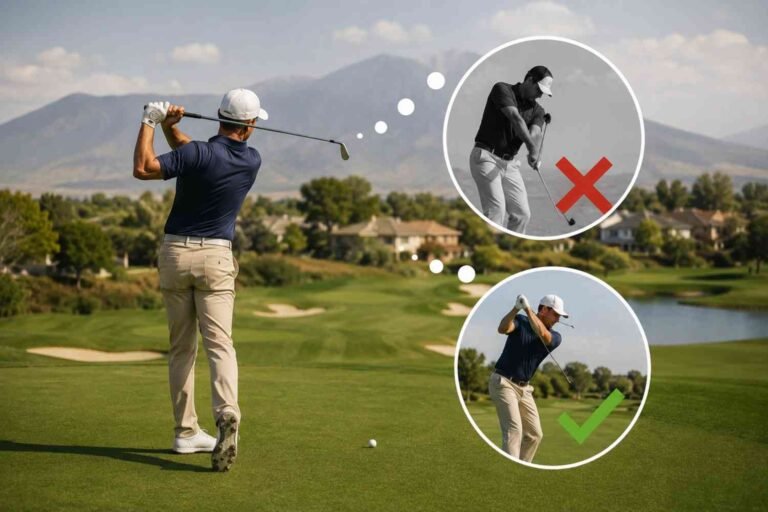

I used to think driving farther and driving straighter were two separate goals. If I wanted more distance, I assumed I had to swing harder and accept more misses. Then I started paying attention to what happened on ordinary tee shots. The drives that traveled well were not always my hardest swings. They were usually the ones where contact felt centered, the clubface stayed predictable, and I finished in balance.
I also noticed that accuracy improved when I stopped treating every tee shot like a long-drive contest. A controlled swing that found the middle of the face could produce plenty of speed, while an aggressive swing that caught the heel could send the ball shorter and farther offline. That changed how I practiced. Instead of chasing my longest drive, I started looking for a repeatable combination of speed, contact, and direction.
Start With Centered Contact
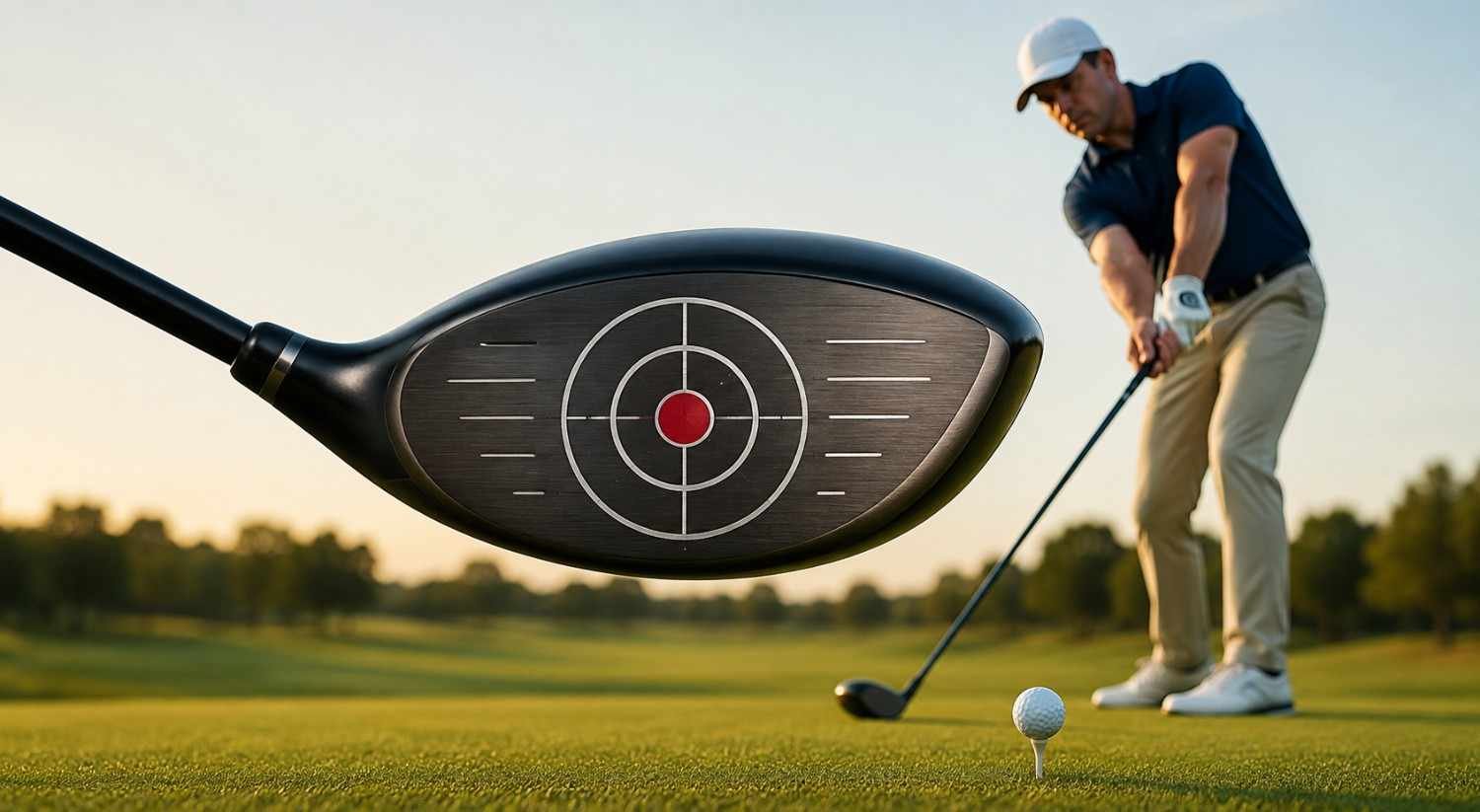
Before trying to add clubhead speed, find out where you are striking the driver. Impact location has a major effect on how efficiently the club transfers speed to the ball. A shot struck away from the center can lose distance and curve more than expected, even when the swing feels fast.
Use foot spray, impact tape, or another simple feedback method during practice. Hit several drives and look at the pattern rather than one perfect strike. If most contacts gather toward the heel or toe, that pattern gives you something useful to work on.
This is also why swinging harder can backfire. More effort does not help much if it makes your contact less consistent. A well-struck drive at a controlled speed can be more useful than a faster swing that produces weak contact.
Set Up the Driver for Distance and Control
Driver setup gives you a chance to improve launch and control before the club even moves.
Start with the ball positioned forward, around the inside of your lead heel. The exact position can vary with your build and swing, but the driver generally needs more room to travel through impact than an iron. A slight tilt of your upper body away from the target can also support an upward strike.
Tee height matters, too. A common starting point is having roughly half the ball above the crown, then adjusting based on your actual strike pattern and launch. There is no single tee height that works perfectly for every golfer, so use feedback rather than blindly following a fixed rule.
Your grip and alignment deserve the same attention. Build your stance around the clubface rather than setting your feet first and hoping the face ends up aimed correctly. Pick an intermediate spot a few feet in front of the ball and use it to establish your starting line. This small step can make alignment more repeatable.
Swing With Speed You Can Control

Distance requires speed, but speed is only useful when you can deliver the club consistently.
If your normal swing becomes rushed when you try to hit your longest drive, back off slightly and find the fastest motion you can repeat without losing balance; for some golfers, that may feel like 70 or 80 percent effort. It is not a universal percentage, but it can be a useful starting point for finding controlled speed.
A wide backswing and full rotation can help create room for speed, but do not turn the swing into a checklist of body positions. Focus on rhythm and sequencing. Your lower body, torso, arms, and club should work together instead of your arms racing ahead.
A stable lead wrist through the impact zone can also help keep the clubface from becoming overly active. You do not need to hold the club rigidly. The goal is to avoid adding unnecessary hand action when you are trying to hit harder.
Aim for a Bigger Window
Accuracy becomes easier when your target is realistic. Instead of picking one tiny spot in the distance, identify the section of fairway where your normal shot can safely finish.
This is especially useful when hazards sit along one side. If your miss tends to go right and there is water on the right, aim toward a part of the fairway that gives that miss more room. You are creating a larger margin for error rather than demanding a perfect swing.
The same principle applies to distance. If adding five extra yards requires a much more aggressive swing and greatly increases your dispersion, those yards may not help your score. The best drive is often the one that leaves you with a manageable second shot.
Understand What Your Driver Is Actually Doing
Once your contact and setup become reasonably consistent, launch data can help explain why a drive flies the way it does.
Clubhead speed, ball speed, launch angle, spin rate, and attack angle all influence distance. But chasing an ideal number without considering your whole swing can become distracting. Two golfers with different speeds and deliveries may need different launch conditions.
Focus first on patterns. Are you launching too low? Are you producing excessive spin? Are your best strikes clearly longer than your average ones? Data becomes useful when it answers questions like these.
Pay attention to carry distance as well. Roll changes with turf, weather, and course conditions, while carry gives you a more dependable number for choosing clubs and planning tee shots.
Practice Driving With a Purpose

Randomly hitting 50 drivers is rarely the best way to improve. Start with a small number of swings focused on contact, then add direction and speed.
For example, hit five balls while focusing on centered contact. Then choose a fairway target and hit five more while tracking your starting line and curve. Finish with several shots where you gradually increase speed while trying to keep the same contact and balance.
This is how to build a golf practice routine that works and can make your driver sessions more useful. A routine that moves from contact to control and then to speed gives you feedback instead of simply exhausting you.
Practice should also include imperfect shots. If every ball is hit from the same position toward the same target, you may not learn how your swing responds when fatigue or pressure changes the motion.
Make Accuracy Hold Up Under Pressure
A driving-range swing and a first-tee swing can feel completely different. The fairway suddenly looks narrower, and the temptation to hit a perfect drive can make you tighten your grip or rush the transition.
Build a simple pre-shot routine. Stand behind the ball, choose the target, pick an intermediate point, step in, and make the swing you practiced. Once the target is chosen, stop changing your mind.
Your goal under pressure is not to produce your fastest swing. It is to reproduce a motion you trust. A balanced finish is a useful checkpoint because it can show whether you stayed under control.
Learning golf tips that help you play better under pressure can reinforce this part of your game. The more familiar your routine becomes, the less attention you need to spend on mechanics when the shot matters.
Fix the Strike Before Adding More Speed

If your driver is still inconsistent, go back to impact rather than immediately adding another swing thought.
Use feedback to see where the ball meets the face. Check whether your tee height and ball position are helping or hurting your contact. Then make one adjustment at a time and retest it.
A centered strike does not mean every ball must touch the exact geometric middle. Modern drivers can retain performance on reasonable misses, and some areas away from the center can perform better than others. The practical goal is a repeatable strike pattern that gives you dependable ball speed and direction.
If contact remains your biggest issue, learning how to improve centered strike in golf gives you a more productive place to focus than simply trying to swing faster.
Build a Drive You Can Trust
Driving improvement becomes easier when you stop judging every swing by its maximum distance. The real target is a repeatable tee shot that starts where you expect, carries far enough for your game, and stays within a dispersion pattern you can manage. That kind of drive gives you confidence because you know what is likely to happen before you step onto the tee.
Keep chasing better contact, not just harder swings. When speed, strike, setup, and control begin working together, more distance can arrive without sacrificing the accuracy that makes it useful.
FAQs: How to Improve Driving Accuracy and Distance for More Consistent Tee Shots
1. How can I hit my driver farther without losing accuracy?
Start with centered contact and controlled speed. Once your strike becomes consistent, gradually increase speed while keeping your balance and starting direction stable.
2. Should I swing my driver at 80 percent?
There is no universal percentage. A controlled effort can help if swinging harder causes rushed tempo, poor contact, or loss of balance. Find your fastest repeatable motion.
3. Where should I position the ball with a driver?
A common starting point is opposite the inside of your lead heel. Fine-tune it based on your strike location, setup, and launch rather than treating one position as mandatory.
4. What matters more for driving, distance or accuracy?
Both matter. Extra distance can shorten approach shots, but it only helps when you keep the ball playable. A slightly shorter drive in the fairway can be more valuable than a longer drive in trouble.