

I used to notice a strange pattern in my own golf. A swing that felt natural on the range could suddenly feel rushed when I needed a good score. I would stand over the ball longer, think about where I could not hit it, and start changing things that had worked perfectly well for the first few holes. The pressure did not create a completely different swing. It changed how I approached the shot.
Over time, I found that my better rounds under pressure were not the ones where I somehow stopped feeling nervous. They were the ones where I had a simple process to fall back on. I picked a target, settled my breathing, committed to one shot, and moved on. That made pressure feel less like something I had to defeat and more like something I could manage.
Build a Pre-Shot Routine You Can Trust

A reliable pre-shot routine gives you something familiar to do when your mind starts racing. It does not need to be long or complicated. In fact, adding too many steps can create another source of pressure.
Your routine might involve standing behind the ball, choosing your target, taking one or two practice swings, taking a breath, and stepping into the shot. The exact sequence matters less than repeating it consistently.
Try to keep the time between your final look at the target and the start of your swing fairly consistent, too. Pressure can make golfers stand over the ball longer while they search for confidence. That extra time often creates more opportunities for negative thoughts and tension to creep in. A dependable routine can help prevent that spiral.
This is also why how to build a golf practice routine that works matters beyond the range. Your practice routine should include the same pre-shot process you expect to use during a round, so it already feels familiar when the score matters.
Stop Trying to Protect Your Score
One of the hardest pressure moments comes when you realize you are playing one of your better rounds.
Suddenly, every shot seems connected to the scorecard. You start calculating what you need on the next three holes or thinking about the number you could shoot if you simply avoid a mistake. That can make an ordinary golf shot feel much bigger than it actually is.
The score matters, but it is not something you can control while standing over the ball. You can control the target, club, routine, and commitment.
Try separating the round into individual shots. If you are playing the 16th hole and need a good finish, your job is not to protect a number. Your job is to play the 16th hole well.
That mental shift sounds small, but it can keep the pressure from spreading across every shot.
Practice With Consequences
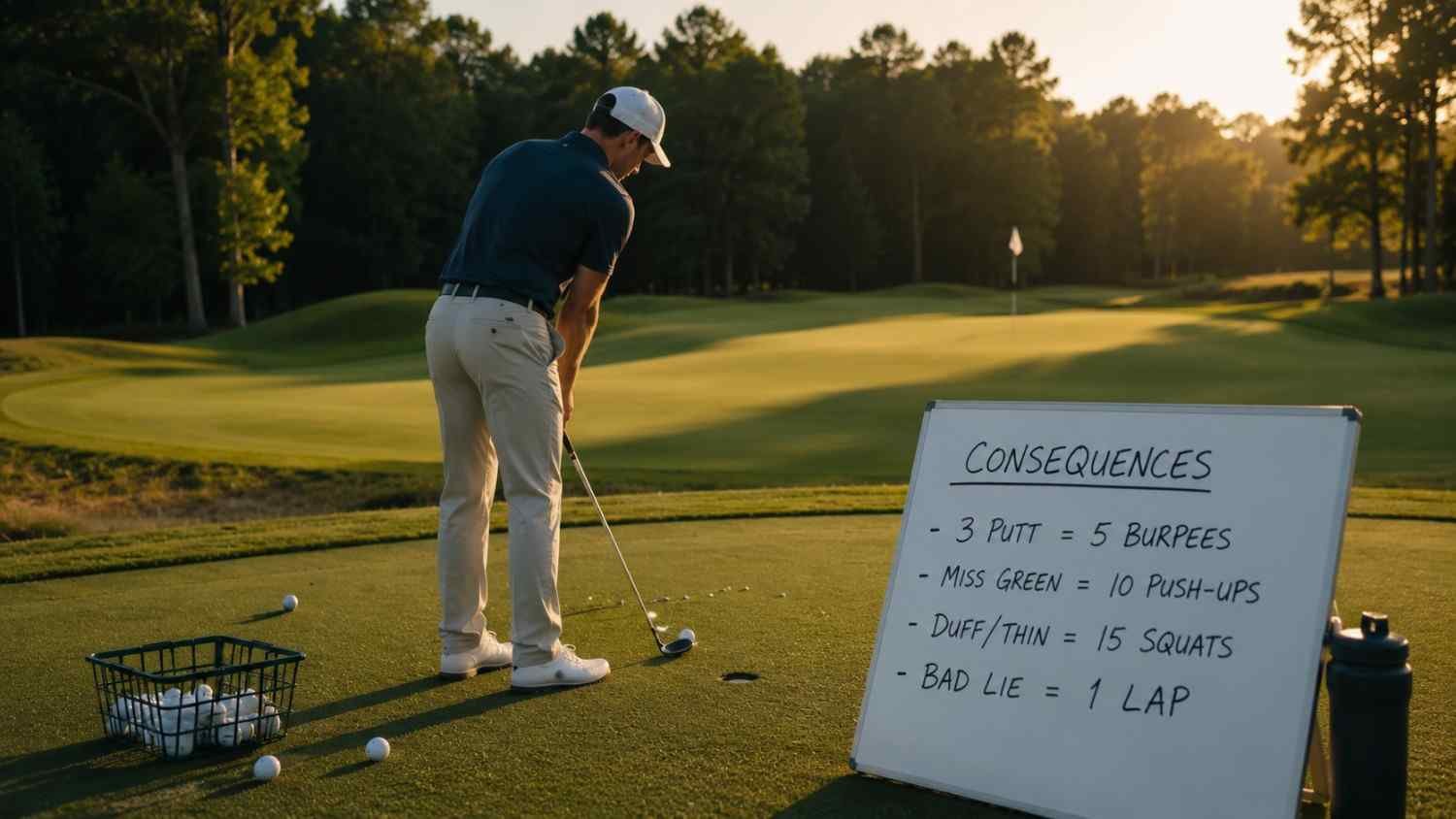
It is difficult to expect yourself to perform calmly under pressure if every practice session is completely comfortable.
You can create small consequences without turning practice into something miserable. For example, make five short putts in a row before moving on. Miss one and restart. On the range, give yourself a target and a limited number of attempts. If you fail to hit the target, begin the challenge again.
Another option is to play an imaginary nine or 18 holes during practice. Choose a club based on an imaginary hole, hit the shot, evaluate where it finished, and select the next club based on that result. This forces you to make decisions instead of simply hitting balls.
Pressure-practice games are useful because they introduce a small amount of uncertainty and consequence. They also give you opportunities to rehearse your routine when a shot does not feel completely comfortable.
For golfers looking to make those sessions more structured, learning how to manage difficult approach shots can also help turn practice into realistic scoring situations rather than a collection of perfect lies.
Have One Stock Shot When Nerves Rise
Pressure is rarely the right time to experiment.
If you normally hit a controlled fade, there is little reason to suddenly try to manufacture a huge draw because the flag is tucked behind a tree. If your comfortable wedge swing is reliable, use it rather than attempting a shot that requires perfect timing.
Your stock shot should be the option you trust when your confidence is not at its highest. That does not mean hitting the same shot on every hole. It means knowing which motion gives you the best chance when you need something dependable.
The more familiar the shot feels, the less mental energy you need to spend trying to manufacture it.
Reset Quickly After a Bad Shot

A pressure round can unravel because of what happens after a mistake rather than because of the mistake itself.
You hit a poor drive, get frustrated, and carry that frustration toward your approach. Then you miss the green and immediately start thinking about the previous hole. Suddenly, one bad swing has influenced several decisions.
Create a simple post-shot reset. React naturally for a moment, accept what happened, then shift your attention to something outside the golf shot while walking to the next one. Notice the course, talk to your playing partner, or simply focus on your surroundings.
A recent sports-psychology approach to golf recommends using a repeatable post-shot routine as a mental break, helping golfers transition from one shot to the next rather than carrying the previous result forward.
When you arrive at the next ball, start your normal pre-shot routine again. The previous shot is finished.
Make Smart Decisions When the Stakes Rise
Pressure can make golfers more conservative, but it can also make them overly aggressive. Both reactions come from the same problem: making decisions based on emotion rather than the situation.
If a flag is tucked beside water and your normal miss moves toward it, you may need a safer target. If the hole gives you plenty of room and an aggressive club creates a much easier approach, backing away simply because you feel nervous may not make sense.
Think about three things: the safest useful target, your most manageable miss, and the swing you can fully commit to. That approach allows you to play smart without becoming passive.
This is where understanding how to play safer without becoming too conservative becomes useful. The goal is not to remove all risk from your game. It is to make sure the risk you accept has a worthwhile reason behind it.
Keep Your Routine the Same When the Pressure Builds

Your routine should not change because the situation becomes more important. If anything, pressure is when you need it most.
Do not add extra practice swings because you are nervous. Do not stare at the target for twice as long. Do not suddenly change your grip or swing thought because you are standing over a shot that could change your score.
Let the preparation happen before you step into the ball. Once you have selected the shot, trust the decision and make the swing.
That consistency is valuable because pressure already adds enough noise. Your routine gives you one familiar sequence that stays the same whether you are hitting your first tee shot or standing over a putt that matters.
FAQs: Golf Tips That Help You Play Better Under Pressure and Stay Consistent
1. Why do I play well in practice but struggle under pressure?
Practice usually has fewer consequences, so your mind stays quieter. Pressure can add tension, negative thoughts, and extra swing analysis. Practicing with targets and consequences can make that environment more familiar.
2. Should I change my swing when I feel nervous?
Usually, no. Pressure is generally a poor time to introduce mechanical changes. Stick with a familiar swing thought or focus on your target and shot shape instead.
3. How can I calm down before an important shot?
Use your normal pre-shot routine and take one slow, deliberate breath. Focus on your target and the shot you want to produce rather than the score or possible outcome.
4. What should I do after hitting a bad shot?
Accept the result, reset, and leave the previous shot behind. Give yourself a mental break before beginning the same routine for your next shot.
Why Consistency Under Pressure Starts Before the Pressure
Playing well when the stakes rise is less about finding a magic mental trick and more about having fewer decisions to make when your mind is busy. A dependable routine, controlled breathing, clear targets, realistic shot selection, and pressure-based practice give you something concrete to rely on. You may still feel nervous, and that is normal. The difference is that those nerves no longer have to dictate your tempo, target, or decision.
You do not need to eliminate pressure to play good golf under it. Learn to work with it, return to your routine, and treat each shot as its own opportunity.