
The last putt drops, but my body is rarely finished with the round. After hours of walking, rotating, bending, and repeating the same swing pattern, I use a post round golf recovery routine after 18 holes to replace fluids, refuel, and loosen the areas that stiffen first.
Golf can demand more than it appears. In a 2026 study, golfers who walked averaged about 17,000 steps and 880 activity calories. Golfers using a cart averaged roughly 6,300 steps and 456 activity calories. That difference is why I do not use the same recovery plan after every round.
My 60-Minute Post-Golf Recovery Plan
I keep my post round golf recovery routine after 18 holes simple enough to repeat every weekend.
| Time | What I Do | Main Goal |
| 0–15 minutes | Water, electrolytes if needed, protein and carbs | Rehydrate and refuel |
| 15–30 minutes | Gentle hip, back, shoulder, and quad mobility | Restore movement |
| Later | Light activity, optional foam rolling, dinner, sleep | Prepare for tomorrow |
The routine does not need expensive recovery equipment. Most of what I need fits inside my golf bag or kitchen.
Phase 1: Rehydrate and Refuel First

Start With Fluid, Not the Clubhouse Bar
My first drink is water. After a hot, humid, or very sweaty round, I may add electrolytes. The American College of Sports Medicine emphasizes maintaining both fluid and electrolyte balance during exercise.
I treat 16 to 20 ounces as a practical starting amount rather than a prescription for every golfer. Sweat rate, body size, temperature, walking distance, and previous fluid intake all change recovery needs.
For a more personal check, I can compare body weight before and after activity. ACSM notes that changes in body weight can help estimate how much body water was lost and not replaced.
This is where golf hydration tips for hot weather matter. If I finish badly dehydrated, no parking-lot stretch can replace the fluid I should have been drinking during the round.
Pair Protein With Carbohydrates
My post round golf recovery routine after 18 holes always includes food.
Sports-nutrition guidance suggests roughly 20 to 40 grams of high-quality protein per serving can be an effective target for physically active adults. The ideal amount varies with body size and total daily protein intake.
I keep recovery food practical. Greek yogurt with fruit, a turkey sandwich, eggs with toast, or a protein shake with a banana all combine protein with carbohydrates.
Protein provides amino acids used by the body for tissue maintenance and repair. Carbohydrates also help restore energy after prolonged activity.
If I reach the 18th hole starving, I also reconsider what to eat during 18 holes of golf. Post-round nutrition works better when I have not spent the entire back nine running on empty.
Phase 2: Restore Hips, Back, and Shoulders
My post round golf recovery routine after 18 holes includes five to ten minutes of easy mobility. I use it to regain comfortable motion rather than expecting stretching to eliminate every ache tomorrow morning.
That distinction matters. Recent systematic reviews found that post-exercise stretching alone does not meaningfully reduce next-day muscle soreness or significantly accelerate physical recovery.
Seated Figure-Four Stretch

I sit on a chair, bench, or the edge of my trunk. I cross one ankle over the opposite knee, keep my back long, and hinge forward.
I stop when I feel a gentle stretch around the outer hip and glute. I hold it for about 20 to 30 seconds, breathe normally, then switch sides.
There is no prize for forcing the knee toward the floor.
Open-Book Rotation
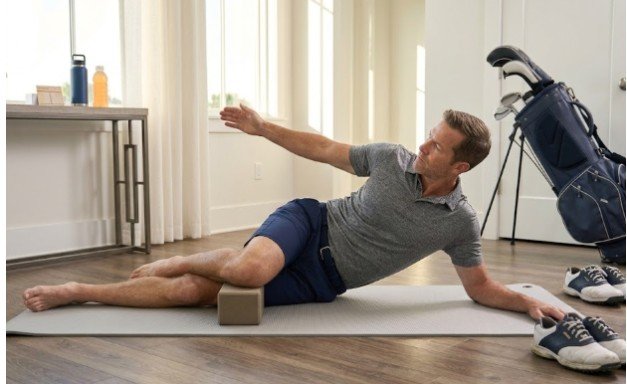
At home, I lie on my side with the top knee bent and supported. I slowly rotate my chest open while keeping that knee anchored.
I focus on smooth movement through my mid-back. I never force a bigger rotation through my lower back simply to create more range.
Standing Lat and Shoulder Stretch
I place both hands on a golf cart, countertop, or wall. Then I step backward, push my hips away, and let my chest move gently between my arms.
I like this one because it requires no floor space and takes less than a minute.
Standing Quad and Hip-Flexor Stretch
I stand tall, bend one knee, and bring my heel toward my glutes. I keep my knees fairly close and gently move my hips forward.
If my legs feel tired after walking the course, I hold a cart, wall, or other stable surface.
Phase 3: Keep Moving Later in the Day

I do not finish my post round golf recovery routine after 18 holes and stay planted on the sofa for the next six hours.
Easy walking and normal light activity are enough. I am trying to keep moving comfortably, not squeeze another workout into the day.
Foam rolling is optional. Research suggests it can improve range of motion and may provide a modest reduction in exercise-related soreness. I focus on the calves, hamstrings, glutes, and upper back rather than aggressively rolling directly over my lumbar spine.
I also plan ahead with best snacks for walking 18 holes. If I repeatedly finish drained, putting better food in my golf bag makes more sense than trying to repair a huge energy deficit afterward.
What I Skip After Golf
I do not take a contrast shower because someone told me it will “flush lactic acid.”
Lactate is not simply waste trapped inside tired muscles. It remains involved in energy metabolism during exercise and recovery.
Cold-water recovery can reduce perceived soreness or fatigue in some exercise settings, but that is different from claiming cold water washes harmful lactate from the body.
I also stay cautious with magnesium. I do not automatically add a supplement to every post round golf recovery routine after 18 holes.
The NIH Office of Dietary Supplements lists 350 mg per day as the upper intake level for magnesium from supplements and medications for adults. That limit does not include magnesium naturally present in food.
My priorities remain less exciting but more useful: fluid, food, comfortable movement, and sleep.
Why a Post Round Golf Recovery Routine After 18 Holes Should Change With the Round
A cool cart round and a five-hour walk in July do not create identical demands.
That is why I scale my post round golf recovery routine after 18 holes according to heat, sweat, walking distance, fatigue, soreness, and how soon I plan to play again.
The walking-versus-cart data makes this especially clear. Walkers in the 2026 study recorded almost three times as many steps and substantially higher activity energy expenditure.
If I have another tee time the following morning, I put extra attention on dinner, fluids, and getting enough sleep. I would rather recover consistently than turn the evening into an hour-long stretching marathon.
Sharp pain, new swelling, numbness, weakness, or symptoms that keep getting worse are different from ordinary post-round stiffness. Those signs deserve professional medical assessment.
FAQs About Golf Recovery After 18 Holes
1. How long should a post round golf recovery routine after 18 holes take?
About 15 to 30 focused minutes can cover fluids, food, and mobility, while recovery continues through meals, normal movement, and sleep.
2. Should I stretch immediately after playing 18 holes?
Gentle stretching is fine if it feels comfortable, but research does not support stretching alone as a reliable method for preventing next-day soreness.
3. What should I drink after a hot round of golf?
I start with water and consider electrolytes after heavy sweating, particularly during long rounds in hot or humid weather.
4. Is ice or heat better after golf?
Either may feel comfortable for ordinary stiffness, but significant pain, swelling, or suspected injury calls for more specific medical advice.
Make the 19th Hole Work for Tomorrow
My post round golf recovery routine after 18 holes works because it is repeatable: drink first, eat a recovery snack or meal, move for five to ten minutes, then get on with my evening.
The smartest recovery upgrade actually happens before I tee off. I put water and a protein-and-carb snack in my bag before leaving home. When the final putt drops, recovery is already packed and waiting instead of becoming one more thing I forget.