

A hard leg day on Friday can make Saturday’s first tee feel much farther away than 24 hours. So, should you workout the day before golf? Yes, but I recommend treating that session as preparation rather than a fitness test.
Light strength work, mobility, core activation, and easy cardio can fit well before a round. Heavy lifting, unfamiliar exercises, and sets taken to failure are much more likely to leave you stiff or fatigued when you need a repeatable swing.
So, Should You Workout the Day Before Golf?
For most healthy recreational golfers, the answer is yes. The key is controlling the training dose.
Golf itself requires strength, mobility, conditioning, balance, and coordinated use of major muscle groups. Walking 18 holes can also add several miles of activity, depending on the course.
That means I would not use the previous day to chase personal records or create deep muscle fatigue. I would use it to maintain movement quality while arriving at the course fresh.
The 2026 American College of Sports Medicine resistance-training guidance also reinforces an important point: effective strength training does not require complicated programming or routinely training to muscular failure. Consistency matters more.
| Day-before situation | My recommendation |
| No soreness, normal energy | Light-to-moderate workout |
| Slight stiffness | Mobility, activation, easy cardio |
| Heavy soreness or fatigue | Recovery or complete rest |
| Important tournament tomorrow | Reduce volume further |
| New workout or exercise planned | Save it for another day |
Why Workout Intensity Matters Before Golf
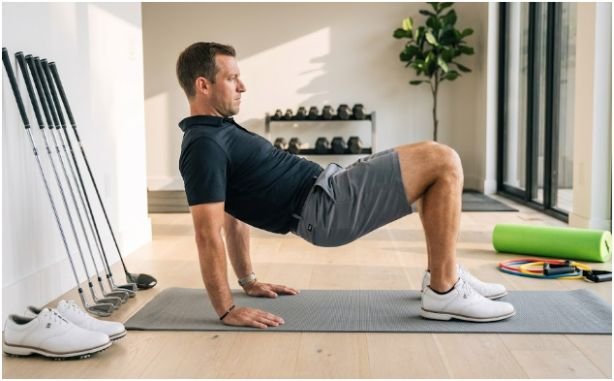
The better question behind should you workout the day before golf is not simply whether exercise is allowed. It is whether today’s workout creates fatigue that survives until tomorrow’s tee time.
A resistance-training study found that sessions taken to failure required considerably more time for neuromuscular and metabolic recovery than sessions stopped short of failure. A 2024 review reached a similar conclusion, noting that training to failure can lengthen recovery and temporarily impair subsequent performance.
That matters in golf because small changes in coordination, stability, or range of motion can affect a highly precise movement.
Muscle Soreness Is More Likely After Unfamiliar Eccentric Training
The lowering phase of exercises such as squats, lunges, pull-ups, and Romanian deadlifts involves eccentric muscle action.
Eccentric exercise is useful, but high-intensity or high-volume eccentric work can cause delayed soreness and reduced muscle function. ACSM notes that the effect is especially noticeable when the exercise is new or performed infrequently.
That is why I would never test a new leg workout the evening before an early tee time.
Best Workout the Day Before Golf
If someone asks me should you workout the day before golf, my preferred session lasts about 20 to 30 minutes and leaves plenty of energy in reserve.
Core Activation for Golf Stability
I like low-fatigue core exercises such as dead bugs, bird dogs, short planks, or Pallof presses.
The goal is not to exhaust the abs. It is to practice trunk control without creating soreness. Golf uses the core alongside the hips, shoulders, back, and legs during the swing.
Two comfortable sets are usually enough for a day-before session.
Hip and Glute Mobility Before a Round
Easy bodyweight squats, glute bridges, hip rotations, and controlled reverse lunges can help keep the lower body moving.
I keep the range comfortable and stop well before fatigue. The day before golf is also a poor time for high-volume walking lunges or heavy Romanian deadlifts if they commonly make your hamstrings or glutes sore.
Light Cardio and Dynamic Mobility
A 10-to-20-minute walk or relaxed cycling session works well when I want movement without much training stress.
Dynamic shoulder rotations, thoracic rotations, and hip mobility can follow. Light activity is also consistent with recovery research suggesting low-intensity active recovery can be useful compared with simply doing nothing.
What Exercises Should You Avoid Before Golf?

When deciding should you workout the day before golf, I would pay more attention to volume and familiarity than to banning individual exercises.
Heavy squats, deadlifts, presses, or rows are not automatically bad. The problem comes when the workout is unusually demanding.
Avoid chasing one-rep maxes, adding several unfamiliar exercises, performing a high-volume leg day, or repeatedly taking sets to failure. Research specifically associates failure training with slower recovery, while ACSM’s current guidelines say failure is not necessary for the average healthy adult to gain benefits from resistance training.
Is 12 to 24 Hours Enough Recovery Before Golf?
There is no universal 12-hour or 24-hour rule that guarantees recovery.
Your training history matters. So do exercise selection, volume, intensity, sleep, age, and how accustomed you are to the workout.
I would therefore treat 12 to 24 hours as a scheduling window rather than a biological guarantee.
If your tee time is 8:00 a.m. Saturday, a short Friday morning session gives you more recovery than a demanding Friday-night workout. If you regularly feel sore for two days after leg training, schedule that workout earlier in the week.
Use My Green, Yellow, Red Tee-Time Readiness Test
This is the practical framework I find more useful than simply asking should you workout the day before golf.
| Status | What you feel | What to do |
| Green | Normal energy, no unusual soreness | Short normal session, stop well before failure |
| Yellow | Mild stiffness or tired legs | Mobility, activation, easy cardio |
| Red | Significant soreness, pain, poor sleep, heavy fatigue | Rest and prioritize recovery |
The system forces one useful question: Will today’s session make tomorrow’s golf better, neutral, or harder?
For a casual Sunday round, a Green session may include moderate strength work. Before a club championship or a round where scoring matters, I would move the same golfer toward Yellow and reduce unnecessary fatigue.
That is the article’s key distinction: the correct workout changes with the importance of tomorrow’s performance.
A Simple 25-Minute Day-Before Golf Workout
For a golfer teeing off Saturday morning, I would structure Friday like this:
| Exercise | Amount | Purpose |
| Easy walk or bike | 8–10 min | Raise body temperature |
| Glute bridges | 2 × 10 | Lower-body activation |
| Dead bugs | 2 × 6 each side | Core control |
| Bodyweight squats | 2 × 8 | Comfortable leg movement |
| Pallof press | 2 × 8 each side | Anti-rotation control |
| Hip and thoracic rotations | 5 min | Mobility |
Every repetition should look clean. I would finish feeling as though I could have done more.
That last detail matters. The workout should not become an accidental conditioning test.
How Should Golf Fit Into Your Weekly Workout Plan?

If should you workout the day before golf keeps becoming a weekly question, the bigger issue may be workout scheduling.
For recreational golfers who play most weekends, I prefer placing demanding strength sessions earlier in the week. The final day before golf can then focus on movement and readiness.
If you are building the broader schedule, how many days a week should golfers workout is the next question to solve. ACSM’s latest guidance recommends training the major muscle groups at least twice weekly for general resistance-training benefits.
A weekly workout plan for recreational golfers can therefore place two meaningful strength sessions away from the most important round.
You do not need to choose between being strong and playing fresh. You need to organize the week so those goals stop competing.
Don’t Win Friday’s Workout and Lose Saturday’s Round
So, should you workout the day before golf? Yes, if the workout leaves you feeling better rather than beaten up.
I would keep familiar exercises, reduce total volume, avoid failure, and skip anything likely to create next-day soreness. If your body already feels heavy, choose mobility and easy movement instead.
A lighter golf fitness routine for weekend golfers can fill the remaining gaps with mobility, walking, and recovery work.
Your final Friday repetition does not appear on Saturday’s scorecard. Save enough energy for the swings that do.
Reference Snapshot
| Source | Evidence used |
| American College of Sports Medicine, 2026 | Current resistance-training guidance; failure is not required for general benefits. |
| Morán-Navarro et al., 2017 | Training to failure increased recovery requirements. |
| Sousa et al., 2024 | Review of resistance-training recovery and subsequent performance. |
| ACSM, Ruas & Nosaka | High-intensity eccentric exercise, soreness, and neuromuscular fatigue. |
| USGA | Golf’s strength, mobility, conditioning, and full-body demands. |
Frequently Asked Questions
1. Should I lift weights the day before playing golf?
Yes, but keep the session familiar, reduce volume, and avoid training to failure if next-day performance matters.
2. Is it bad to do leg day before golf?
A hard leg session can create soreness or fatigue, so schedule demanding lower-body work earlier when possible.
3. Should you workout the day before golf tournament play?
Yes, but I would favor light activation and mobility over a demanding strength session when scoring performance is the priority.
4. Should I rest completely the day before golf?
Not necessarily; easy movement can be appropriate, but significant soreness, pain, or unusual fatigue is a good reason to prioritize recovery.