
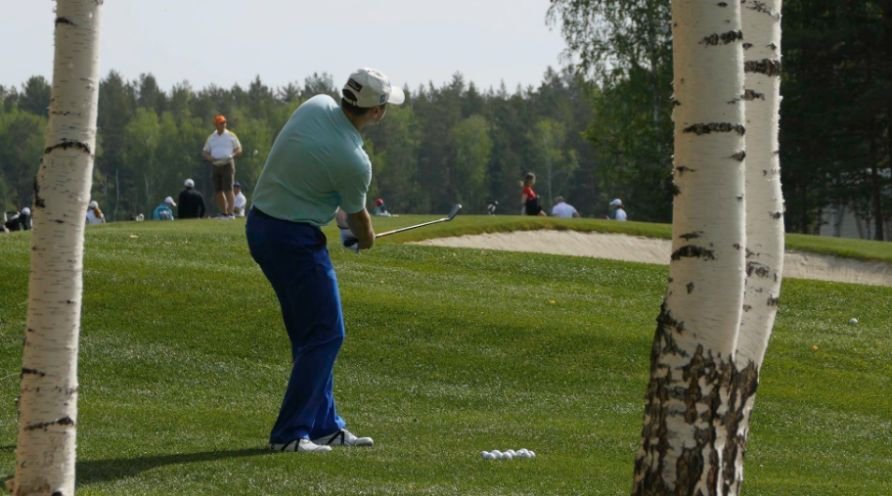
I used to glance at a scorecard, check the par and total yardage, and assume I knew how challenging the round would be. Then I encountered shorter layouts that punished every inaccurate shot and longer courses that offered generous landing areas. That experience taught me that how golf course difficulty is measured involves much more than distance.
Course Rating, Bogey Rating and Slope Rating provide the official foundation. Rating teams also examine elevation, wind, forced carries, fairway width, rough, bunkers, trees and green characteristics. Understanding these measurements can help any golfer compare courses, select suitable tees and establish realistic expectations before the first shot.
The Short Answer: Three Ratings Measure Difficulty
Golf course difficulty is primarily evaluated through three connected figures:
Course Rating estimates the score a scratch golfer should produce while playing well under normal conditions.
Bogey Rating estimates the corresponding score for a bogey golfer. For rating purposes, this model generally represents a male golfer with a Handicap Index around 20.0 or a female golfer around 24.0.
Slope Rating compares the two model players. It shows how rapidly the course becomes more challenging as playing ability decreases.
These figures are assigned to individual sets of tees, not just the course as a whole. Moving forward or backward changes the length, angles, landing zones and influence of hazards. Consequently, each tee set can have a different Course Rating and Slope Rating.
Course Rating Explained

Course Rating measures the difficulty of a particular set of tees for a scratch golfer under normal course and weather conditions. It is expressed in strokes to one decimal place.
Suppose a par-72 layout has a Course Rating of 73.4. A scratch golfer would be expected to score approximately 73 or 74 during a good round. The course therefore plays more difficult than its par suggests for that model player.
If the same layout had a Course Rating of 69.8, it would be expected to play below par for a scratch golfer. This illustrates why par alone cannot provide an accurate comparison.
Why Par Does Not Measure Total Difficulty
Par indicates the expected number of strokes needed to complete each hole. It is influenced heavily by hole length, but it does not fully account for narrow landing areas, severe bunkers, troublesome rough or difficult approach angles.
Two par-72 courses can present dramatically different challenges. Course Rating supplies the more meaningful scoring benchmark for accomplished golfers.
What Bogey Rating Reveals
Bogey Rating applies a similar evaluation to a higher-handicap model player. Because this player generally hits shorter and less accurately than a scratch golfer, hazards can affect the expected score differently.
A forced carry may be almost irrelevant to a powerful, accurate player but extremely costly to someone who cannot consistently carry the required distance. Deep rough, narrow landing zones and difficult recovery shots can create the same separation.
Bogey Rating is not always displayed prominently on scorecards. Nevertheless, it is essential because the difference between Bogey Rating and Course Rating produces Slope Rating.
How Slope Rating Works
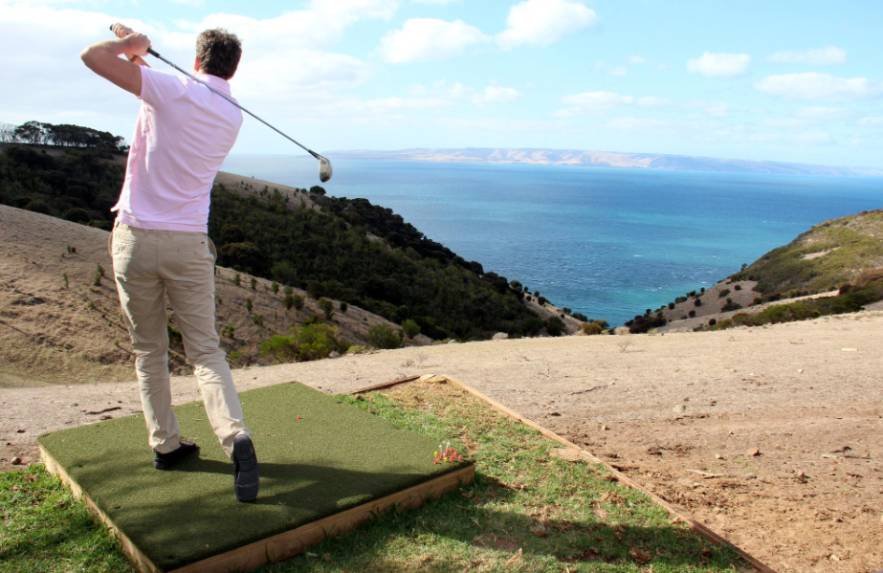
Slope Rating measures relative difficulty rather than predicting a score. Its official range is 55 to 155, while 113 represents standard relative difficulty.
A number above 113 means the challenge generally increases more sharply for higher-handicap golfers relative to scratch golfers. A number below 113 indicates a smaller difference between the two groups.
A higher Slope Rating does not automatically mean that a course is the hardest for every player. A layout could have a demanding Course Rating but a moderate Slope Rating if scratch and bogey golfers are affected in relatively similar ways.
For the most accurate assessment, examine Course Rating and Slope Rating together.
A Simple Rating Example
Imagine two par-71 courses that both carry a Course Rating of 71.0. Course A has a Bogey Rating of 92.5 and a Slope Rating of 116. Course B has a Bogey Rating of 95.5 and a Slope Rating of 132.
Both courses present comparable expected difficulty for a scratch golfer. However, Course B creates substantially more trouble for the bogey player. Forced carries, severe rough or hazards positioned near common misses could explain the difference.
How Rating Teams Evaluate Effective Playing Length
The number printed as yardage is only the starting point. Qualified rating teams determine effective playing length by adjusting measured distance for conditions and design features that make holes play longer or shorter.
A course with steep slopes and uneven terrain can also demand frequent setup adjustments from the golfer. Building a reliable stance through how to improve golf posture at address can make it easier to maintain balance and alignment when playing from challenging lies.
Roll
Firm, level fairways can produce considerable roll. Soft turf or uphill landing areas reduce it.
Elevation and Altitude
Uphill shots play longer, while downhill shots may play shorter. At higher altitudes, reduced air resistance allows the ball to travel farther.
Wind
Normal prevailing wind strength and direction can affect the practical length and difficulty of exposed holes.
Doglegs and Forced Lay-Ups
A dogleg may prevent a player from using full driving distance. Water, bunkers or other crossing hazards can also force a conservative lay-up.
The 10 Obstacle Factors

In addition to effective length, rating teams evaluate 10 obstacle categories on every hole for scratch and bogey players:
- Topography, including uneven lies and stance difficulty
- Fairway width and the proximity of surrounding trouble
- Green target size, visibility and receptiveness
- Recoverability and the severity of rough
- Bunker size, depth and location
- Crossing obstacles that affect the intended line
- Lateral obstacles beside the playing corridor
- Trees that block shots or complicate recovery
- Green surface speed, contour and difficulty
- Psychology created when several hazards combine
Bunkers can influence difficulty through their depth, positioning and the shots required to escape them. Once the shot is complete, golfers should also understand how to rake a golf course bunker so footprints and club marks do not create additional challenges that were never part of the course design.
These factors are evaluated around the expected landing zones and the trajectory of a golf ball for each model player. That separate analysis explains why the same bunker or penalty area may influence Bogey Rating more than Course Rating.
Course Rating Versus Stroke Index
Stroke Index is commonly mistaken for another course-difficulty measurement. It actually determines where handicap strokes are allocated during a round.
The hole marked Stroke Index 1 is not necessarily the most technically difficult hole in every format. Stroke allocation may also be arranged to distribute handicap strokes fairly across both nines. It should not be used as a substitute for Course Rating or Slope Rating.
Why Daily Conditions Can Feel Different
Official ratings assume normal playing and weather conditions. A course may feel considerably harder when strong wind, wet turf, thick rough, firm greens or demanding hole locations are present.
Physical readiness can also influence how difficult a round feels. Golfers returning after soreness or a minor strain may benefit from understanding muscle recovery for golf injury before playing a demanding layout, especially when long carries, uneven lies and repeated full swings are involved.
These temporary circumstances do not normally rewrite the permanent ratings. Handicap systems may use a separate playing-conditions adjustment when submitted scores show that conditions were unusually easy or difficult.
Frequently Asked Questions
1. What is considered a difficult Slope Rating?
There is no universal boundary, but a rating above 130 generally signals a substantial relative challenge for bogey and higher-handicap golfers. Course Rating should also be considered.
2. How often is a course rated again?
Established courses should normally be rerated at least once every 10 years. New courses may require another rating sooner because their playing characteristics can change after construction.
3. Why does every tee have different ratings?
Each tee changes distance, shot angles, landing zones and required carries. Therefore, every rated tee can produce its own Course Rating and Slope Rating.
4. Is yardage the best indicator of difficulty?
No. Effective playing length, hazards, landing-area width, recovery demands and green characteristics can make a shorter layout harder than a longer one.
Final Thoughts
I now treat par and yardage as starting points rather than complete answers. Course Rating tells me what a strong scratch player might score, while Slope Rating shows how sharply the challenge grows for less consistent golfers.
Before choosing a course or tee, I would check both figures and consider forced carries, fairway width and penalty areas. These details create a far more realistic picture of the round ahead—and can prevent a supposedly relaxing game from becoming an unexpectedly punishing test.