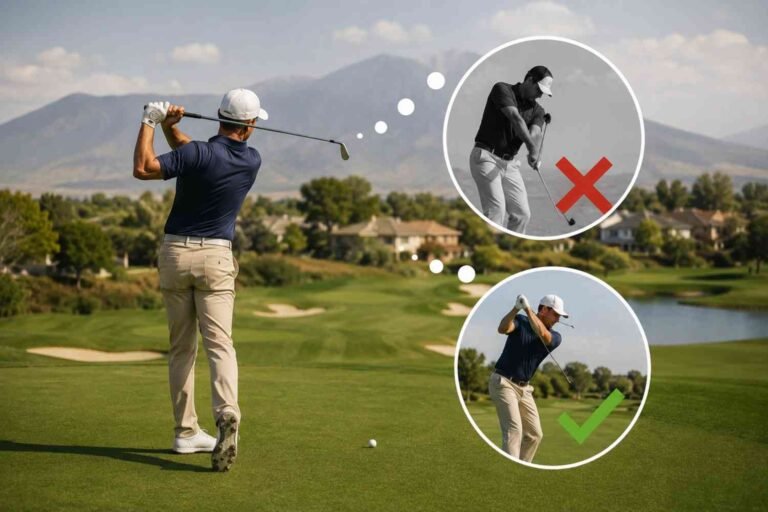

I used to think lowering my score meant fixing my swing first. But after enough rounds, I noticed something else: I could hit a solid drive and still make bogey because I chose the wrong target, attacked a pin I had no business attacking, or tried to rescue a bad lie with a shot I rarely pulled off. The swing was not always the problem. The decision before it often was.
I also noticed that my better rounds felt surprisingly calm. I was not making birdies on every hole or hitting every fairway. I was simply giving myself more room to miss. Once I started looking at hazards, landing areas, pin positions, and my own tendencies before choosing a shot, I stopped giving away as many easy strokes.
Build Your Strategy Around Your Actual Game
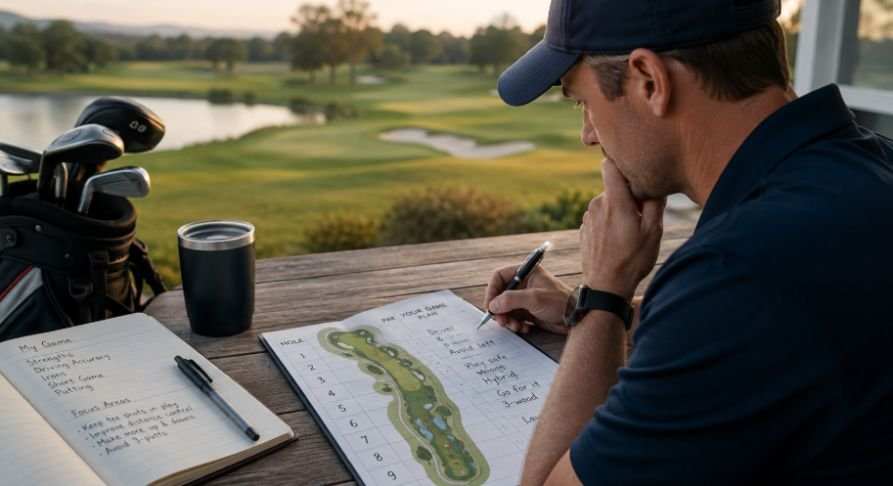
Start with honest information about your game. Know your normal carry distances, typical shot shape, and common miss.
If your driver normally carries 240 yards but occasionally reaches 265, build your plan around 240. If your irons tend to miss right, give that pattern some room.
This is one reason golf swing analysis at home can help. A few recorded swings can reveal patterns in alignment, setup, or ball flight. The goal is to learn which shot you can trust.
Use the Tee Box to Create a Better Angle
The tee box gives you more control than many golfers realize. If trouble sits along the left side, moving toward the right side can create a better angle and encourage a line away from the hazard. The reverse can work when trouble is on the right. GOLF.com has also highlighted tee-box positioning as a useful tactic.
Then choose the club based on the next shot. A driver may be ideal when it gives you a shorter approach and enough room for your normal miss.
The goal is not simply to hit the shortest club. It is to choose the club that gives you a good combination of distance, accuracy, and a manageable next shot.
Stop Hunting Every Pin
The flag is tempting because it gives you a clear target. It is also an easy way to turn a normal approach into a difficult recovery.
Look at the green as a whole. If the pin is tucked beside a bunker or close to the edge, identify the larger safe area and aim there. The center of the green is a useful default because a poor strike can still leave you putting rather than scrambling.
Account for your natural miss, too. If you fade the ball, do not choose a target that leaves the entire right side exposed. Recent GOLF.com instruction similarly emphasizes smart targets, realistic carry numbers, and playing away from trouble.
Plan for the Shot After This One
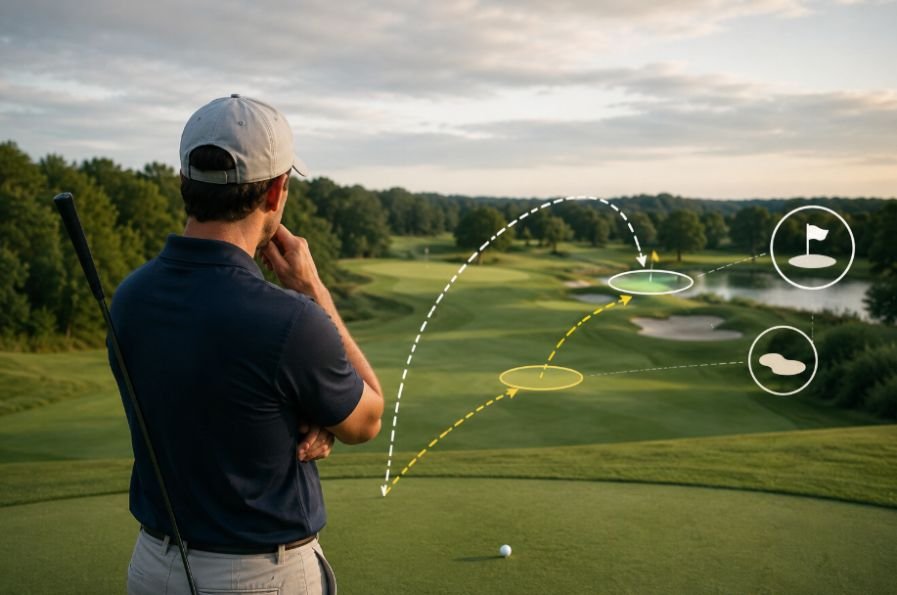
A good decision should make the next shot easier whenever possible.
Par 5s show this clearly. If reaching the green in two requires a long club from a poor lie with water guarding the landing area, forcing it may not be your best option. A layup that leaves a comfortable wedge can create a better birdie or par opportunity.
If you are much more comfortable from 100 yards than 55, keep that preference in mind when choosing a layup distance. Your best number is the one where you consistently produce playable shots.
Take the Safe Miss When Risk Is Too High
A bad shot does not have to become a bad hole.
If your ball finishes behind a tree, in thick rough, or near a penalty area, ask what you can realistically execute. If you rarely pull off a recovery shot, it is usually a poor percentage play.
Getting back into position can feel frustrating, but accepting bogey is often better than chasing par and turning the hole into a triple. GOLFTEC’s January 2026 course-strategy advice also focuses on reducing big mistakes and managing risk for high-handicap golfers.
Adjust for Wind, Lie, and Course Conditions
A yardage number is only the beginning. The lie, wind, and slope can change how a shot plays. A 150-yard approach from a clean fairway lie is different from 150 yards in deep rough. When carrying a hazard, use carry distance rather than total distance to decide whether you have enough club.
Practice the Decisions, Not Just the Swing
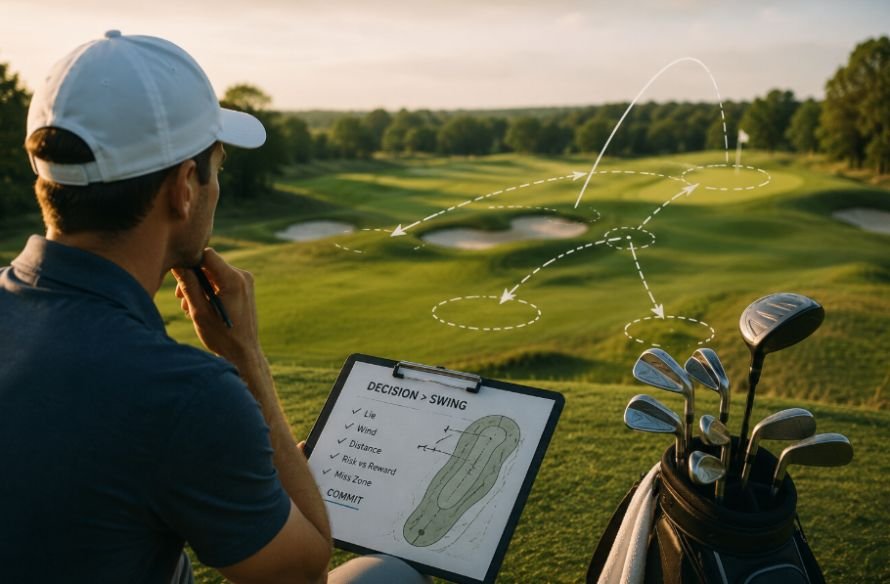
Range practice can improve contact, but course management improves when you practice situations that resemble actual golf.
Change distances and targets instead of hitting the same club repeatedly. Pick a landing area, decide where your miss should go, and practice choosing the safer option when trouble sits nearby.
For indoor golfers, golf simulator practice techniques can make that process more realistic. Play holes with different pin locations, practice layups, use uncomfortable approach distances, and deliberately choose conservative targets. This makes decision-making part of practice rather than something you only think about after a mistake.
Use Technology to Understand Your Tendencies
Technology can make course management more precise when it answers practical questions.
A launch monitor can establish carry distances. GPS and shot tracking can reveal hazards and problem clubs.
Use the numbers to change a decision. Wider dispersion matters when the fairway narrows, while a shorter average carry matters when water is in play.
That is the practical value of using technology to make golf practice more effective. Good data should help you understand your game well enough to make calmer choices on the course.
Frequently Asked Questions
1. What is the biggest course management mistake golfers make?
One of the biggest mistakes is aiming at the flag without considering the surrounding trouble. A safer target can leave a much easier second putt or recovery.
2. Should I always use my driver on par 4s?
Not always. Driver often makes sense when distance creates an easier approach, but a shorter club can be smarter when it keeps a major hazard out of play.
3. How should I choose where to aim?
Look for the widest useful area and account for your normal miss. Your target should give you room for a slightly imperfect shot rather than requiring perfect execution.
4. Can course management lower my score without changing my swing?
Yes. Better targets, club selection, risk management, and recovery decisions can reduce penalty strokes and blow-up holes even when your swing stays the same.
Why Better Decisions Add Up
Course management rarely produces one dramatic moment. Instead, you finish a round with fewer penalty strokes, fewer impossible recovery attempts, and more approaches from comfortable positions. Those choices can remove strokes over time.
You will still hit poor shots. The goal is to stop one poor shot from deciding the entire hole. Play for the largest safe areas, trust your normal shot pattern, and give your next shot a chance to be easier.