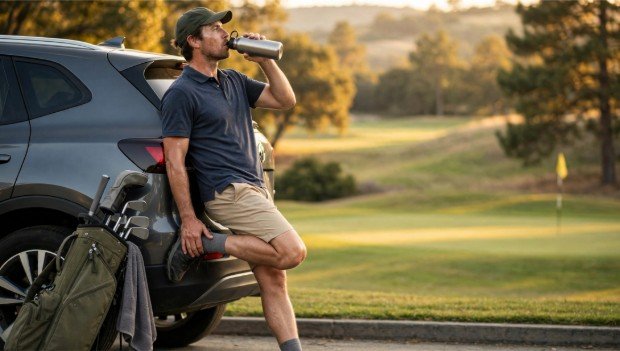
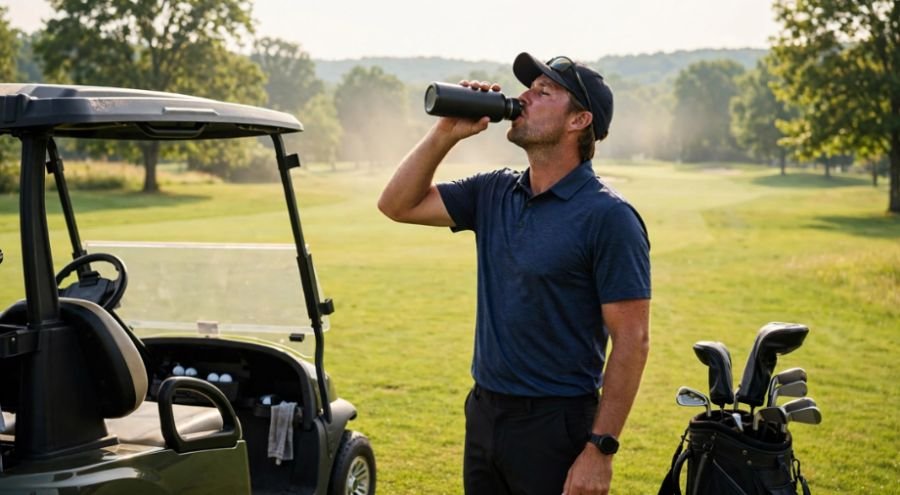
Hot-weather golf can wreck my back nine before my swing ever feels tired. Focus fades, decisions get sloppy, and a normal walk suddenly feels much harder. The best golf hydration tips for hot weather are simple: start hydrated, drink on a schedule, replace meaningful sweat losses, and recognize when heat has become a safety problem.
A full round can keep a golfer outside for hours in direct sun and humidity. CDC guidance for hot-weather activity recommends drinking more than usual and not waiting until thirst becomes strong before taking fluids.
Start Hydrating Before the First Tee
When I plan for a hot round, I never want the first tee to be the first time I think about water. I drink consistently the day before, then include water with breakfast and during the drive to the course.
Sports-medicine guidance supports starting exercise well hydrated rather than trying to repair a fluid deficit after activity begins. ACSM recommends beginning pre-hydration several hours before exercise when extra fluid is needed.
If heavy sweating looks likely, I pair fluids with normal sodium-containing foods or an electrolyte drink. Sodium can help support fluid balance during prolonged exercise in heat.
For a broader pre-round strategy, my guide to how to stay hydrated during a round of golf is a useful next read.
I also chill my drinks before leaving home. A half-frozen bottle stays cold deeper into the round and can make regular drinking more appealing on brutally hot afternoons. Golf-specific hydration guidance recommends the same simple trick.
Use a Hole-by-Hole Hydration Schedule

One of my most practical golf hydration tips for hot weather is to make the scorecard my drinking reminder.
Round length also affects how much fluid I need to carry. Knowing how long it takes to play 9 holes of golf helps me estimate how long I may be exposed to heat, especially when course traffic or a slower pace stretches the round.
My Scorecard Sip Loop
Every time I record a score, I take several sips. If conditions are severe, I drink again around the next tee.
That removes the biggest weakness in most hydration plans: remembering to follow them.
Recent golf hydration advice recommends linking a few sips with routine actions such as entering a score. I like the method because it requires no timer, app, or complicated calculation.
How Much Should I Actually Drink?
I do not treat one fluid target as perfect for every golfer. Sweat losses change with temperature, humidity, body size, clothing, walking pace, and heat acclimatization.
NIOSH uses roughly 8 ounces every 15–20 minutes as a practical benchmark for moderate activity in heat. It also warns against excessive fluid intake and generally recommends staying below six cups per hour.
I treat that as context, not a compulsory golf quota.
A more personal check is body weight. Weighing myself before and after a comparable hot-weather practice session can give a rough estimate of net fluid loss. Sports hydration research stresses individualized replacement because both dehydration and overhydration can cause problems.
That personalization is what makes these golf hydration tips for hot weather more useful than simply carrying the largest water bottle I can find.
Golf Hydration Tips for Hot Weather: Water vs. Electrolytes
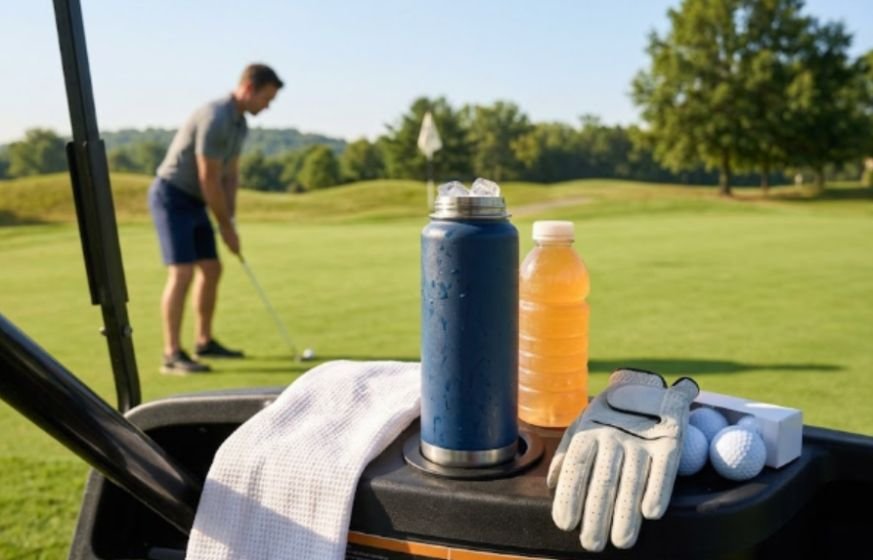
The water-versus-electrolyte debate becomes easier when I consider how long I will be sweating.
When Plain Water Makes Sense
For a mild morning round or shorter heat exposure, water combined with normal meals may cover my needs. NIOSH notes that regular meals can replace electrolytes for many people.
When Electrolytes Earn Their Place
If I am walking 18 holes in strong heat and sweating for several hours, I am more likely to add an electrolyte drink. Sweat contains sodium and chloride, so prolonged sweating increases electrolyte losses.
Visible salt marks on my shirt or cap are also a useful practical clue that I am losing plenty of salt.
I do not automatically insist on zero-sugar electrolyte drinks. Carbohydrate can help fuel prolonged activity, especially when food intake is limited. ACSM notes that carbohydrate-electrolyte beverages can provide benefits over water alone in some exercise situations.
Alcohol does not make my hydration rotation. Heat guidance recommends avoiding alcohol during prolonged hot-weather exposure.
Eat Your Hydration Too
My golf hydration tips for hot weather work better when food supports the bottle.
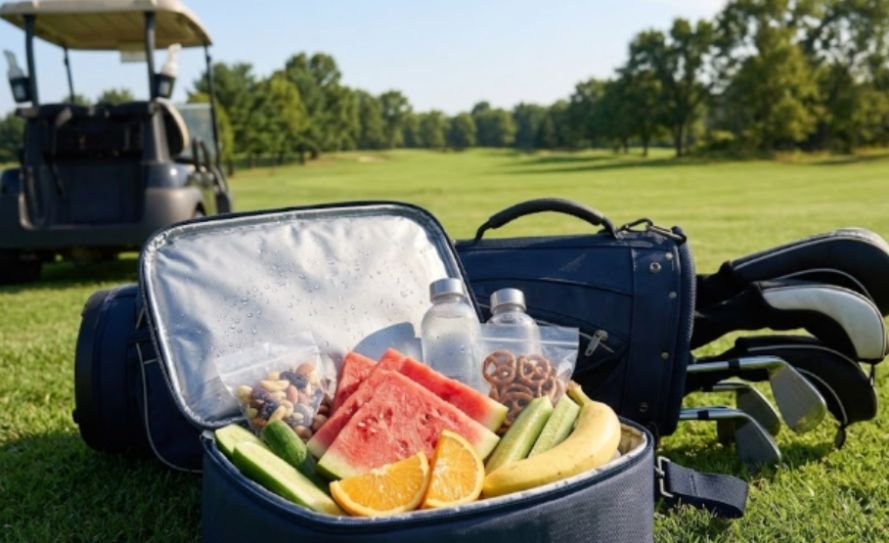
Watermelon, oranges, cucumber, and similar foods contribute both fluid and easy-to-eat carbohydrates. A banana provides carbohydrate and potassium. Pretzels or a small amount of trail mix can add sodium and energy.
I prefer small amounts through the round instead of one oversized meal at the turn. Golf nutrition guidance similarly favors regular fueling during long rounds rather than waiting for energy to crash.
For a complete fueling strategy, I would link this section to what to eat during 18 holes of golf.
Golf Hydration Tips for Hot Weather: Quick Reference
I use this table as a simple starting framework rather than a rigid drinking prescription.
| Round phase | My trigger | Practical action |
| Day before | Regular meals | Drink consistently rather than water-loading at night |
| Before tee time | Breakfast and drive | Drink water; consider electrolytes for heavy sweating |
| Holes 1–6 | Every score entry | Take several steady sips |
| Holes 7–12 | Heat builds | Continue fluids and add electrolytes when useful |
| Holes 13–18 | Concentration fades | Keep drinking instead of saving water |
| Post-round | Clubs packed | Replace remaining fluid and electrolyte losses |
The most important feature is consistency. Small drinks throughout the round usually fit golf better than suddenly chugging a large bottle after realizing I am behind.
Make the Course Work in My Favor
Among my golf hydration tips for hot weather, changing how I play the course can matter almost as much as changing what I drink.
I choose an early tee time when possible. I use shade while playing partners hit, wear loose lightweight clothing, and avoid unnecessary exertion during severe heat.
On especially hot days, riding instead of walking can reduce the physical load of the round. Golfers who regularly prefer that option may also want to compare golf cart prices when deciding whether owning a cart makes sense for frequent play.
CDC recommends scheduling exercise outside the hottest part of the day when possible, pacing activity, and choosing light, breathable clothing.
I also pay attention to heat index, not just air temperature. Humidity changes how effectively sweat can cool the body. NIOSH notes that full sunshine can increase heat-index exposure by as much as 15°F compared with shaded conditions.
If I am walking and carrying my bag, I also plan lighter foods using best snacks for walking 18 holes rather than loading the bag with heavy meals.
Signs of Dehydration and Heat Illness on the Golf Course
No list of golf hydration tips for hot weather should imply that enough water makes extreme heat harmless.
Headache, dizziness, weakness, nausea, unusually heavy sweating, and muscle cramps can signal heat stress. CDC guidance says to stop activity and get somewhere cool if weakness or faintness develops.
Confusion, altered mental status, slurred speech, seizures, loss of consciousness, or very high body temperature can indicate heat stroke. Heat stroke is a medical emergency. CDC advises calling 911 and beginning rapid cooling while help arrives.
My stop rule is therefore simple: if symptoms suggest the body is losing its battle with the heat, the scorecard stops mattering.
People with medical conditions or medications that affect hydration, sodium balance, sweating, or heat tolerance should follow individualized clinical advice rather than copying a general fluid plan. Certain medications can increase heat-related illness risk.
The Back Nine Does Not Get to Bully Me
My summer strategy is boring on purpose: begin hydrated, sip by routine, replace electrolytes when sweat losses justify them, eat steadily, and respect dangerous heat.
The smartest golf hydration tips for hot weather turn drinking into part of my round instead of an emergency response somewhere around the 15th tee.
Before the next scorching tee time, I prepare cold fluids the night before and make one rule non-negotiable: score down, bottle up.
Frequently Asked Questions
1. How much water should I drink during 18 holes in hot weather?
Drink small amounts regularly and adjust for your sweat rate, heat, body size, and activity rather than forcing one universal volume.
2. Are electrolytes better than water for golf in summer?
Water may cover lighter exposure, while electrolyte drinks become more useful when heavy sweating continues for several hours.
3. What should I drink before playing golf in extreme heat?
Start well hydrated with water and normal meals, then consider electrolytes when prolonged or heavy sweating is expected.
4. Which golf hydration tips for hot weather matter most?
Start before tee time, sip consistently, replace substantial electrolyte losses, manage sun exposure, and stop playing when heat-illness symptoms appear.