

I used to treat a windy round almost like a normal round with a little extra club. That approach usually lasted until the first strong gust moved an otherwise solid iron well off target. I started noticing that the biggest mistakes were rarely caused by the wind alone. They came from trying to fight it, choosing the wrong club, or making a normal swing when the conditions called for something more controlled.
Once I began treating wind as part of the shot instead of an obstacle to overpower, the game became much easier to manage. I stopped chasing my usual distances and started paying more attention to trajectory, balance, contact, and where I wanted the ball to finish. A windy day can still be difficult, but a few smart adjustments can make your shots far more predictable.
Read the Wind Before You Pick a Club

The first mistake is making a club selection based only on the number shown by your rangefinder. Wind can change how that number plays, and the breeze around your body may not tell the whole story.
Look at treetops, flags, grass, and other objects above the ground. A full golf shot can climb high enough that the wind affecting the ball is stronger than what you feel at address. Checking the conditions around the height of your expected ball flight can give you a better idea of what the shot will actually face.
Then separate the situation into headwind, tailwind, and crosswind. Each requires a different decision. Into a strong headwind, extra club is often better than extra effort. Downwind, the challenge can shift toward controlling distance and rollout. A crosswind adds another layer because your starting line and natural curve both matter.
Take More Club and Swing Smoother
A strong headwind can make golfers instinctively swing harder. That often creates the opposite result.
Adding speed can increase spin and launch, allowing the ball to climb into the wind and lose momentum. A smoother swing with more club can produce a lower, more controlled flight. Recent instruction also recommends taking additional club and maintaining a controlled tempo instead of trying to overpower a headwind.
The exact number of extra clubs should depend on the wind, your ball flight, and how well you normally strike the club. In a significant headwind, two or even three clubs may sometimes be reasonable. Do not treat that as a fixed formula, though. Watch what the wind is doing during the round and adjust based on the actual results you are seeing.
This approach also connects with how to improve driving accuracy and distance because better driving in difficult conditions is not always about adding speed. A balanced swing that produces a predictable launch can be far more valuable than one that produces maximum distance only when the weather cooperates.
Learn the Knockdown Shot
A reliable knockdown shot can become one of the most useful tools in windy conditions. It is especially helpful when you need to keep an iron or wedge below the strongest part of the wind.
Start with a slightly back ball position and a little less loft at impact. Grip down on the handle and keep your weight stable. Make a controlled swing and finish shorter than you normally would. The shorter finish is not about stopping the club artificially. It simply encourages a more compact motion and helps prevent the ball from climbing too high.
The shot should still feel like a proper golf swing. If you try to steer the club or deliberately hold the face shut, contact can suffer. Solid contact matters even more in wind because a mishit can exaggerate the effect of the conditions.
Adjust Your Aim for Crosswinds
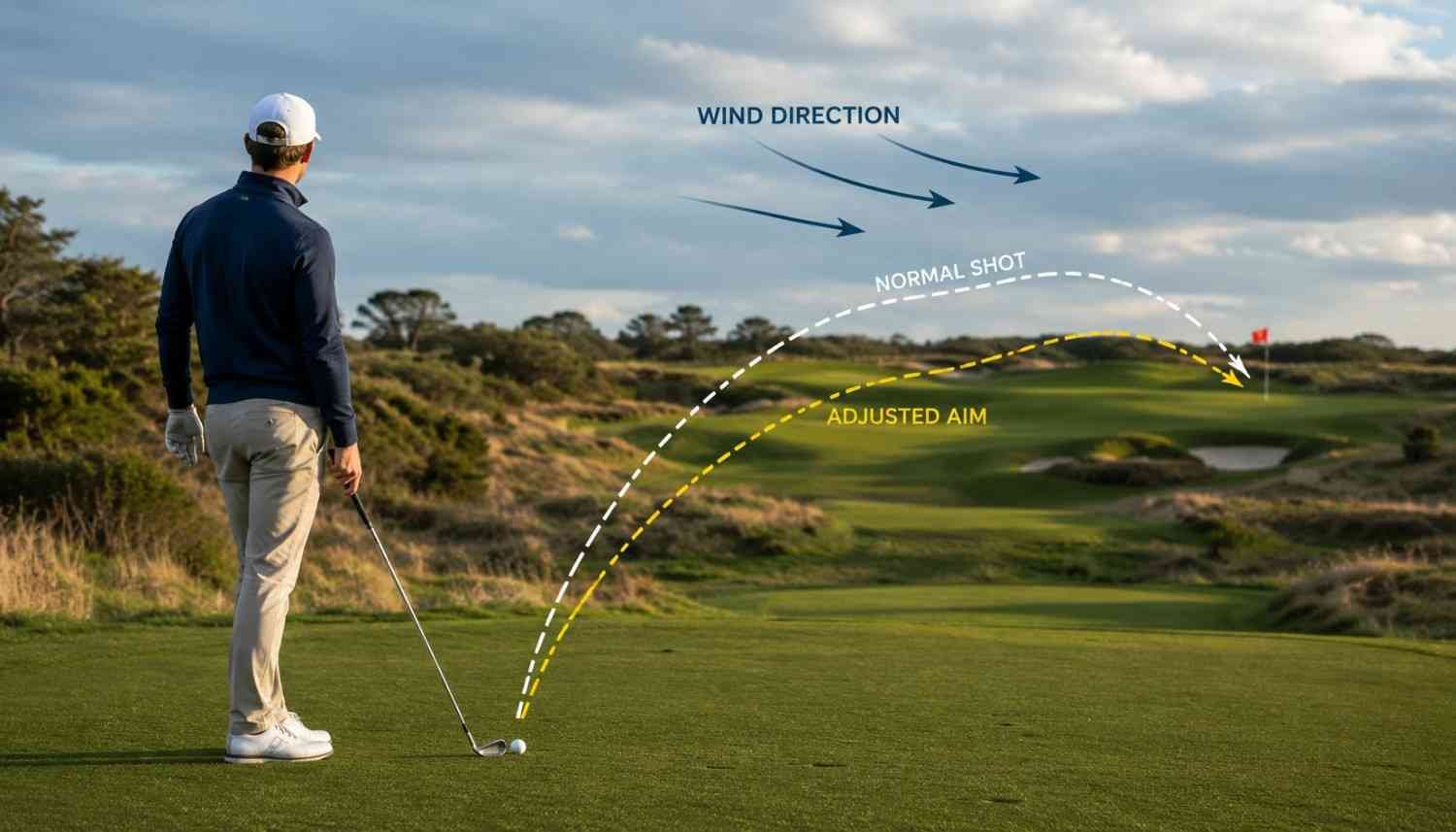
Crosswinds require a different kind of decision. The wind may push the ball away from your intended target, but your existing shot shape can either work with that breeze or against it.
If you are playing a left-to-right wind and normally fade the ball, you need to consider how those two influences combine. Trying to start the ball directly at the target may leave you watching it drift farther than expected. A golfer with a reliable shot shape can sometimes use that shape to work against the wind and reduce the overall movement.
The important part is committing to the starting line. Pick the direction where you want the ball to begin, account for the wind, and make your normal controlled swing. Constantly changing the target while standing over the ball usually creates more uncertainty than the wind itself.
Stay Patient When the Wind Gets Uncomfortable
Windy golf can become as much a mental challenge as a technical one. A ball that normally carries 160 yards may suddenly come up short, and a familiar club may produce an unfamiliar result. That can make golfers start changing everything at once.
Do not let one poor result convince you that your entire strategy is wrong. Look at the shot, check the conditions, and make one adjustment.
Your pre-shot routine becomes especially useful here. Pick the target, choose the club, visualize the trajectory, and commit. This is where golf tips that help you play better under pressure can make a difference because windy conditions reward golfers who stay patient instead of reacting emotionally to every gust.
A good windy round may not produce your normal number of greens in regulation. That is fine. The goal is to avoid compounding mistakes. If the conditions make a certain pin too risky, take the larger part of the green. If a recovery shot has little margin for error, take the safer route.
Make Centered Contact Your Priority
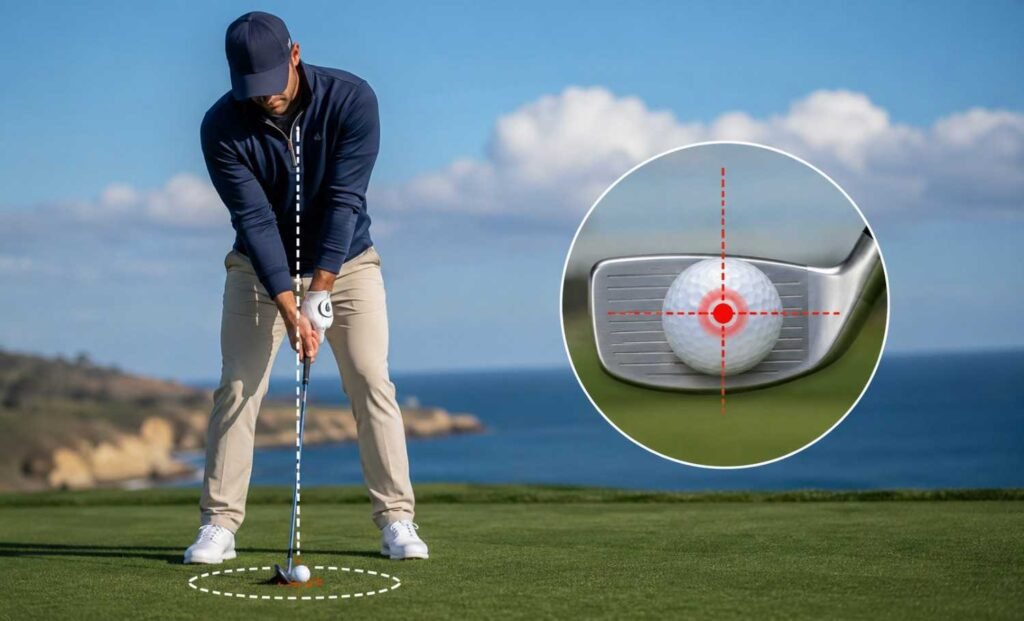
Wind magnifies poor contact. A shot struck low on the face, toward the toe, or toward the heel can already have an unpredictable flight before the weather gets involved.
That makes centered contact one of the best skills to focus on when conditions become difficult. A smooth tempo and stable base can help you avoid excessive movement. Choking down slightly can also improve control and make it easier to find the middle of the clubface.
Practicing shorter swings is useful because it teaches you to create consistent contact without relying on maximum effort. Work on different trajectories and clubs, then pay attention to where the ball starts and how it flies.
For golfers who struggle with inconsistent contact, how to improve centered strike in golf becomes especially relevant on windy days. A more repeatable strike gives you a more predictable launch, which makes every other wind adjustment easier to judge.
Use the Ground When the Air Is Unpredictable
Not every windy shot needs to fly all the way to the target. Around the green, a lower shot that lands early and rolls can sometimes be much easier to control than a high wedge exposed to strong gusts.
A bump-and-run with a lower-lofted club can reduce the amount of time the ball spends in the air. It also gives you a larger margin for error when the wind is moving unpredictably.
Pay attention to rollout during the first few holes. Downwind chips and pitches can release more than expected, while a shot into the wind may behave differently. Let the conditions teach you something early in the round, then use that information later.
Practice Wind Control Before the Wind Arrives

Wind skills are easier to trust when you have practiced them before needing them on the course. Spend some range time hitting three-quarter shots, lower-flighted irons, controlled drives, and different starting lines.
Do not judge the session only by distance. Look at trajectory, strike quality, balance, and how consistently the ball starts where you intended. The more comfortable you become with changing your flight and tempo, the less dramatic a windy forecast will feel.
The best wind technique is not one perfect swing. It is the ability to make small, repeatable changes while keeping your decision-making simple.
FAQs: Golf Techniques for Windy Conditions Every Golfer Should Know
1. Should I swing harder when hitting into the wind?
No. A harder swing can add spin and send the ball higher, allowing the wind to affect it more. Taking extra club and making a smoother swing is usually easier to control.
2. How far should I move the ball back?
Only slightly. Moving it a little back can help produce a lower flight, but moving it too far can change contact and launch more than you want.
3. What is the best shot for strong wind?
A controlled knockdown is one of the most useful options because it keeps the ball lower and limits the wind’s influence. It still requires solid contact and balance.
4. How should I play a crosswind?
Start by identifying your natural shot shape and the direction of the wind. Choose a starting line that accounts for both, then commit to the shot rather than changing your aim during the swing.
Why Wind Can Make You a Better Golfer
Playing in strong wind forces you to pay attention to parts of the game that are easy to ignore in calm weather. You have to think about trajectory, contact, club selection, balance, and target selection instead of relying on one familiar swing for every situation. Those skills can improve your decision-making even when the weather becomes calm again.
You cannot control the wind, but you can control how you respond to it. Take the right club, make a balanced swing, and give yourself room for the conditions to do what they do.