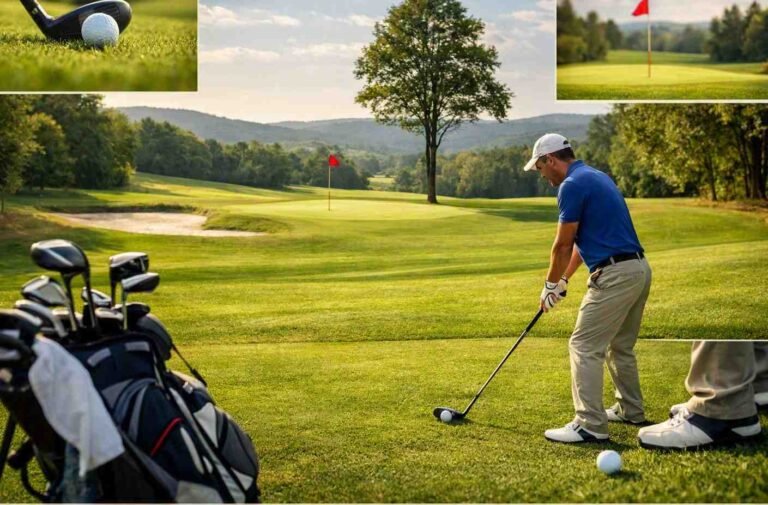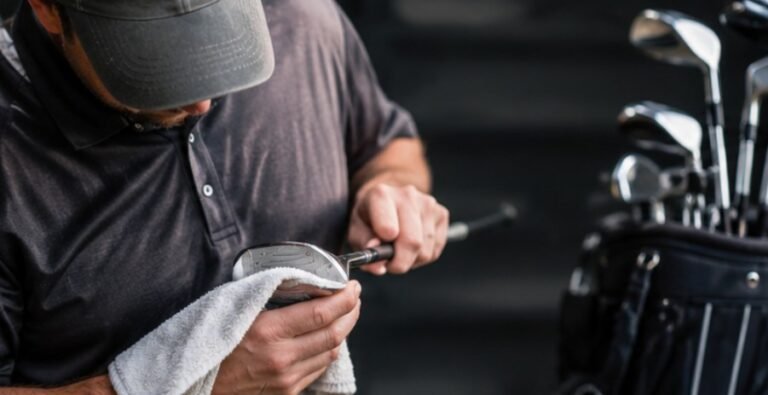
Watching golf pros make perfect swings always looks effortless. After spending time on the course and missing more shots than expected, one thing became obvious: the fastest way to improve was to practise golf at home consistently. A few simple drills, a little space, and regular repetition can help beginners build confidence, sharpen technique, and enjoy better results without constantly visiting a driving range.
Key Takeaways
- Practise golf at home regularly to build consistency and confidence.
- Simple putting and swing drills improve beginner fundamentals.
- A structured routine works better than random practice sessions.
- Short game practice can lower scores faster than long drives.
- Small daily improvements lead to noticeable results on the course.
More Practice, Less Pressure
A comfortable practice environment helps golfers focus on learning instead of performance. Without distractions from other players, beginners can experiment with drills and build confidence at their own pace.
Better Habits From Day One
Good habits are easier to build than bad habits are to fix. Practicing regularly at home helps reinforce proper mechanics before mistakes become difficult to correct.
Build Your Home Golf Zone
Creating a practical golf setup does not require a huge budget or dedicated studio. Many golfers improve their game with a small indoor area, a garage setup, or a backyard practice station. The goal is to create a safe space where repetition becomes part of the daily routine.
Indoor Golf Practice Area
A spare room, basement, or garage can work well for indoor golf practice. Using foam golf balls and a quality practice mat allows beginners to work on swing mechanics without worrying about damaging walls or furniture.
Backyard Practice Space
A backyard creates more freedom for realistic golf training. Short chip shots, target practice, and controlled swings can help improve accuracy while creating a more course-like experience.
Safety Comes First
Always check for enough clearance before swinging. Using practice balls and securing equipment properly helps create a safer and more enjoyable training environment.
Swing Smarter With Hitting Nets
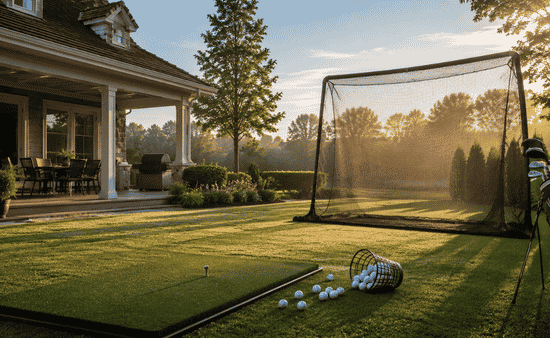
A hitting net is one of the most useful tools for golfers who want to practice full swings at home. It allows players to focus on technique and contact without constantly retrieving golf balls, making practice sessions more efficient.
Choose The Right Net Setup
A quality golf net should be durable and wide enough to catch off-center shots. Many beginners prefer enclosed net systems because they provide extra protection and confidence during practice.
Add A Practice Mat
A golf mat protects flooring and helps recreate different playing conditions. Some mats even simulate fairway, rough, and tee positions, allowing golfers to experience more realistic ball striking scenarios.
Track Progress With Feedback
Consistent feedback helps accelerate improvement. Launch monitors can provide useful data on distance, ball speed, and shot direction, helping beginners understand how swing changes affect performance.
Improve Accuracy With Putting Practice
Putting often determines whether a round feels successful or frustrating. Since putting makes up a large percentage of total strokes, improving this area can produce faster scoring gains than chasing longer drives.
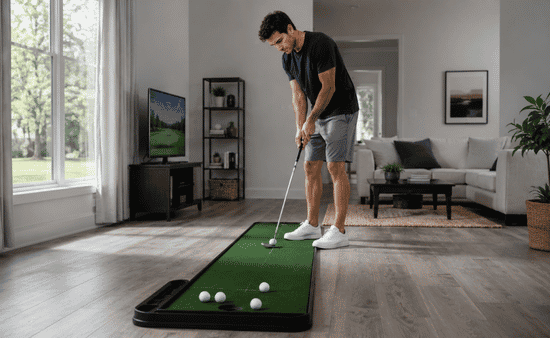
Use A Putting Mat
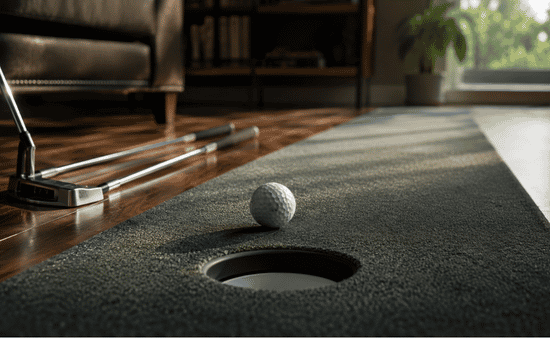
A dedicated putting mat creates a reliable practice surface. Regular use helps golfers develop a repeatable stroke while improving distance control and alignment.
Focus On Speed Control
Distance management is one of the most important putting skills. Practicing putts of different lengths helps golfers learn how much force is needed for various situations.
Master The Gate Drill
The gate drill improves consistency and accuracy. Rolling putts through a narrow target encourages a straighter putting stroke and better clubface control.
Sharpen Your Short Game
The short game often separates confident golfers from frustrated beginners. Fortunately, effective chipping drills require very little space and can be practiced almost anywhere. These drills are especially helpful for golfers learning how to stop chunking chip shots with crisp contact, as they improve ball-first contact, control, and consistency around the greens.
Create Target Challenges
Place a towel, bucket, or small target at different distances. Aiming at specific targets improves precision and helps develop better feel around the green.
Try The Coin Drill
The coin drill is simple but surprisingly effective. Chipping a coin from a carpet encourages crisp contact and teaches proper weight transfer through impact.
Practice Different Landing Spots
Changing targets forces golfers to adapt. This improves touch, distance awareness, and shot selection skills that become valuable during real rounds.
Practise Golf At Home Step By Step
Building a productive routine is easier than many beginners think.

Start by setting up a safe practice area with enough room to move comfortably. Spend a few minutes warming up with slow swings to improve mobility and body awareness. Move into putting practice to sharpen alignment and distance control before working on swing drills.
Next, focus on balance and tempo exercises rather than power. Use a hitting net if space allows and pay attention to consistent contact. Finish the session with short game drills such as target chipping or the coin drill. Repeating this process several times each week helps golfers practise golf at home effectively while building skills that transfer directly to the course.
Common Mistakes To Avoid
Many beginners unknowingly slow their progress by practicing incorrectly. Focusing on quality repetitions instead of hitting hundreds of balls usually produces better long-term results.
Swinging Too Fast
Trying to generate power often leads to poor mechanics. A controlled tempo helps golfers develop consistency before increasing swing speed.
Ignoring The Short Game
Many players spend too much time on full swings. Putting and chipping typically influence scores more than distance alone.
Practicing Without Goals
Random practice often creates random results. Setting specific objectives for each session keeps improvement measurable and focused.
Frequently Asked Questions
1. What is the 70/30 rule in golf?
The 70/30 rule suggests spending about 70 percent of practice time on short game skills such as putting and chipping, while dedicating the remaining 30 percent to full swings and longer shots.
2. What is the 80 20 rule in golf?
The 80/20 rule highlights focusing on the small number of skills that create the biggest results. For most golfers, putting, chipping, and solid contact account for the majority of scoring improvements.
3. Is golf good for spinal stenosis?
Golf may help some individuals remain active and improve mobility, but spinal stenosis affects everyone differently. It is best to consult a healthcare professional before beginning or increasing golf activity.
4. Is golf bad for hip impingement?
Golf can sometimes aggravate hip impingement because the golf swing involves significant rotation. Proper technique, stretching, and medical guidance can help reduce discomfort and lower the risk of further irritation.
From Living Room Swings To Lower Scores
Choosing to practise golf at home is one of the smartest steps a beginner can take. Consistent home training helps build stronger fundamentals, improve confidence, and develop better habits without needing constant trips to the course.
With a simple setup, focused drills, and a realistic routine, golfers can turn spare minutes into meaningful progress and enjoy better performance every time they tee it up.