
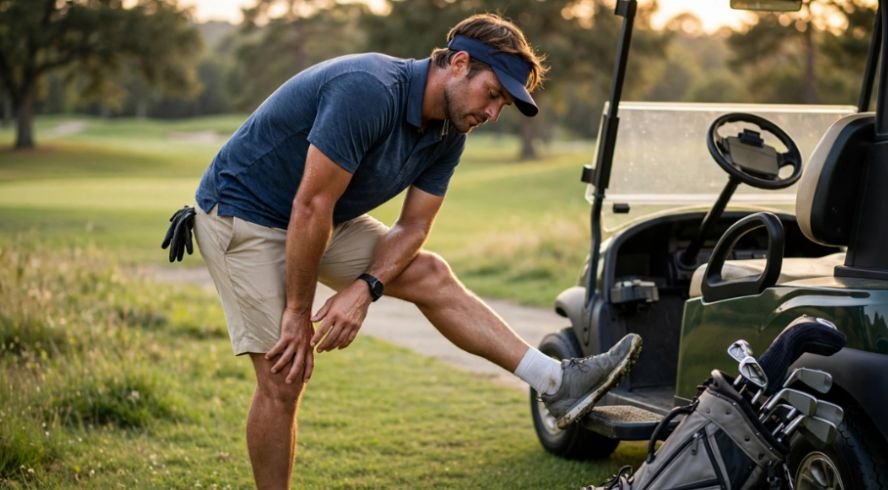
Eighteen holes can leave the hips tight, the upper back stiff, and the legs heavier than the scorecard suggests. I prefer a short post round golf stretching routine for weekend golfers that targets the areas golf loads repeatedly, without turning recovery into another workout.
The goal is simple: let your breathing settle, then use gentle static stretches while your body is still warm. Mayo Clinic advises stretching after exercise, moving slowly, avoiding bouncing, and holding a mild stretch for about 30 seconds.
Quick Reference: 8-Minute Post-Round Routine
| Area | Stretch | Time |
| Upper back | Thoracic open book | 30 sec/side |
| Chest | Standing pec opener | 30 sec |
| Glutes/hips | Cross-legged hip stretch | 30–45 sec/side |
| Hip flexors | Half-kneeling hip flexor | 30 sec/side |
| Hamstrings | Standing hamstring fold | 30 sec/side |
| Quads | Standing quad stretch | 30 sec/side |
| Torso | Seated torso twist | 30 sec/side |
| Upper spine | Foam-roller extension | 5–8 slow reps |
This post round golf stretching routine for weekend golfers takes roughly eight minutes when you move directly from one side to the other.
Why Golfers Feel Tight After 18 Holes
Golf repeatedly loads hip and thoracic rotation. Walking, standing, and bending over putts add fatigue.
Hospital for Special Surgery notes that better hip and thoracic motion can reduce rotation demanded from the lower spine. I therefore prioritize those areas.
Stretching may feel good, but reviews show little meaningful reduction in next-day soreness from post-exercise stretching alone. I treat it as mobility work, not a soreness guarantee.
The Best Post-Round Golf Stretches
Thoracic Open Book
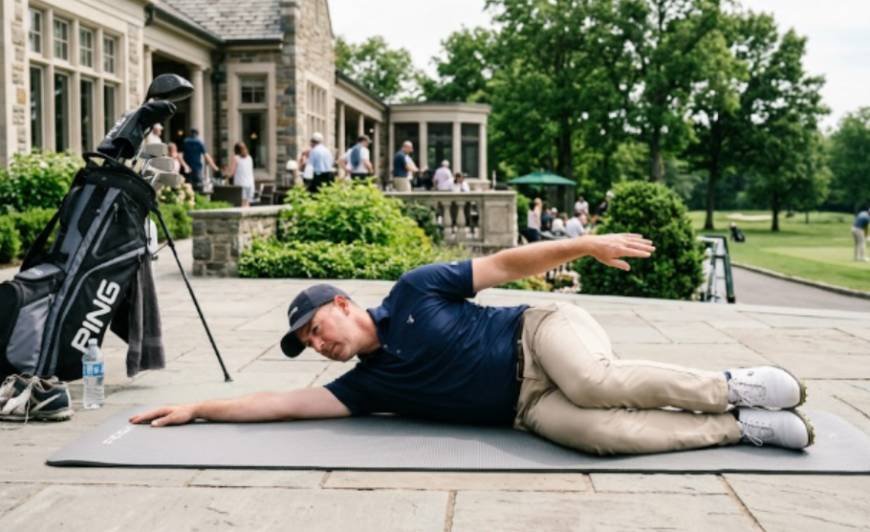
Lie on your side with knees bent and hands stacked. Sweep the top arm open while keeping your knees together. Rotate from the ribs. Hold about 30 seconds per side.
This movement targets the upper-back rotation golfers repeatedly use during the backswing and follow-through. HSS specifically recommends improving thoracic and hip motion to reduce excess demand on the lower spine.
Cross-Legged Hip Stretch
Sit on a bench, place one ankle over the opposite knee, and hinge forward with a long spine. You should feel the glute and deep hip muscles.
Hold for 30 to 45 seconds if comfortable. This move suits a post round golf stretching routine for weekend golfers because it needs no floor space or equipment.
Half-Kneeling Hip Flexor Stretch
Place one knee down and the opposite foot forward. Tuck your pelvis, then shift forward until the rear hip stretches. Hold about 30 seconds per side.
If kneeling feels uncomfortable, perform the same movement from a standing split stance. Keep the stretch gentle rather than forcing extra range.
Hamstrings and Quads

For hamstrings, place one heel forward, soften the knee, and hinge from the hips without rounding your spine.
For quads, use a club or wall for balance. Bring one heel toward your glutes while keeping your knees aligned. Aim for mild tension rather than pulling the foot as high as possible.
Chest Opener and Seated Torso Twist
Clasp your hands behind you and draw the shoulders back and down. Then sit tall, plant both feet, and rotate slowly to each side.
These movements work naturally alongside golf cool down stretches after playing because they address the posture and rotation repeated through a round.
Static After Golf, Dynamic Before Golf
I separate pre-round mobility from post-round recovery. Before teeing off, movement should raise body temperature and prepare the swing pattern. That is where dynamic stretches for golfers before playing fit best.
After golf, slower static holds make more sense. Mayo Clinic recommends gentle stretching without bouncing and stopping before pain. The USGA also encourages golfers to include warm-up, cool-down, and mobility work in their fitness habits.
That difference keeps the post round golf stretching routine for weekend golfers focused on comfortable range rather than speed.
My Green-Yellow-Red Stiffness Check

Weekend golfers often stretch tighter areas harder. I use this rule instead.
Green means normal muscular tightness that eases during a gentle hold. Continue at a comfortable intensity.
Yellow means one side feels unusually restricted or sensitive. Reduce the range and avoid chasing flexibility.
Red means sharp pain, numbness, weakness, swelling, or joint-specific pain. Stop stretching that area and seek appropriate professional guidance if symptoms persist.
This traffic-light check makes the post round golf stretching routine for weekend golfers adaptable instead of rigid. It also gives you a simple way to track recurring problem areas from one weekend to the next.
How Long Should You Stretch After Golf?
For a post round golf stretching routine for weekend golfers, eight to ten minutes is enough. I prioritize six to eight movements and hold most static stretches for about 30 seconds.
Mayo Clinic recommends roughly 30-second holds and advises against bouncing during stretching. A comfortable hip or glute stretch can extend toward 45 seconds, but more intensity does not automatically mean better recovery.
Foam rolling is optional. Use it gently around the upper spine, not as aggressive pressure on the lower back.
What to Do After Stretching
A post round golf stretching routine for weekend golfers is only one part of recovery. Rehydrate, eat normally, and break up long periods of sitting if you already feel stiff.
Recovery also extends beyond what you do immediately after leaving the course. Understanding how golf lifestyle habits influence health, focus, and performance can help you connect hydration, nutrition, sleep, regular movement, and practice habits with how you feel and play from one round to the next.
I also avoid treating a post-round routine as preparation for the next tee time. The goals differ.
If you play early the next day, use a separate golf warm up routine before a morning round rather than repeating long static holds immediately before your first drive.
The most useful post round golf stretching routine for weekend golfers is the one you will actually repeat after weekend rounds.
Frequently Asked Questions
1. How soon should I stretch after golf?
Start once your breathing settles, ideally while your muscles remain warm from the round.
2. Is stretching after golf good for lower-back stiffness?
Gentle hip and thoracic mobility may reduce rotation demanded from the lower spine, but persistent pain deserves assessment.
3. How long should post-golf stretches be held?
About 30 seconds is a practical target for most static stretches.
4. Should a post round golf stretching routine for weekend golfers prevent soreness?
Not necessarily. Evidence suggests post-exercise stretching has little effect on delayed-onset soreness, though it can still support flexibility and comfortable movement.
Your Scorecard Is Done—Your Body Isn’t
I would rather spend eight focused minutes on key areas than do a random 25-minute session. Keep the holds gentle and stop before pain.
For newer weekend players, recovery is only one part of becoming more comfortable on the course. Learning golf etiquette for beginners can also make early rounds less stressful by clarifying pace of play, safety, course care, and the small courtesies other golfers expect.
After your next 18 holes, use this post round golf stretching routine for weekend golfers and note which two areas feel tightest. Give those areas consistent attention across your next three rounds. That simple habit makes recovery easier to track and keeps mobility work connected to how your body responds.