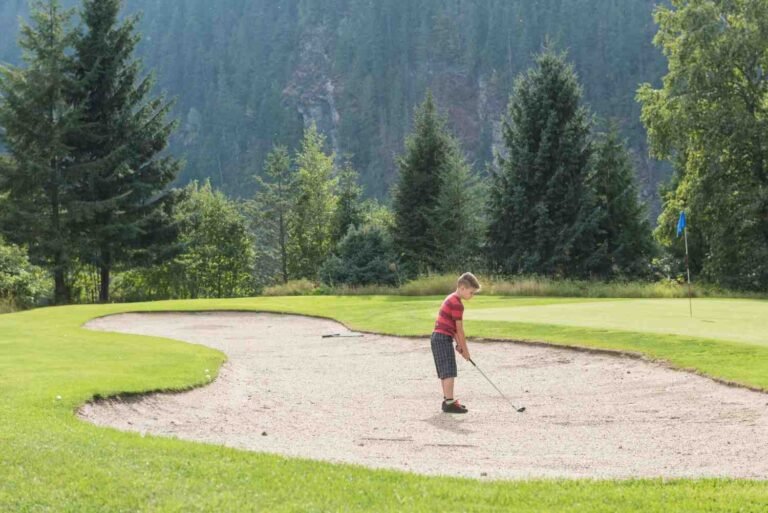

Starting golf on a full 18-hole championship course can feel overwhelming. Long fairways, deep bunkers, water hazards, faster groups, and unfamiliar rules can make a new golfer feel nervous before the first swing.
That is why I always recommend par 3 golf courses for beginners as one of the easiest ways to enter the game.
A Par-3 course keeps golf simple without removing the real experience of playing on a course. Every hole is short enough to give a newer player a fair chance of reaching the green with one good shot.
That reduces the frustration of long distances and helps beginners focus on clean contact, short-game control, putting, pace of play, and basic golf etiquette.
What Is a Par-3 Golf Course?
A Par-3 golf course is a short golf course where every hole is designed to be completed in three strokes. Ideally, you hit one tee shot onto or near the green, then use two putts to finish the hole.
Most beginner-friendly Par-3 holes are around 80 to 150 yards, though some short courses may include holes under 80 yards or stretch closer to 200 yards.
Unlike a standard golf course, you do not face Par-4 and Par-5 holes that demand long drives and multiple full swings before reaching the green. This makes the game feel more manageable for first-time players, juniors, seniors, families, and casual golfers who want to learn without pressure.
In many US cities, Par-3 courses are found at municipal golf facilities, public golf courses, short courses, pitch-and-putt layouts, driving range complexes, and beginner-friendly golf academies. They are often easier to book, quicker to play, and more relaxed than private or championship-style courses.
Why Are Par-3 Courses Perfect for Beginners?
Par-3 courses are perfect for beginners because they remove the most intimidating part of golf: distance. A newer player may struggle to hit a driver far or straight, but that does not matter much on a short course. You can use an iron, wedge, or hybrid and still enjoy the round.
The shorter layout also lowers frustration. If you miss a shot, you are not stuck 300 yards from the flag. You can recover quickly, keep playing, and still feel encouraged.
That matters because beginners improve faster when the game feels fun instead of punishing.
This easier layout can also help older beginners who want to enjoy golf without putting too much strain on their body. If balance, setup, or stiffness is a concern, a golf posture guide for seniors can make the first few rounds feel more comfortable and controlled.
I also like Par-3 golf because it teaches the skills that actually build confidence. You learn how to aim, choose a club, hit from a teeming area, chip onto the green, read putts, mark your ball, repair ball marks, and move at a respectful pace.
These are real golf skills, just learned in a smaller and friendlier setting.
How Par-3 Golf Builds Your Short Game
A strong short game is one of the fastest ways to enjoy golf more. Many gol

f teachers point out that a large share of scoring happens near the green, especially through pitching, chipping, bunker play, and putting. Par-3 courses naturally put beginners in those situations again and again.
Instead of spending the whole round trying to survive long tee shots, you get repeated practice with wedges, short irons, and putters. You learn how far your pitching wedge travels, how a sand wedge lands, how much a chip rolls, and how much speed a putt needs on different greens.
That kind of repetition is valuable. A driving range helps you practice your swing, but a Par-3 course helps you practice golf. You deal with slopes, rough, bunkers, wind, tee boxes, greens, and real scoring decisions. This is why short courses can make a beginner feel more prepared for a full-size course later.
Par-3 Course vs Executive Course: Which Is Better?
Both Par-3 and executive courses can help new golfers, but they are not exactly the same. A Par-3 course has only short holes. An executive golf course usually has mostly Par-3 holes, but it may also include shorter Par-4 holes.
If you are completely new, I would start with a Par-3 course. It allows you to focus on contact, control, putting, and etiquette without needing a driver. Once you feel comfortable, an executive course can be a smart next step because it introduces slightly longer holes while still staying beginner-friendly.
This progression works well for many US golfers. Start at the driving range, play a Par-3 course, move to an executive course, then try a 9-hole public course when you feel ready.
What Clubs Do You Need for a Par-3 Course?
You do not need a full set of clubs to play a Par-3 course. In fact, packing light often makes the experience better. Most beginners only need a putter, a pitching wedge or sand wedge, and a 7-iron or 8-iron. If the course has longer holes, you may also bring a 6-iron, hybrid, or fairway wood.
The goal is not to carry every club. The goal is to choose a few clubs you can swing comfortably. This keeps decisions simple and helps you focus on making smooth contact with the golf ball.
You should also bring golf balls, tees, a glove, water, sunscreen, a ball marker, and comfortable golf shoes or athletic shoes. If you do not own clubs yet, look for a beginner-friendly course with club rentals.
This lets you try the sport before spending money on equipment.
What Should Beginners Look for in a Par-3 Course?

When choosing a short course, do not look only at the nearest option. A good beginner golf course should offer a relaxed atmosphere and useful learning features.
I would first check whether the facility has a driving range and practice green. A short warm-up before your tee time helps you loosen your swing and get a feel for the speed of the greens.
If the course also has a chipping area, that is even better.
Next, look for golf training, beginner lessons, or resident coaches. A course with a teaching professional or golf academy can help you build proper mechanics from the start.
This is especially useful if you are serious about improving and do not want to develop bad swing habits.
Club rentals, affordable green fees, clear tee time booking, and casual dress expectations also matter. Many public and municipal short courses in the US are ideal because they are budget-friendly, welcoming, and less formal than private clubs.
How Long Does a Par-3 Round Take?
A 9-hole Par-3 round usually takes about 60 to 90 minutes, depending on the course layout and how busy it is. An 18-hole Par-3 round may take around two to three hours.
That is much easier to fit into a weekday evening, weekend morning, family outing, or casual practice session, especially when beginners are still learning what to know before playing a public golf course.
The shorter time commitment also helps beginners stay focused. A full 18-hole championship course can take four to five hours, which may feel exhausting when you are still learning. A shorter round gives you enough real practice without draining your energy or patience.
Beginner Tips for Playing Your First Par-3 Round
The most important tip is to focus on contact, not power. You do not need to swing hard on a short hole. A smooth, balanced swing that makes clean contact is far better than a powerful swing that misses the ball or sends it offline.
You should also aim for the middle of the green instead of attacking every flag. Beginners often get into trouble by aiming at tucked pins near bunkers or water.
A safe shot toward the center gives you a better chance at two putts and keeps the round enjoyable.
Pace of play matters too. Be ready when it is your turn, limit practice swings, and keep moving between shots. If you are struggling badly on a hole, it is perfectly fine to pick up your ball, place it on the green, and practice your putts. That keeps the group moving and removes unnecessary pressure.
Basic Par-3 Etiquette Every New Golfer Should Know

Golf etiquette is simple once you understand the basics. If this is your first time playing on a course, a golf etiquette for beginners can help you feel more prepared before you tee off.
Never hit until the group ahead is safely out of range. If your ball may hit someone, yell “Fore!” loudly right away. Stay quiet while others swing, avoid standing on another player’s putting line, and do not walk across someone’s line on the green.
You should also take care of the course. Repair ball marks on the green, rake bunkers after sand shots, replace divots when needed, and leave the course in good condition for the next group.
These small habits show respect and make you look more confident, even if your score is not perfect yet.
Are Par-3 Courses Worth It for New Golfers?
Yes, Par-3 courses are absolutely worth it for new golfers. They are usually more affordable, less intimidating, quicker to play, and easier to learn on than traditional courses. They help you build solid foundational skills while still giving you a real on-course experience.
For me, par 3 golf courses for beginners are not just a practice option. They are the best first step into golf because they make the game feel possible. You can learn at your own pace, build confidence, and enjoy the process without feeling judged or rushed.
FAQs
1. Are Par-3 courses good for complete beginners?
Yes, Par-3 courses are great for complete beginners because the holes are shorter, the atmosphere is more relaxed, and players can focus on basic swing control, chipping, and putting.
2. Do I need a driver on a Par-3 course?
Most beginners do not need a driver on a Par-3 course. A putter, wedge, and one or two irons are usually enough for a short course.
3. Is a Par-3 course better than a driving range?
A driving range helps you practice ball striking, but a Par-3 course teaches real golf skills such as club choice, aiming, putting, etiquette, and pace of play.
4. What should I do if I am slowing down other golfers?
If you are falling behind, pick up your ball and move closer to the green or let the group behind you play through when it is safe.
Final Thoughts
I believe par 3 golf courses for beginners are the ultimate entry point into golf because they make the game shorter, simpler, and more enjoyable.
You do not need expensive equipment, a perfect swing, or a full day to get started. You only need a few clubs, a relaxed mindset, and the willingness to learn one shot at a time.
If you are new to golf, start with a nearby public Par-3 course before booking a full championship layout. You will build confidence faster, understand the rhythm of the game better, and enjoy your first rounds much more.