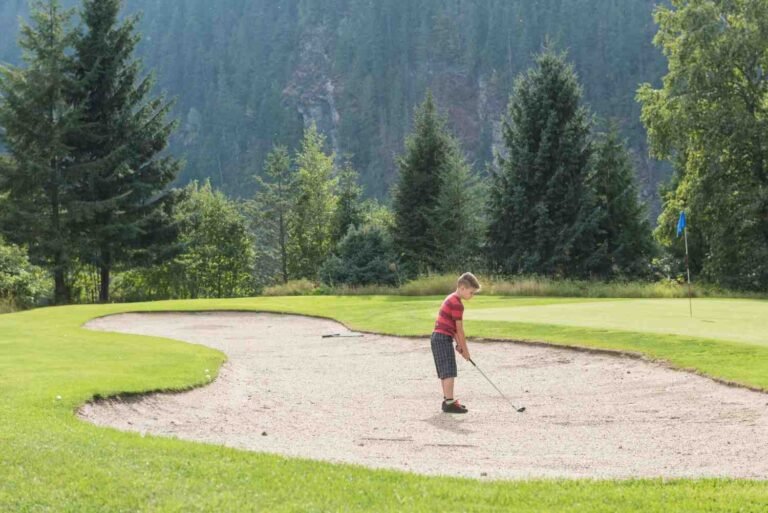

The first time I played a genuinely hilly course, my rangefinder gave me familiar numbers, but the shots produced unfamiliar results. Approaches finished short, downhill shots ran through greens, and seemingly good swings curved away from the target. I quickly realized that hills affect much more than distance.
Learning how to play golf on hilly courses requires adjustments to club selection, setup, balance, target choice, and even energy management. The following strategies can help everyday golfers make smarter decisions without rebuilding their entire swing.
Read the Terrain Before Choosing a Club
A hilly-course shot should begin with three separate observations: the distance to the target, the elevation change, and the direction of the ground beneath the ball.
A rangefinder may show 150 yards, but that number does not explain whether the green is above or below you. It also cannot tell you how an uneven lie will influence your golf ball swing or ball flight unless the device includes an allowed slope function.
Identify whether the shot is uphill, downhill, or sidehill. Many real situations combine two conditions, such as an uphill lie with the ball above your feet. Reading both components prevents you from solving only half the problem.
Adjust Your Club for Elevation Changes
An elevated target normally plays longer than its horizontal yardage. A downhill target generally plays shorter, although wind, temperature, firmness, and landing angle can alter the final result.
Use one additional club as a starting point for a moderately uphill shot. For a downhill approach, consider one less club and plan for a lower landing angle and additional rollout. Avoid treating this as a fixed formula. Learn how your own shots react through experience.
Focus on carry distance when a bunker, stream, or other trouble protects the green. Total distance is less useful when the ball must clear a hazard.
Make the Right Uphill-Lie Adjustments

When you play golf in wet conditions, an uphill lie adds effective loft to the club, so the shot usually launches higher and travels a shorter distance.
Set Up With the Hill
Position the ball slightly forward of its usual location and align your shoulders with the slope. For a right-handed golfer, the lead shoulder will be higher than the trail shoulder. Reverse the directional references if you play left-handed.
Use a stable stance and avoid leaving all your weight on the back foot. Swing along the slope at approximately 75 to 80 percent effort. A controlled swing makes solid contact more likely than an aggressive attempt to recover lost distance.
Take more club and expect the ball to move slightly toward the high side. For a right-handed player, that commonly means a leftward tendency, so allowing a little room on the right may be sensible.
Control a Downhill Lie
A downhill lie reduces effective loft, creating a lower flight and more rollout. It is often more difficult because golfers instinctively lean away from the descending ground.
Stay With the Slope
Move the ball slightly back, place more pressure on the lower foot, and angle your shoulders with the hill. Swing down the slope instead of trying to lift the ball.
Choose a more lofted club when the descent already makes the shot fly low. This can make strong lofted irons playable while helping you produce a more controlled trajectory. The ball may move toward the low side—commonly right for a right-handed golfer—so select a target that allows for that tendency.
Never force a high shot from a severe downhill lie. Playing toward a safe section of the green or fairway is usually better than attempting a low-percentage carry over trouble.
Handle the Ball Above Your Feet
When the ball is above your feet, it is effectively closer to your body. Grip down on the club, stand slightly taller, and maintain your balance through a controlled swing.
The resulting swing becomes flatter, and the ball will commonly curve left for a right-handed player. Aim farther right, but account for your normal shot shape too. A golfer who already produces a strong draw may need a much more conservative target.
Choose the safest available landing area rather than aiming directly at a tucked flag.
Play the Ball Below Your Feet
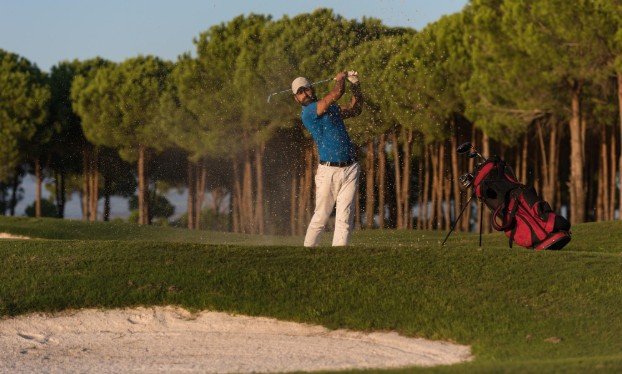
To improve short game distance control around the game, remember that a ball below your feet requires additional knee flex because it sits farther from you. Widen your stance, place pressure toward your heels, and maintain your posture throughout the swing.
Standing up during the downswing is a common cause of thin and topped shots. Use a shorter, controlled motion and focus on balanced contact.
For a right-handed golfer, the ball will often fade toward the right. Aim left and select a club that gives you enough margin for imperfect contact.
Plan Tee Shots Around Flat Landing Areas
Study the fairway before choosing a club. Identify:
- The widest landing area.
- The flattest section of fairway.
- The direction balls will bounce after landing.
- Trouble on the downhill side.
- The best angle into the green.
A slightly longer second shot from level ground may be easier than a short approach from an extreme sidehill lie.
Attack Elevated and Downhill Greens Carefully
Elevated greens demand sufficient carry. When the front is protected by a bunker rake or steep bank, choose a club that can reach the center rather than selecting one based on the flag distance alone.
For a green below you, anticipate a lower landing angle and more bounce. Landing the ball near the front may allow it to release toward the middle. Firing directly at a back flag can send an otherwise good shot over the green.
Center-green targets are especially valuable when elevation makes distance difficult to judge.
Simplify Chips and Putts on Slopes

On a downhill chip, use a stable stance, maintain pressure on the lead side, and select a landing point that allows for extra rollout. A high-risk flop shot is rarely necessary when a lower option can keep the ball under control.
Uphill putts require sufficient pace, while downhill putts demand a softer strike. Read the final portion near the hole carefully because the ball is moving slowest there. On severe slopes, prioritize leaving the next putt below the hole.
Protect Your Balance and Energy
Wear golf shoes with reliable traction, particularly when the grass is wet. Walk across steep slopes carefully rather than rushing directly up or down them. Never attempt a powerful swing when your feet cannot establish a secure base.
Hilly rounds can also be physically demanding. Carry water, eat light snacks, and maintain a sustainable walking pace. Fatigue affects posture, balance, and decision-making, especially late in the round.
Common Mistakes to Avoid
The most frequent mistake is using flat-ground yardage without considering elevation. Other costly errors include swinging at full speed from unstable lies, keeping the shoulders level with the horizon, aiming directly at every flag, and ignoring expected rollout.
Do not fight the hill. Accept the natural ball flight, choose a target that accommodates it, and prioritize solid contact.
Frequently Asked Questions
1. How do you learn how to play golf on hilly courses?
Begin by recognizing the four basic lies: uphill, downhill, ball above the feet, and ball below the feet. Practice each with controlled swings and record how the slope changes trajectory, distance, and direction.
2. Should I take more club on an uphill shot?
Usually, yes. An uphill target plays longer, while an uphill lie adds loft and can reduce distance. Wind and the severity of the elevation change should also influence the final choice.
3. Which way does a sidehill shot curve?
For right-handed golfers, a ball above the feet generally moves left, while a ball below the feet commonly moves right. Left-handed golfers should reverse those directions.
4. Can I use a slope rangefinder?
Slope functions are normally suitable for practice and casual rounds. Competition committees can prohibit elevation-measuring features, so confirm the local rules and disable the function when required.
Final Thoughts
I have found that hilly courses become far less intimidating when I stop chasing perfect shots and start choosing practical ones. Reading the terrain, controlling my swing, and aiming for safer landing areas consistently produces better outcomes than trying to overpower every slope.
Treat every hill as useful information. Adjust for the lie, protect your balance, accept the expected curve, and play toward the section of the course that leaves the simplest next shot.