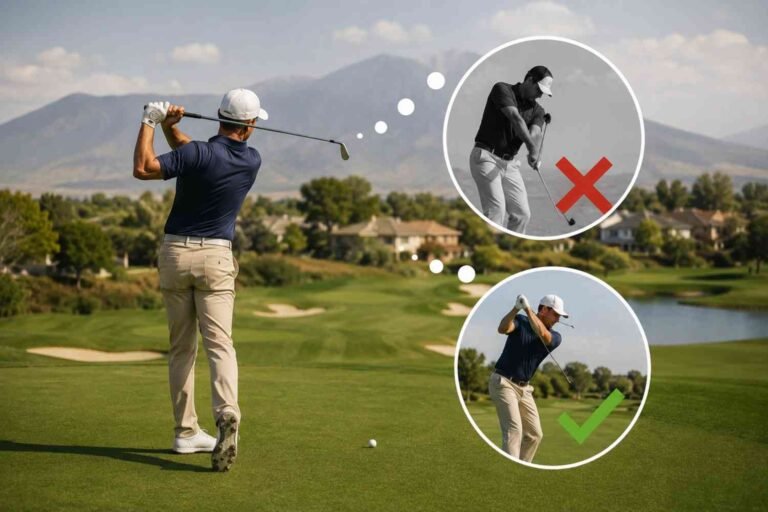

I used to think short-game distance control was mostly about having better feel. A chip would come up short or run 15 feet past the hole, and the easy reaction was to blame the swing. Over time, I noticed that the bigger problem was often my target. I was looking at the hole and trying to judge the entire shot at once instead of deciding where the ball needed to land first.
I found that my misses became much easier to understand once I started treating the landing spot as the real target. The hole still mattered, but it became the second part of the shot. Once the landing area, club choice, and rollout made sense, the swing itself felt much simpler.
Why Short Game Distance Control Is So Difficult

Short shots leave very little room for error. A full iron has a larger motion and a more obvious target, while a chip or pitch requires you to control a much smaller swing and predict what happens after the ball lands.
That second part is where many golfers get stuck. A shot that carries 8 yards and rolls 12 is very different from one that carries 14 and rolls only 6, even if both finish near the same distance.
The lie, slope, green firmness, grass, club loft, and trajectory all change the result. That’s why good short-game distance control isn’t simply about swinging harder or softer. It starts with choosing a predictable shot.
Control Distance With Swing Length
One of the simplest ways to improve distance control is to let backswing length influence how far the ball travels instead of constantly changing your effort level.
A common mistake is making a short backswing and then trying to hit the ball harder through impact. That can change strike, launch, and spin. A more repeatable approach is to create a slightly longer or shorter motion while keeping the overall tempo comfortable.
Your grip should also stay relatively light. You don’t need to squeeze the club to make a 20-yard chip. A relaxed grip allows the clubhead to move naturally and makes it easier to repeat the motion.
For short wedges, control matters more than speed. Golf Digest’s instruction on wedge play similarly emphasizes control, balance, relaxed movement, and matching the finish to the backswing length.
This is also where the rest of your swing can influence your short game. If your full swing has an inconsistent path, you may find that how to stop coming over the top in golf becomes relevant to improving your overall clubface control and contact.
Use Different Clubs to Create Easier Shots

You don’t need to hit every greenside shot with your highest-lofted wedge.
Suppose you have plenty of green between your ball and the hole. A pitching wedge or even a lower-lofted club may allow you to land the ball short and let it roll like a putt. That can be easier to judge than trying to fly a sand wedge most of the way to the hole.
A bump-and-run also reduces the amount of airborne distance you have to control. Fewer variables can mean a larger margin for error.
Higher-lofted shots still have their place. If the pin is short-sided or you need to carry a bunker, more loft can give you the trajectory you need. The goal isn’t to always choose the easiest club. It’s to choose the club that makes the required shot as predictable as possible.
Practice Distance Control With Real Targets
Hitting 30 chips toward one flag doesn’t always teach you how to control different distances. You need practice that forces you to change the shot.
Try setting targets at 10, 20, and 30 yards. Use the same wedge and change only your backswing length. Don’t immediately worry about where every ball finishes. First, watch where each one lands.
You can also place a towel on the green and make it your landing target. Hit several shots while trying to land the ball on or near it. Then move the towel and repeat.
Another useful game is reverse leapfrog. Hit the first ball toward a target, then make the next ball finish a few feet farther without going past the target. Keep extending the distance. This forces you to adjust rather than repeating the same swing. Similar landing-zone and leapfrog games are used in current golf instruction to develop touch and distance awareness.
Practice quality matters here. Don’t rush through balls. Take your time, pick a target, make your decision, and treat each shot like it matters.
Adjust for the Lie and Green Conditions

The same swing won’t produce the same result from every lie.
A clean fairway lie gives you more control over contact. From rough, the grass can slow the club or change how the face interacts with the ball. A downhill lie can increase rollout, while an uphill lie may reduce it.
Green speed matters too. On a firm, fast green, you may want to land the ball farther from the hole and let it release. On a soft green, you can often carry the ball closer.
Wind deserves attention on higher shots, while a low chip may be less affected. Before swinging, ask three simple questions: Where can I land it? How will it react? What happens if I miss my landing spot?
That process is often more valuable than trying to manufacture perfect feel.
Don’t Let Technique Take Over the Shot
Short-game practice can become overly mechanical. Golfers start thinking about wrists, shoulders, weight shift, clubface position, and finish all at once.
That makes a simple chip feel like a full swing.
Once your setup is sound, give yourself one clear intention. Pick the landing spot, choose the club, make the appropriate swing, and watch the result.
Your broader iron play can affect how confidently you approach these shots too. If you’re working on contact throughout your bag, simple drills for more consistent iron contact can help reinforce the relationship between centered contact and predictable ball flight.
The short game still needs technique, but technique should support the shot rather than dominate your attention.
Common Distance-Control Mistakes
The biggest problems usually come from a few habits:
- Trying to control distance by changing swing speed instead of swing length.
- Choosing a club based only on the pin distance.
- Ignoring rollout after the ball lands.
- Practicing from perfect lies but rarely testing rough, slopes, or different green speeds.
- Looking at the hole throughout the shot instead of committing to a landing area.
- Decelerating because the golfer is afraid of hitting the ball too far.
The last mistake is particularly common. Trying to guide the ball toward the hole can produce poor contact and inconsistent speed. A controlled motion with a clear landing target is usually easier to repeat.
Build a Short-Game Routine You Can Trust
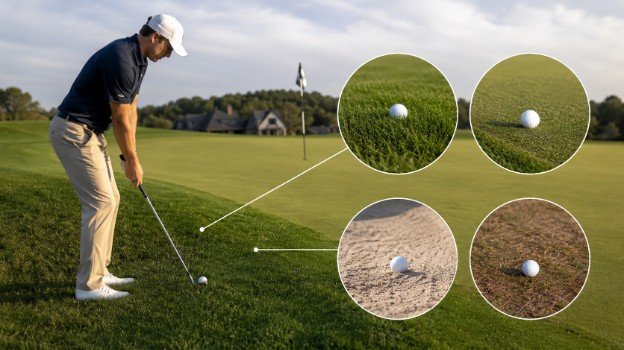
Before each chip or pitch, take a moment to read the lie and green. Choose your landing spot. Decide how much rollout you want. Pick the club that gives you the best margin for error.
Then make your normal motion.
You don’t need a completely different technique for every yardage. A repeatable setup and swing can give you a reliable foundation, while club selection and landing spots create the variation. That same philosophy connects naturally with how to build a repeatable golf swing, because consistency comes from having dependable movements rather than searching for a new solution on every shot.
With enough practice, the process becomes quicker. You start seeing the landing spot automatically, recognizing how different lies affect rollout, and knowing which club gives you the best chance of leaving a manageable putt.
FAQs: How to Improve Short Game Distance Control Around the Green
What is the best way to improve short game distance control?
Start by practicing landing spots instead of aiming only at the hole. Combine that with consistent swing length and several known distances for your wedges.
Should I use the same wedge for every chip?
Not necessarily. Lower-lofted clubs can be useful when you have plenty of green, while higher-lofted wedges help when you need more carry and less rollout.
How do I stop hitting chips too far?
Focus on your landing spot and control distance through backswing length. Avoid slowing down dramatically through impact because that can make contact unpredictable.
How often should I practice short game distance control?
Short, focused sessions can be more useful than occasional marathon practices. Spend 15 to 30 minutes working through different landing spots, clubs, and distances.
Why Better Distance Control Changes the Whole Short Game
Good short-game distance control isn’t about having perfect hands or magically knowing how far every shot will travel. It comes from building a simple decision-making process and giving your swing enough structure to repeat it. When you know where the ball should land, how it should release, and which club gives you the best margin for error, greenside shots stop feeling like guesses.
The goal isn’t to hit every chip close. It’s to make your misses smaller, your next putt easier, and your short game more predictable when the round gets uncomfortable.