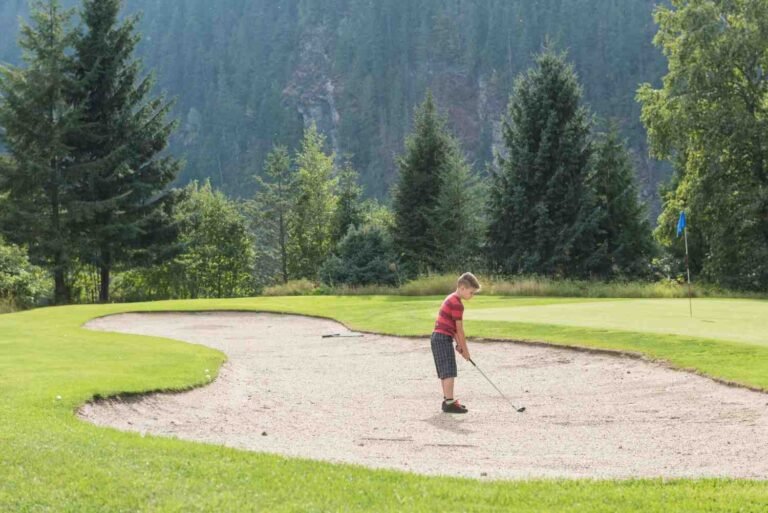

Golf is supposed to feel relaxed, but one slow group can turn a smooth round into a long afternoon of waiting on every tee box.
I have learned that good pace is not about rushing your swing or racing between shots. It is about playing with awareness, staying ready, and respecting everyone else on the course.
So, what is a good pace of play in golf? For most US public courses, a standard foursome should finish 18 holes in about 4 to 4.5 hours, which works out to roughly 13 to 15 minutes per hole. More than the stopwatch, the real test is whether your group is keeping up with the group directly in front of you.
How Long Should 18 Holes of Golf Take?
For most everyday golfers in the United States, 18 holes should take around 4 hours for an experienced group and closer to 4.5 hours for a full foursome on a busy public course.
Private clubs, resort courses, municipal courses, and championship-style layouts may all move at slightly different speeds, but the same principle applies everywhere: stay close to the group ahead.
Course design also affects pace. A short, open course with wide fairways usually plays faster than a long layout with water hazards, thick rough, blind tee shots, and long distances between greens and tee boxes.
Weather can also slow things down, especially when wind, rain, wet turf, or cart-path-only rules force players to take extra time.
Still, slow play usually comes from habits more than conditions. Long pre-shot routines, poor cart positioning, lost-ball searches, and waiting too long to choose a club can stretch a round quickly.
I have seen groups lose 20 minutes without noticing it simply because every player waited until their turn to start thinking.
What Is the Target Pace by Group Size?

Group size makes a big difference. A twosome should usually finish 18 holes in about 3 hours if the course is open. A threesome should often finish in around 3.5 hours. A foursome should aim for 4 to 4.5 hours, especially on a standard US public course.
These numbers are helpful, but they are not absolute. A twosome stuck behind several foursomes will not play in 3 hours unless the course allows them through.
A beginner foursome may need slightly more time, but that does not mean they should ignore pace. The goal is always to move with purpose and avoid unnecessary delays.
This is why the question what is a good pace of play in golf has two answers. The time-based answer is 4 to 4.5 hours for a foursome. The etiquette-based answer is to keep up with the group in front while giving the group behind no reason to wait constantly.
How Long Should 9 Holes of Golf Take?
A good pace for 9 holes is usually around 1 hour and 45 minutes to 2 hours and 15 minutes. Many golfers play 9 holes after work, before sunset, or during a quick weekend morning round, so pace matters even more.
If one group slows down badly, everyone behind them may run out of daylight.
For beginners, 9 holes is one of the best ways to learn golf pace of play without feeling overwhelmed. You can practice tee shots, approach shots, short game, putting, club selection, and basic golf etiquette without committing to a full 18-hole round.
It also gives newer players a chance to understand how long they should spend on each hole.
Why Keeping Up With the Group Ahead Matters Most
Good pace is really about position. If your group reaches the tee box as the group ahead is leaving the fairway or approaching the green, you are likely in good shape. If the group ahead has completely disappeared and there is an empty hole between you, your group needs to speed up.
Golf courses work like traffic. One slow group can create delays for every tee time behind them. That is why starters, rangers, and marshals often focus on open gaps between groups. They are not trying to rush players unfairly. They are trying to protect the flow of the entire golf course.
I always recommend checking your position every few holes. If you are falling behind, do not wait until the marshal says something. Start playing ready golf, shorten routines, watch shots more carefully, and move efficiently between shots.
How Do Beginners Keep Pace Without Feeling Rushed?

Beginners often worry that they are too slow because they miss shots, top the ball, or take extra strokes. But a high score does not automatically mean slow play. A beginner can shoot 110 and still keep pace if they stay organized.
The smartest move is to choose the right tees. Playing from the back tees makes the course longer, harder, and slower than necessary. Forward or middle tees help beginners enjoy the round and reach greens in a reasonable number of shots.
It also helps to carry extra balls, limit practice swings, and pick up when a hole gets out of control during casual play. Many groups use a friendly maximum score, such as double par, to keep the round moving. That approach protects pace and keeps frustration low.
What Slows Down Golfers the Most?
Lost balls are one of the biggest pace killers. Under the Rules of Golf, players generally have three minutes to search for a lost ball. In casual rounds, I prefer to move on sooner if the ball is clearly gone and the group behind is waiting.
If your tee shot may be lost or out of bounds, hit a provisional ball when allowed.
Pre-shot routines also matter. The USGA pace guidance often points to a 40-second window once it is your turn to play. That is plenty of time to take one practice swing, aim, and hit.
Rehearsing several swings before every shot may feel harmless, but over 18 holes it can delay the whole course.
Golfers can save time by building a simple motion cue instead of overthinking mechanics, especially when learning how to rotate hips in golf swing properly for power.
Just like the rules to limit golf ball distance aim to manage how the game plays in the future, pace habits help manage how smoothly each round moves today.
Poor green habits cause delays too. Players should avoid standing on the green after the hole is finished. Record scores at the next tee box, not beside the cup.
If your cart or bag is in the wrong place, you may have to walk backward after putting out, which slows the group behind you.
What Is Ready Golf and Why Does It Help?
Ready golf means the player who is ready and safe to hit can play first, instead of always waiting for the person farthest from the hole.
Most casual US public courses encourage this style because it saves time without hurting etiquette.
Ready golf still requires safety and respect. You should never hit while another player is in danger, distracted, or standing too close. But when it is safe, there is no reason for four players to stand around waiting if one golfer is ready to play.
On the tee box, the first prepared player can hit if the group agrees. In the fairway, start checking yardage and choosing a club before it is your turn.
Around the green, read your putt while others are preparing. After putting out, leave the green quickly and write scores at the next tee.
How Can You Maintain a Great Golf Pace?

You do not need to run, rush your swing, or skip your routine to maintain a great pace. Most time savings come from small habits between shots.
Watch every tee shot, including your partners’ shots, so the group can find balls faster. Park carts on the side of the green closest to the next tee. Bring more than one club when walking from the cart to your ball.
If you ride in a cart, do not drive to one ball, wait for that player to hit, and then drive to the next ball. Drop one player near their shot, then move safely to the other ball.
On cart-path-only days, take a few possible clubs with you so you do not have to walk back.
I also recommend limiting distractions. Long phone checks, repeated rangefinder use from the same spot, and extended conversations on the tee can all slow things down. Golf should be social, but good players know how to talk while still staying ready.
Why Good Pace Is Part of Golf Etiquette
Pace of play is one of the clearest signs of golf etiquette. It shows that you respect the people in your group, the players behind you, the course staff, and every golfer with a tee time after yours.
Good etiquette includes repairing ball marks, raking bunkers, staying quiet during swings, yelling “Fore!” when a shot may hit someone, and moving at a responsible pace.
You do not have to be a low-handicap golfer to be a good playing partner. You just need awareness, preparation, and respect.
For me, the best rounds are not always the lowest-scoring ones. They are the rounds where the group stays relaxed, keeps moving, and never makes other golfers wait unnecessarily.
Frequently Asked Questions (FAQs)
1. Is 4 hours a good pace for 18 holes of golf?
Yes, 4 hours is a good pace for 18 holes, especially for a foursome that is playing efficiently and keeping up with the group ahead.
2. How many minutes should each golf hole take?
A good average is about 13 to 15 minutes per hole for a foursome, although par-3 holes may play faster and long par-5 holes may take more time.
3. What is considered slow play in golf?
Slow play usually happens when a group falls more than one clear hole behind the group in front and causes the group behind to wait repeatedly.
4. How can beginners play faster without rushing?
Beginners can play faster by choosing forward tees, limiting practice swings, playing ready golf, picking up after a high casual score, and preparing before it is their turn.
Final Thoughts
If someone asks me what is a good pace of play in golf, I give them a simple answer: a foursome should usually finish 18 holes in 4 to 4.5 hours, a threesome in about 3.5 hours, and a twosome in about 3 hours when the course is open. For 9 holes, around 2 hours is a strong target.
But the better answer is this: keep up with the group in front of you.
You can do that by playing ready golf, limiting ball searches, watching every shot, parking smart near greens, recording scores at the next tee, and using a simple pre-shot routine.
If you are new to the game, keeping a glossary of golf terms handy can also help you understand pace-related words and course etiquette faster. When golfers follow these habits, the course moves better, the round feels smoother, and everyone has more fun.