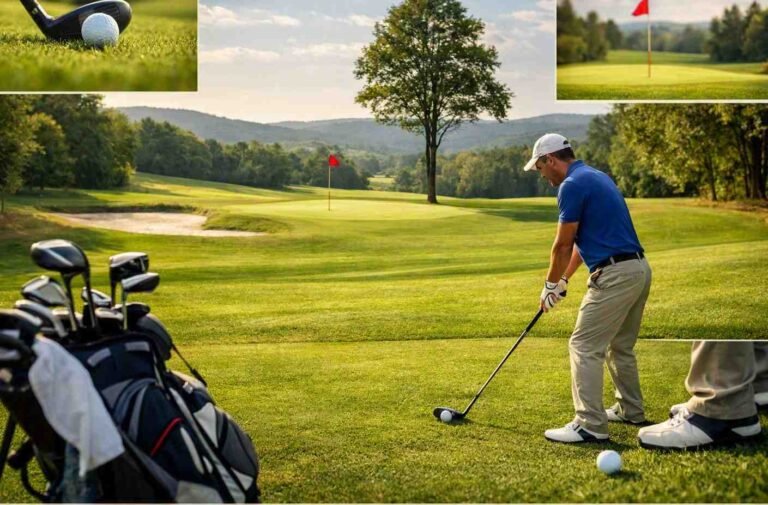
Saying “I’ll just hit another one real quick” on the tee box is one of the most expensive phrasing mistakes in golf. Under official USGA guidelines, if you do not explicitly use the phrase “provisional ball,” your second shot legally becomes your ball in play under a stroke-and-distance penalty, instantly killing any chance of playing your original ball even if it is sitting in the middle of the fairway.
Understanding the provisional ball rule in golf isn’t just about saving face during a casual weekend round. It is an exercise in efficiency, risk management, and procedural logic. For players who appreciate precision—whether you are framing a shot through a 4K camera lens, optimizing sensor telemetry, or mapping course optics—the mechanics of Rule 18.3 offer a fascinating lesson in strategic workflow.
| Tee Box | |
|---|---|
| Did the shot drift toward a hazard, dense woods, or out-of-bounds? | |
| ↳ Penalty Area | ↳ Lost Ball / Out of Bounds Likely |
| No provisional ball | Announce “Provisional Ball” |
| Take relief under Rule 17 | Play the 2nd ball from the tee |
| — | Search for the original ball for a maximum of 3 minutes |
The Physics and Protocol of Rule 18.3
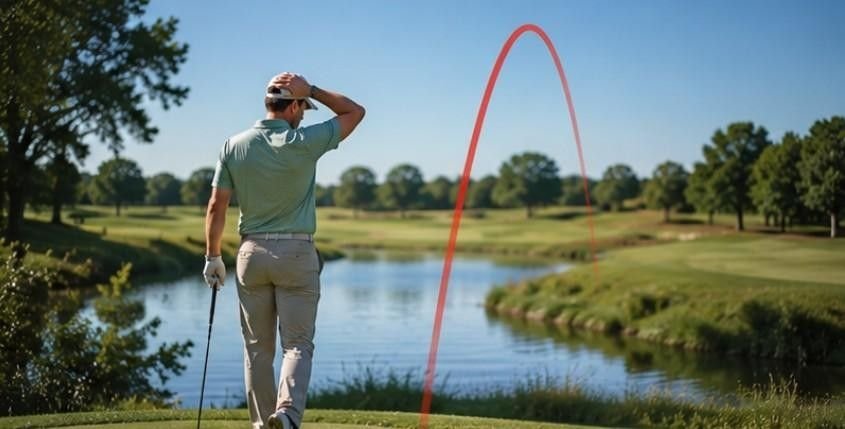
At its core, Rule 18.3 exists to solve a operational bottleneck: pace of play. Golf courses suffer from compound delays when players walk 300 yards down a fairway, search through dense foliage, fail to find their sphere, and then trek all the way back to the tee box to replay the stroke.
The rule allows you to play a backup ball from the original spot before moving forward. However, you can only deploy a provisional ball under two specific conditions: when your original ball might be lost outside a penalty area, or when it might be out of bounds (OB).
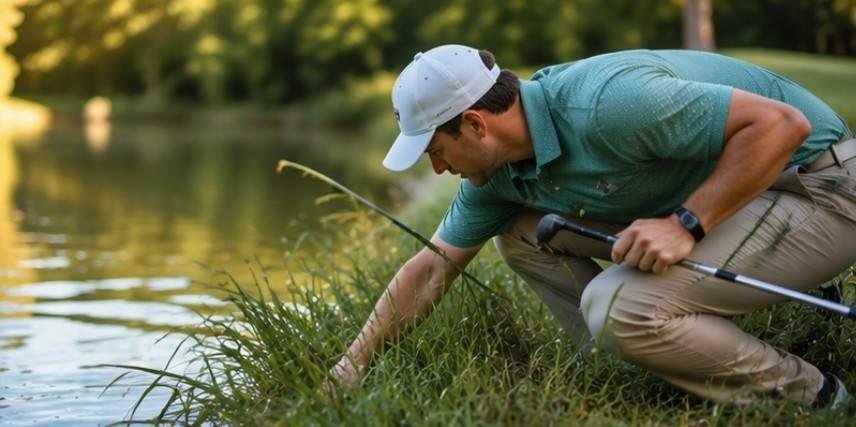
If your ball clearly splashed into a red or yellow staked water hazard, playing a provisional is strictly prohibited. If you drop a second ball in that scenario, it automatically becomes your official ball in play under penalty, rendering your original shot dead regardless of where it actually lands.
The governing bodies at the United States Golf Association (USGA) and The R&A established these parameters to ensure pace-of-play standards remain fair without giving players an unfair tactical advantage.
The Exact Verbal Declaration: Words Matter
In photographic terms, executing a provisional ball is like setting your camera to save RAW+JPEG simultaneously. It builds a safety net, but only if your camera settings are dialed in correctly beforehand.
In golf, legal intent requires explicit vocabulary like red stakes vs yellow stakes. You must clearly communicate your intent to your fellow players or markers before executing the stroke.
Acceptable Declarations:
- “I am playing a provisional ball.”
- “I’m going to hit a provisional ball, just in case.”
Invalid Declarations (Triggers Automatic Penalty Ball in Play):
- “I’ll hit another one.”
- “Let me reload.”
- “I’m going to drop another ball real quick.”
- “I’ll shoot a mulligan just in case.”
If you use any of the invalid phrases, Rule 18.3 ceases to protect you. The original ball is instantly declared abandoned, and your second shot counts as your third stroke (stroke one plus a one-stroke penalty).
Furthermore, always mark your provisional ball with a distinct identifier or play a different brand/number. Research on visual search patterns from Cornell University Turfgrass Program highlights how easily identical objects blend into complex outdoor textures. If you find two identical balls in heavy rough without distinct markings, both are treated as lost balls under the rules.
When to Hit vs. When to Hold: The Decision Matrix
Deciding whether to fire a provisional shot requires quick spatial analysis. Think of it like adjusting exposure settings on a high-dynamic-range shoot: you have to calculate risk versus reward on the fly.
| Scenario | Can You Play a Provisional? | Official Procedural Action |
| Ball sliced into heavy tree line (In-Bounds) | Yes | Announce provisional, play second ball from tee box |
| Ball seen flying over white Out-of-Bounds stakes | Yes | Announce provisional, play second ball from tee box |
| Ball seen splashing into a red-staked pond | No | Walk forward, proceed under Penalty Area Rule 17 |
| Ball lands in thick rough near a lateral hazard | Yes | Announce provisional (valid if it could be lost outside hazard) |
Editor’s Note: For visual clarity on course management, this decision matrix works best as a side-by-side flow chart during pre-round strategy sessions.
The three-minute search clock begins the moment you or your caddie reach the area where the ball is believed to rest. Sports psychology insights referenced by the National Institutes of Health indicate that time perception accelerates significantly during high-stress situations. Carrying a timer or tracking watch ensures you stay disciplined within the strict three-minute search window.
The Modern Local Rule E-5 Alternative
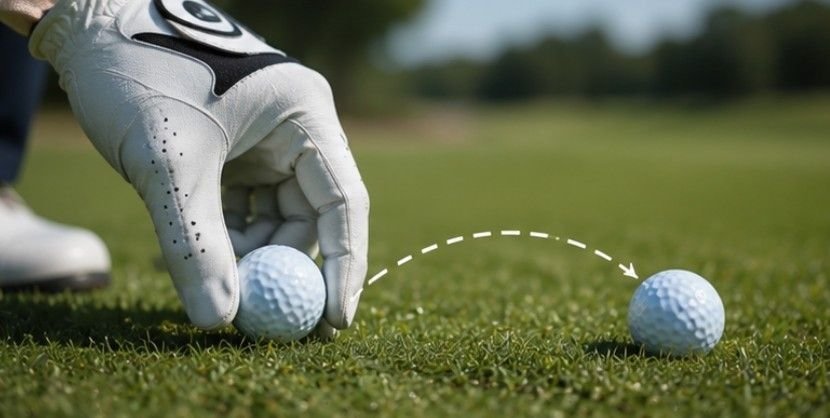
In 2019, golf’s governing bodies introduced Model Local Rule E-5 to accelerate casual play. While not active in professional tournaments or sanctioned handicap play unless explicitly adopted, this local rule offers an alternative for everyday rounds.
Build your golf fitness routine with ease. Under Local Rule E-5, if your ball is lost or out of bounds and you did not play a provisional ball, you may take a two-stroke penalty drop in the fairway near where your ball was lost. This saves you from walking back to the tee box while simulating the score you likely would have achieved with a provisional ball.
However, if you already hit a provisional ball off the tee, Local Rule E-5 is completely off the table. You must play out the point using either your original ball (if found in bounds within 3 minutes) or your provisional ball.
According to tournament records from the PGA of America, improper execution of provisional procedures remains one of the top five rule infractions penalized during amateur club qualifiers.
Frequently Asked Questions
1. Is a provisional 1 or 2 stroke penalty?
Hitting a provisional ball carries no penalty by itself. However, if your original ball is lost or out of bounds, the provisional becomes your ball in play with a one-stroke penalty under stroke-and-distance rules.
2. When can you not play a provisional ball in golf?
You cannot play a provisional ball if your original ball is known or virtually certain to be in a penalty area (yellow or red stakes/lines), or if you have already walked forward to search for it.
3. Why take a provisional instead of a drop?
Taking a provisional ball protects your score and saves time. If your original ball is found in bounds, you pick up the provisional with zero penalty. Whereas a drop off the course forces immediate penalty strokes.
4. What are the new golf rules regarding provisional balls?
Under recent rule updates, you can play a provisional ball even if you briefly search for the original first, provided you have not crossed the area where the original ball is expected to lie within the 3-minute search time.
Precision Rules for a Better Game
Mastering the provisional ball rule in golf transforms potential frustration into structured course management. By locking down your verbal declaration, understanding when hazards override provisional options, and tracking your three-minute search window, you keep your scorecard legal and the pace of play crisp. Treat the rule as a procedural safeguard: announce it clearly, mark your sphere distinctly, do golf workouts at home and execute with confidence.