
I’ve always noticed that putting can feel like a completely different part of golf when the greens get quick. A stroke that normally sends the ball a comfortable distance suddenly feels like too much, and downhill putts can start looking far more intimidating than their yardage suggests.
The biggest adjustment I’ve found is realizing that fast greens do not require a dramatic change in technique. They require better control over how much energy the stroke puts into the ball.
I also found that trying to “hit it softer” is not always enough. When golfers consciously slow their hands down, they can start steering the putter or decelerating through impact. A better approach is to make the stroke smaller, keep the grip relaxed, and let a consistent tempo control the roll.
Once the goal shifts from chasing the hole to leaving the ball in a comfortable area, fast greens become much easier to manage.
Why Fast Greens Demand Better Speed Control
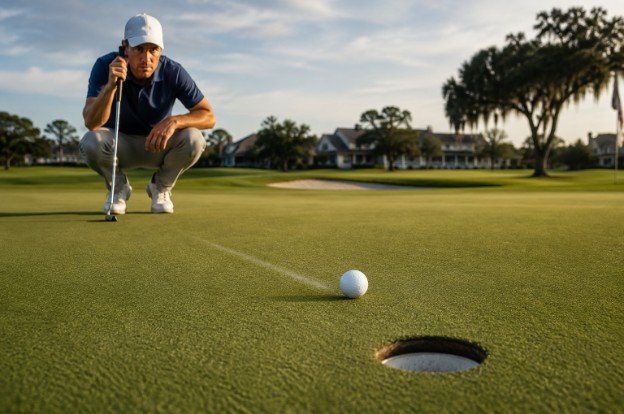
Fast greens magnify small mistakes. On a slower surface, a putt struck a little too firmly may finish a few feet past the hole. On a slick surface, the same mistake can turn into a much longer comeback putt.
The speed also changes how much a putt can break. A ball traveling slowly has more time to respond to slope, so a putt that looks fairly straight can move more than expected. That means speed control and green reading cannot really be separated.
The goal on a fast green is not to make every putt finish at the center of the cup. The better target is a controlled roll that gives the ball a realistic chance while limiting the distance of the next putt. PGA of America coaching advice on fast greens similarly emphasizes lag putting and avoiding three-putts, particularly from longer distances.
Shorten Your Backstroke Instead of Slowing Your Hands
One of the easiest adjustments is reducing the length of the backstroke.
A long backstroke creates more opportunity to deliver too much speed. It can also tempt you to slow the putter down before impact when you realize the stroke is getting too big. That combination makes distance control unpredictable.
Instead, take the putter back only as far as needed and allow the forward stroke to stay smooth. The stroke should feel compact rather than forced.
Think of it as changing the size of the motion instead of changing the quality of the motion. You still want a steady rhythm. You simply need less movement to produce the distance.
A useful practice drill is to place a tee several inches behind the putter head. Make strokes without touching the tee. This creates a physical limit for your backswing and encourages a shorter motion. PGA of America coach Brendon Elliott recommends a similar tee drill for fast greens.
Treat Downhill Putts With Extra Respect

Downhill putts deserve a separate thought because slope can make a fast green feel even faster.
A downhill putt does not need much energy to travel a long way. If you use your normal stroke length, the ball can quickly get away from you. The longer it rolls, the more time the slope has to influence its direction.
This is where a tiny stroke can be useful. The motion may feel almost too small at first, but that is often the point. You are trying to get the ball moving rather than launch it toward the hole.
The position of your approach shot matters too. When you have a choice, leaving the ball below the hole often gives you an uphill putt, which is usually easier to control than a fast downhill putt. Fast-green advice from both the PGA of America and Green Books stresses the value of managing where the ball finishes relative to the hole.
Build Better Speed Through Practice
You do not need an elaborate practice session to improve your feel. You need feedback.
Start with three balls from roughly 20, 30, and 40 feet. Try to get each one into the same three-foot finishing zone. Do not worry about the line at first. Pay attention to how far the ball rolls.
You can also use pace counting. Walk off the distance to a target on the practice green, then make the same type of stroke several times. Over time, your brain begins connecting distance with stroke size.
Another useful exercise is to make a few strokes while looking at the hole rather than the ball. You can even close your eyes during the stroke once you are comfortable doing so. The purpose is not to develop a strange new putting technique. It is simply to remove some visual interference and pay attention to feel.
This type of practice can also support better short game distance control, because touch around the course comes from learning how much motion is needed to produce a certain amount of roll.
Avoid Trying to Steer the Putter

Fast greens can make golfers over-control the stroke.
You may see the ball rolling quickly in your mind before you even hit it, then try to guide the putter through impact. That usually makes the stroke less fluid.
The better approach is to trust a repeatable motion. Pick your line, visualize the pace, make a compact stroke, and let the putter move through the ball.
You should also resist the urge to make every fast putt die dramatically at the hole. A putt that finishes a foot or two short is not automatically a bad result if the alternative is leaving yourself a six-footer coming back.
The objective is controlled proximity.
Use Fast Greens to Improve Your Overall Touch
Learning fast greens can improve more than your putting.
The same awareness of pace helps with chips, pitches, and other shots where the ball needs to land and release toward a target. Understanding how much energy different lies and slopes require gives you a better feel for the entire short game.
That is why golfers who spend time developing golf short game consistency often become better at adapting when course conditions change. They are not relying on one exact swing. They are learning how the ball reacts to different amounts of energy.
Fast greens simply make that lesson more obvious.
Make a Quick Adjustment Before Your Round

Spend a few minutes on the practice green before playing. Start with short putts to establish your contact, then move to longer putts and focus almost entirely on speed.
Hit several putts uphill and downhill if the practice area allows it. Notice how little stroke is required to move the ball downhill compared with an uphill putt.
Then pay attention to the first few greens during your round. If your putts consistently finish past the hole, do not overhaul your technique. Make the backstroke slightly shorter. If you are repeatedly leaving putts short, make a small adjustment rather than suddenly adding a lot of force.
And remember that putting speed is only one part of scoring around the green. Your choice of club and shot type can also determine how difficult the next putt becomes. Knowing how to choose the right shot around the green helps you leave yourself better approaches and more manageable putting situations.
FAQs: How to Control Putting Speed on Fast Greens for Better Lag Putts
Should I change my putting stroke on fast greens?
You usually do not need a completely different stroke. A shorter backstroke, relaxed grip, and smooth tempo can reduce the amount of energy you put into the ball without creating a jerky motion.
Should I try to hit fast putts softly?
Think less about hitting softly and more about making a smaller stroke. Deliberately slowing your hands can cause deceleration. A compact, smooth motion gives you better control.
How far past the hole should a putt finish?
There is no single perfect distance, but the goal is to leave yourself a manageable second putt. On very fast greens, prioritizing a small finishing zone can be smarter than trying to reach the back of the cup.
How can I practice speed control?
Practice long putts from different distances and focus on finishing inside a three-foot circle around the hole. Add uphill and downhill putts when possible so you learn how slope changes the required stroke.
Why Better Pace Makes Fast Greens Feel Easier
Fast greens can make a golfer feel like every putting stroke needs to be carefully engineered. In reality, the best adjustment is often simpler. Reduce the size of the stroke, keep your hands relaxed, read the slope carefully, and give yourself enough room around the hole.
The more you practice controlling distance instead of chasing perfect results, the more predictable your putting becomes. That is especially valuable on unfamiliar courses where green speeds can differ from what you normally see.
Good lag putting is not about being timid. It is about understanding the risk of every stroke and choosing a pace that keeps the next shot manageable.