When I first learned how tee boxes worked, I assumed their colors told every golfer exactly where to play. I soon realized that colors vary between courses and can carry outdated labels that have little to do with playing ability. Finding the best tee box for beginner golfers is really about choosing a course distance that matches current shot length, accuracy and confidence.
Most beginners should start from the shortest rated tees available. These are commonly called the forward tees, although their color might be red, green, orange, gold or something completely different. Starting forward gives a new player a realistic opportunity to reach fairways, avoid intimidating carries and experience how each hole was intended to be played.
Why Forward Tees Usually Work Best for Beginners
Forward tees reduce the total length of the course and shorten the distance between the starting area and the green. This means beginners are less likely to need their longest club for every shot.
A manageable course length also makes it easier to learn how different clubs behave during a real round. New players who are still building a set can use what golf clubs do you really need as a beginner to focus on the most useful clubs without carrying equipment they rarely use.
A manageable course length offers several practical benefits. New golfers can reach more greens in the expected number of stroke play, use a wider selection of clubs and spend less time searching for lost balls. Shorter holes also reduce the pressure to swing as hard as possible.
Playing forward is not cheating or avoiding a challenge. It creates an appropriate challenge. A beginner can still encounter bunkers, water, rough, doglegs and difficult greens without being overwhelmed by excessive distance.
The result is usually better pace of play, greater confidence and a more enjoyable round.
Do Not Choose a Tee Box by Color
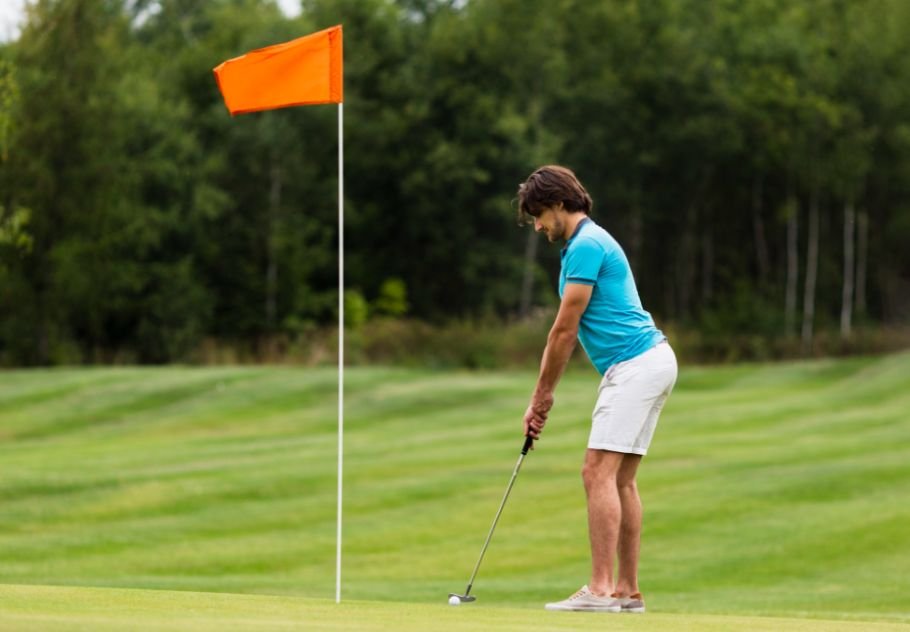
Tee-marker colors are not universal. One course may use red markers for its shortest tees, while another may use green, orange, silver or numbered markers. Golfers should therefore read the scorecard instead of relying on color.
Beginners visiting an unfamiliar facility may also benefit from learning what to know before playing a public golf course without looking like a beginner, including check-in expectations, local rules, tee-time procedures, dress codes, and basic course etiquette.
Age and gender are also poor selection methods. A young golfer may have limited distance, while an older player may hit consistently far. Two beginners can possess completely different swing speeds, athletic backgrounds and levels of control.
Choose tees according to total course yardage and the difficulty of individual holes. The correct position should allow a golfer to reach the fairway comfortably and have a realistic chance of reaching most par-4 greens in two good shots.
How to Find the Best Tee Box for Beginner Golfers
A beginner who does not know their club distances should start with the most-forward rated tees. After several rounds or practice sessions, the golfer can use average distances to make a more personalized decision.
Use Average Distance, Not a Personal Record
One practical method is to measure average 7-iron distance. A golfer should consider several normal shots rather than the longest shot they have ever hit. An occasional perfect strike does not represent the distance they can depend on during a round.
The selected course length should leave a variety of clubs for approach shots. If every par 4 requires a fairway wood or another maximum-distance shot after a reasonable drive, the tees are probably too long.
The ability to drive the golf ball a long distance can provide additional guidance, but it should not be considered alone. A beginner might hit one drive a long way while struggling to keep most shots in play. Accuracy, consistency and usable distance matter more than maximum distance.
Consider More Than Total Yardage
Two courses with identical yardages can play very differently. Hills, wind, narrow landing areas, deep rough and forced carries can make one substantially harder.
Course rating and slope provide useful context. Rating estimates the expected difficulty for a highly skilled player, while slope reflects how much more difficult the course may be for other golfers. Beginners do not need to master these calculations, but they should recognize that a shorter course with a high slope can still be challenging.
When uncertain, ask the starter or golf professional which tees are most suitable for a new player.
Signs You Are Playing From Tees That Are Too Long
A teeing ground is probably too far back if the golfer cannot comfortably carry hazards or reach the beginning of the fairway. Regularly needing a wood for the second shot on an ordinary par 4 is another warning.
Other signs include losing numerous balls, feeling pressured to overswing and consistently holding up the group behind. A round should contain different strategic choices, not eighteen attempts to hit the ball as far as possible.
Moving forward often produces a more complete test of golf because it brings fairway placement, approach accuracy and putting into the game.
When Should a Beginner Move Back?
A beginner should not move back simply after one low score or unusually long drive. Progress should be consistent.
Consider moving back when drives remain in play regularly, most forced carries feel comfortable and par-4 greens can frequently be reached in two well-struck shots. The player should also be able to maintain a reasonable pace without rushing.
Moving back one set at a time is better than making a large jump. If the new distance makes several holes unreasonably difficult, returning forward is a smart adjustment rather than a failure.
Combo tees offer another option. They allow a golfer to play some holes from one set and other holes from a nearby set, producing a distance between the two standard choices.
Tee-Box Etiquette Every Beginner Should Know

A golfer may tee the ball between the outside edges of the two markers and as far as two club lengths behind them. The ball should not be placed in front of the markers.
Players in the same group do not have to use identical tees. Each person can play from the position suited to their ability. Choosing suitable tees can also affect how long does a round of golf take, since excessively difficult tee positions often lead to more shots, longer searches and slower overall play.
Players in the same group do not have to use identical tees. Each person can play from the position suited to their ability. The group can remain efficient by preparing in advance and moving to each player’s markers without unnecessary delay.
Golfers should also repair obvious damage when appropriate, avoid distracting others and be ready when it is their turn. Selecting suitable tees is itself an important part of maintaining pace.
Frequently Asked Questions
1. What is the best tee box for beginner golfers?
The best tee box for beginner golfers is normally the shortest rated or most-forward set of tees. However, the final decision should reflect average distance, accuracy, forced carries and overall course difficulty.
2. Should male beginners play from the forward tees?
Yes. Tee boxes are not restricted by gender. Any golfer whose distance or consistency suits the forward tees can play from them.
3. What yardage should a new golfer choose?
There is no single perfect yardage for every beginner. Start with the shortest rated option, observe whether most holes are manageable and adjust after learning reliable club distances.
4. Can golfers use different tees in the same group?
Yes. Players can use different tee boxes while enjoying the same round. Preparing before each shot helps the group maintain a comfortable pace.
5. Is handicap the best way to select tees?
Handicap can help experienced players, but many beginners do not have one. Average club distance, accuracy and the ability to reach greens in regulation are more useful starting points.
Final Thoughts
I believe the right tee box should make golf challenging without making ordinary holes feel unreachable. Starting forward allows a new player to learn course strategy, use more clubs and build confidence through achievable shots.
I would choose the shortest rated tees for an early round, pay attention to real playing distances and move back only after control becomes dependable. Golf becomes far more rewarding when tee selection is based on honest ability rather than color, tradition or pressure from other players.