
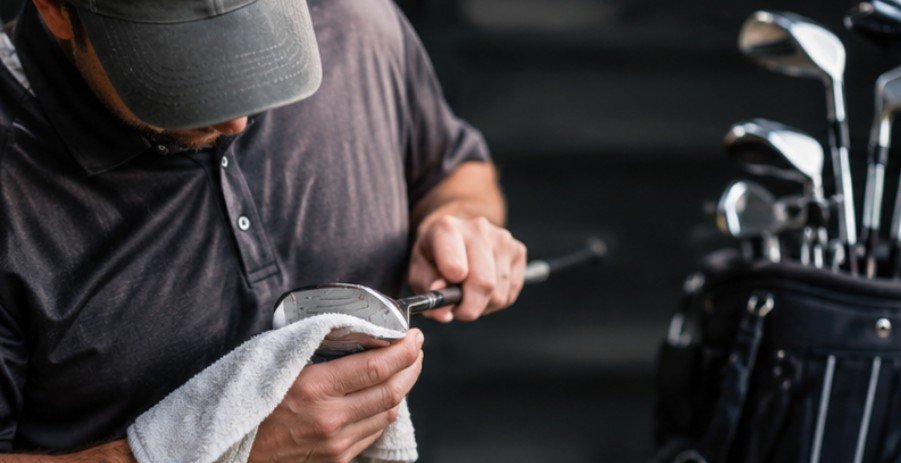
A dirty wedge is not just ugly. Mud, grass, and moisture between the ball and clubface can change friction at impact. USGA research has examined how grass, moisture, and groove geometry affect spin, so keeping the face clear is more than cosmetic.
If you want to know how to clean golf clubs, use lukewarm water, mild dish soap, a soft nylon brush, and microfiber towels. Soak only iron and wedge heads, then dry every part immediately.
Why Clean Grooves Matter More Than Shine
Think of the clubface as a contact surface, not a display piece. The goal is to remove material that interferes with ball-to-face contact.
The USGA’s work on spin generation and groove performance compared shots from clean conditions with shots involving grass and moisture.
Clean grooves matter most on wedges and short irons, where predictable launch and spin help control distance the same margin of control covered in wedge bounce explained for beginners, where sole design and clean turf contact both affect how the club performs through impact.
Arizona dust, Florida humidity, wet Northeast turf, and coastal sand leave different residue, but the rule is the same: clear the face before grime hardens.
The Safest Cleaning Kit Is Basic
Use a bucket, lukewarm water, mild dish soap, a soft-bristle nylon brush or toothbrush, a wooden tee or plastic groove pick, and microfiber towels.
Keiser University’s College of Golf also recommends warm water, a soft brush, and a towel in its club-care guidance.
Microfiber matters on glossy drivers. If you baby camera lenses because coatings scratch, use the same mindset on a painted or carbon-composite crown. Skip wire brushes and abrasive pads.
How to Clean Golf Clubs Step by Step
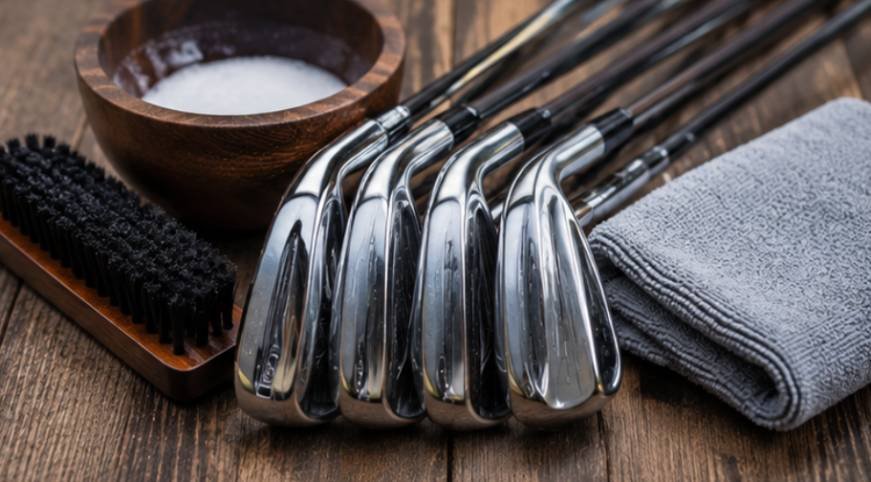
Irons and wedges: soak the head only
Fill a bucket with enough lukewarm soapy water to cover the metal heads while keeping ferrules above the waterline. Let irons and wedges sit for about five to 10 minutes so dried soil softens.
Remove one club at a time. Scrub the face, sole, and cavity with a soft brush. Use a wooden tee or non-metal groove tool for stubborn debris. Rinse or wipe away soap, then dry the head and hosel completely.
Avoid hot water. It adds no cleaning advantage worth the extra heat around bonded components.
Drivers, woods, hybrids, and putters: wipe, do not soak
Modern heads may combine metal, carbon composites, paint, clear coats, inserts, adhesives, and adjustable hardware. Golf Club Brokers advises against soaking drivers, woods, and hybrids.
Wipe the face and sole with a damp microfiber cloth and soap. Use a soft brush only where needed, then dry immediately. Treat putters the same way, especially models with face inserts.
| Club area | Best method | Avoid |
| Irons/wedges | Brief head-only soak, soft brush | Hot water, steel brushes |
| Woods/hybrids | Damp microfiber wipe | Submerging the head |
| Grips | Mild soapy wipe, clean-water wipe | Solvents, oily products |
| Shafts | Damp cloth, immediate drying | Prolonged moisture |
Clean the Grips and Shafts Too
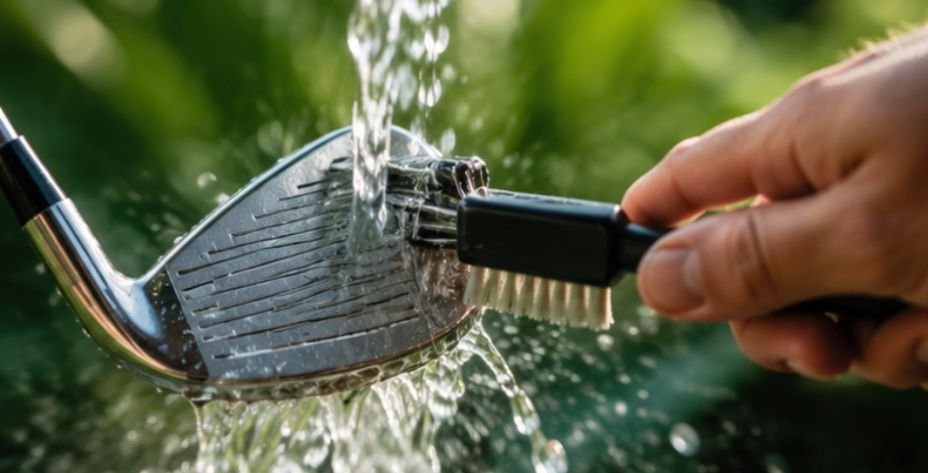
Grips collect sweat, sunscreen, skin oil, and dust. Wipe each grip with mild soapy water, then again with clean water and let it air-dry before storage.
New Mexico State University notes in its cleaning-products guidance that some solvents can damage rubber materials. Ohio State University similarly warns that strong cleaners and solvents can damage rubber or plastic parts. Grip compounds vary, so mild cleaning is the safer default.
For steel or graphite shafts, use a damp microfiber cloth and dry immediately, especially around the ferrule and adjustable adapter.
Drying Is the Step Golfers Rush
Water loosens dirt, but trapped moisture creates another problem. NASA defines corrosion as metal degradation caused by reaction with its environment; its corrosion fundamentals explain why moisture matters.
Never put wet clubs into a closed bag or damp headcover. Dry grooves, soles, hosels, and shafts first, especially after rain or in humid and coastal climates.
A quick post-round wipe usually beats waiting until dirt dries for weeks.
Can You Use Dawn, WD-40, or Metal Polish?
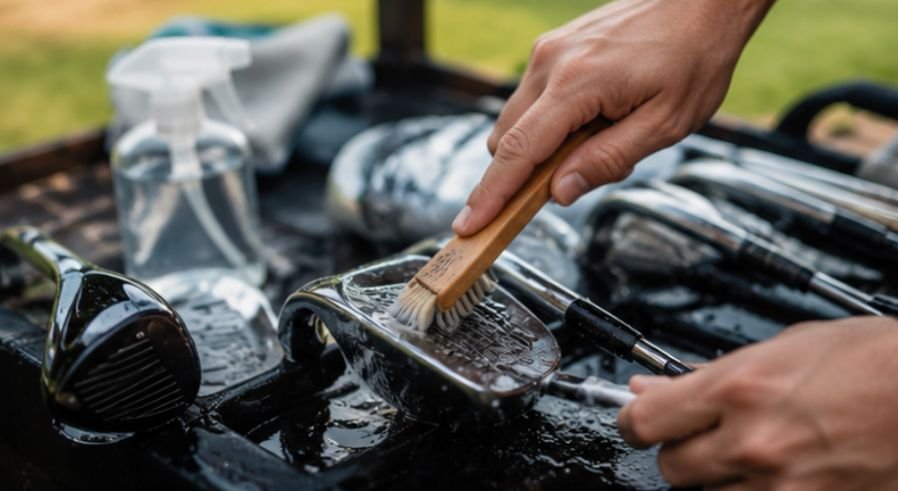
A small amount of Dawn in lukewarm water is generally suitable for routine cleaning. Golfzon Leadbetter specifically gives Dawn as an example. Rinse away residue and keep soaking limited to iron and wedge heads.
WD-40 is different. The manufacturer says its Multi-Use Product can help with light rust and corrosion protection on steel shafts. I would use it as targeted metal care, not an all-purpose cleaner. Keep it off grips and painted crowns, wipe away excess, and do not leave an oily film on the hitting face.
Polish is optional. Use only a product compatible with the club’s finish and keep it out of grooves and inserts.
A 30-Second Check Before Storage
Hold the face under angled light. If a groove still contains soil, clean it again. Run a dry finger over the grip; it should feel clean, not greasy or soap-slick. Then inspect the ferrule, shaft, and head for moisture.
Blaming inconsistent contact on your swing before ruling out dirty grooves is a common way golfers end up practicing the wrong golf skills spending range time fixing a problem that a clean face would have solved in seconds.
That catches the three problems that matter: blocked grooves, slippery grips, and trapped water.
Frequently Asked Questions
1. What is the best thing to clean golf clubs with?
Use lukewarm water, mild dish soap, a soft nylon brush, and microfiber towels. They remove normal dirt and oils without unnecessary abrasion or harsh chemicals.
2. Is Dawn dish soap bad for golf clubs?
No. A small amount in lukewarm water is generally fine for routine cleaning. Rinse away residue and avoid soaking woods, putters, grips, or bonded components.
3. How do I make my golf clubs look new?
Clean the grooves, face, sole, shaft, and grip, then dry thoroughly. For extra shine, use only a polish compatible with the specific metal or finish.
4. Can you use WD-40 to clean golf clubs?
Yes, selectively on suitable metal parts for light rust or moisture displacement. Avoid grips and painted crowns, remove excess, and keep the striking face free of oily residue.
Clean Clubs Are the Cheapest Equipment Upgrade
Learning how to clean golf clubs is mostly about knowing what not to soak, scrub, or spray. Keep the routine gentle: lukewarm water, mild soap, soft bristles, microfiber, and immediate drying. Clean grooves support consistent contact, clean grips feel more secure, and dry metal is less inviting to corrosion.
I would wipe clubs after every round and deep-clean them whenever dirt starts packing into the grooves. If you’re walking 18 holes rather than riding, building up the stamina for that with a few cardio workouts for golfers who walk the course matters just as much as maintaining your gear. Expensive gear does not need expensive maintenance. Give each club a few careful minutes, store it dry, and let the engineering in the head and face do the work without fighting dirt or moisture.