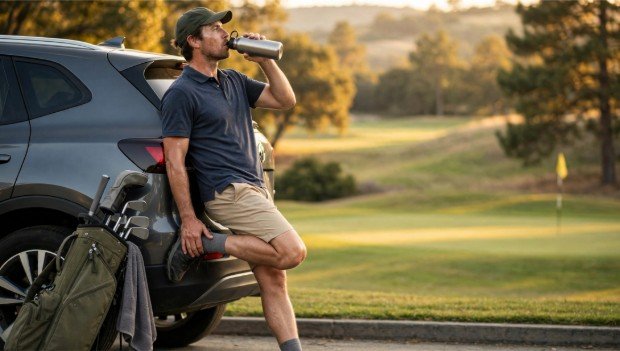

After walking the 18th green, I may be finished scoring, but my body is still working. Knowing what to eat after a round of golf for recovery helps me replace energy, support tired muscles, and avoid spending the rest of the afternoon feeling flat.
My post-round rule is simple: I combine protein, carbohydrates, fluids, and real food rather than chasing a special “golf recovery” product.
What Your Body Actually Needs After 18 Holes
Walking 18 holes can keep me active for several hours. My recovery needs depend on the weather, course terrain, how much I ate during the round, and how soon I plan to play again.
Sports-nutrition research consistently puts carbohydrates, protein, and fluids at the center of post-exercise recovery. The urgency increases when another training session or competition follows within several hours.
That distinction matters for golfers. I do not eat like I have finished a marathon after every casual round. I simply replace what the round likely took from me.
Protein for Muscle Repair
After a long walking round, I want a useful serving of high-quality protein.
Research supports roughly 0.3 grams of protein per kilogram of body weight after exercise as a practical recovery target.
For a 180-pound golfer, or roughly 82 kilograms, that works out to about 25 grams.
I can get there without a shake. Chicken, turkey, eggs, Greek yogurt, cottage cheese, tuna, salmon, milk, tofu, or another protein-rich meal can all work.
I also do not treat the first 30 minutes as a magical deadline. Protein sensitivity remains elevated well beyond the immediate post-exercise window. When possible, however, I prefer eating within an hour because it is practical and stops me from reaching the clubhouse starving.
Carbohydrates for Replacing Energy
Protein repairs. Carbohydrates refill.
Carbohydrate intake after exercise helps restore muscle glycogen, especially when recovery time before another activity is short.
Rice, potatoes, oats, whole-grain bread, fruit, pasta, quinoa, tortillas, and cereal are easy post-round choices.
If I fueled well while playing, I usually need only a normal carbohydrate serving. If I skipped snacks, walked a hilly course, or plan another round soon, I increase it.
That is why my recovery strategy actually starts before the final hole. Good choices for what to eat during 18 holes of golf can make the post-round energy crash far less dramatic.
My Simple Post-Round Recovery Meal Formula

When someone asks me what to eat after a round of golf for recovery, I use a four-part plate rather than a rigid menu.
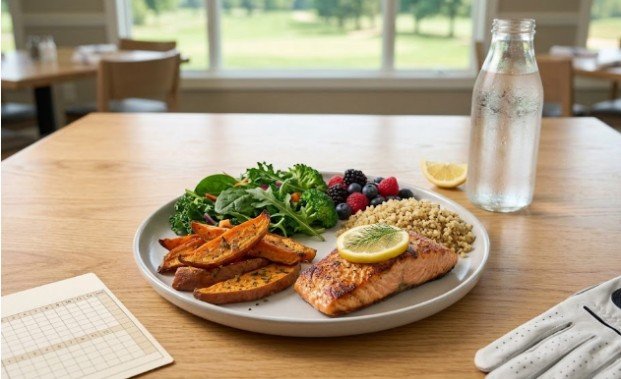
I start with a palm-sized protein source. Then I add a generous carbohydrate source, vegetables or fruit, and a drink.
A typical plate might be grilled chicken with rice, roasted vegetables, and fruit. Another might be salmon, potatoes, and a salad. After an early tee time, eggs with oatmeal, Greek yogurt, berries, and toast can work just as well.
For golfers needing faster recovery, a roughly 3:1 carbohydrate-to-protein combination is a useful practical benchmark. USADA gives 60 grams of carbohydrate with 20 grams of protein as one example.
For a recreational round followed by a quiet evening, I care more about a balanced meal than hitting a perfect ratio.
Preparation also matters. On early tee times, I plan what to eat before a morning round of golf so I am not trying to recover from four hours of under-fueling.
Best Quick Snacks After Golf
Sometimes dinner is an hour away. That is when I use a small recovery snack instead of waiting until I am ravenous.
Greek yogurt with berries gives me protein and carbohydrates without feeling heavy. A turkey sandwich is another easy option. I also like a banana with yogurt, milk, or another protein source.
Chocolate milk can be surprisingly practical. USADA notes that a cup of low-fat chocolate milk provides both carbohydrates and protein, making it a convenient recovery option when solid food is not appealing.
A protein bar with fruit works when I am driving home, although I check the label. Some bars contain plenty of protein but very little carbohydrate, which makes them less complete as a recovery snack.
The key is pairing foods. Protein alone is not my entire recovery plan.
Rehydration After Golf Matters Just as Much
Food gets most of the attention, but what to eat after a round of golf for recovery is only half the equation after a hot walking round.
Sweat losses vary greatly between people, so one fixed fluid recommendation will never fit every golfer. Personalized hydration strategies work better than assuming everyone needs the same bottle size.
I start drinking before I feel desperate for water. That is why how to stay hydrated during a round of golf matters as much as what I drink afterward.
When meaningful dehydration has occurred and rapid recovery is needed, sports-medicine guidance suggests replacing roughly 100% to 150% of the body mass lost as fluid.
Water works for many ordinary rounds. After heavy sweating, especially in hot weather, fluids paired with sodium-containing foods or an electrolyte drink can improve fluid retention.
A Practical Sweat-Loss Example
Here is the recovery calculation I find more useful than saying everyone should drink 16 ounces.
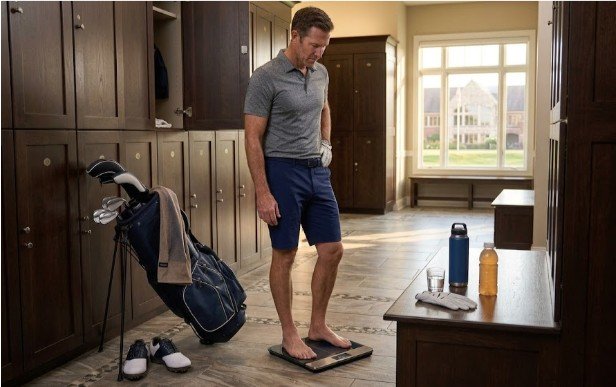
Suppose I weigh 180 pounds before the round and 178 pounds afterward.
That two-pound difference represents roughly 32 fluid ounces of body mass loss, assuming most of the change came from sweat.
Using a 100% to 150% replacement target, rapid rehydration would call for roughly 32 to 48 ounces over the following recovery period, not necessarily all at once.
If I have the rest of the day to recover, I do not force fluids aggressively. The National Athletic Trainers’ Association notes that when recovery extends beyond about 12 hours, normal food and fluid intake can generally restore balance.
That is a far more useful strategy than blindly chugging a gallon after every round.
What I Eat After Morning, Afternoon, and Hot-Weather Rounds
My post-golf meal changes with the tee time.
After a morning round, I often treat recovery as lunch: chicken or turkey, rice or potatoes, vegetables, fruit, and water.
After an afternoon round, dinner handles recovery. Salmon with rice and vegetables is one of the simplest combinations because it covers protein, carbohydrate, and micronutrient needs without requiring special sports foods.
After a hot round, fluids move higher on my priority list. I pair water or an electrolyte drink with a normal salty meal rather than relying only on plain water after heavy sweating.
If another round is scheduled the following morning, I also make carbohydrates more prominent. Faster glycogen replenishment becomes more relevant when the recovery window is short.
Foods I Avoid Immediately After Golf
I do not classify clubhouse food as “good” or “bad,” but some choices make recovery harder.
A large meal built almost entirely around fried food may provide plenty of calories while offering little useful carbohydrate quality, produce, or lean protein.
Alcohol also should not replace my recovery fluids. I rehydrate and eat first.
The same applies to oversized desserts or sugar-heavy snacks eaten alone. Carbohydrates have a role after exercise, but I prefer pairing them with protein and a balanced meal.
Quick Post-Golf Recovery Reference
| Situation | Practical Recovery Choice |
| Normal 18-hole round | Protein + carbs + produce + water |
| Meal is delayed | Greek yogurt and fruit or sandwich |
| Playing again soon | More carbohydrate plus protein |
| Heavy sweating | Fluids plus sodium/electrolytes |
| Morning round | Eggs, oats, fruit, yogurt or lunch |
| Hot walking round | Rehydrate based on sweat loss |
Evidence References
| Source | What It Supports |
| ISSN nutrient timing position stand | Post-exercise carbohydrate timing |
| USADA Nutrition Guide | Practical 3:1 carbohydrate-protein example |
| NATA Fluid Replacement Statement | Individualized post-exercise rehydration |
| Sports Medicine research | Approx. 0.3 g/kg post-exercise protein |
Frequently Asked Questions
1. What is the best meal to eat after 18 holes of golf?
A meal containing lean protein, carbohydrates, vegetables or fruit, and fluids is a practical choice for most golfers.
2. How soon should I eat after playing golf?
Eating within about an hour is convenient, but rapid nutrient timing matters most when another demanding activity follows soon afterward.
3. What should I eat after golf for muscle recovery?
When deciding what to eat after a round of golf for recovery, aim for roughly 20–30 grams of quality protein alongside carbohydrates and fluids.
4. Is a protein shake enough after golf?
It can supply protein, but adding fruit, oats, milk, bread, or another carbohydrate source creates a more complete recovery snack.
Your Scorecard Is Done—Your Recovery Isn’t
I used to think finishing the 18th meant the day’s golf routine was over. Nutrition changes that perspective.
My easiest rule for what to eat after a round of golf for recovery is not complicated: feed the muscles, replace the energy, and restore the fluid I actually lost.
I do not need a perfect sports drink, supplement stack, or expensive recovery meal. A chicken-and-rice bowl, yogurt with fruit, eggs and toast, or salmon with potatoes can do the job.
My next move after signing the scorecard is simple: get some fluid, eat a balanced meal, and give tomorrow’s swing a body that is ready to make it.