
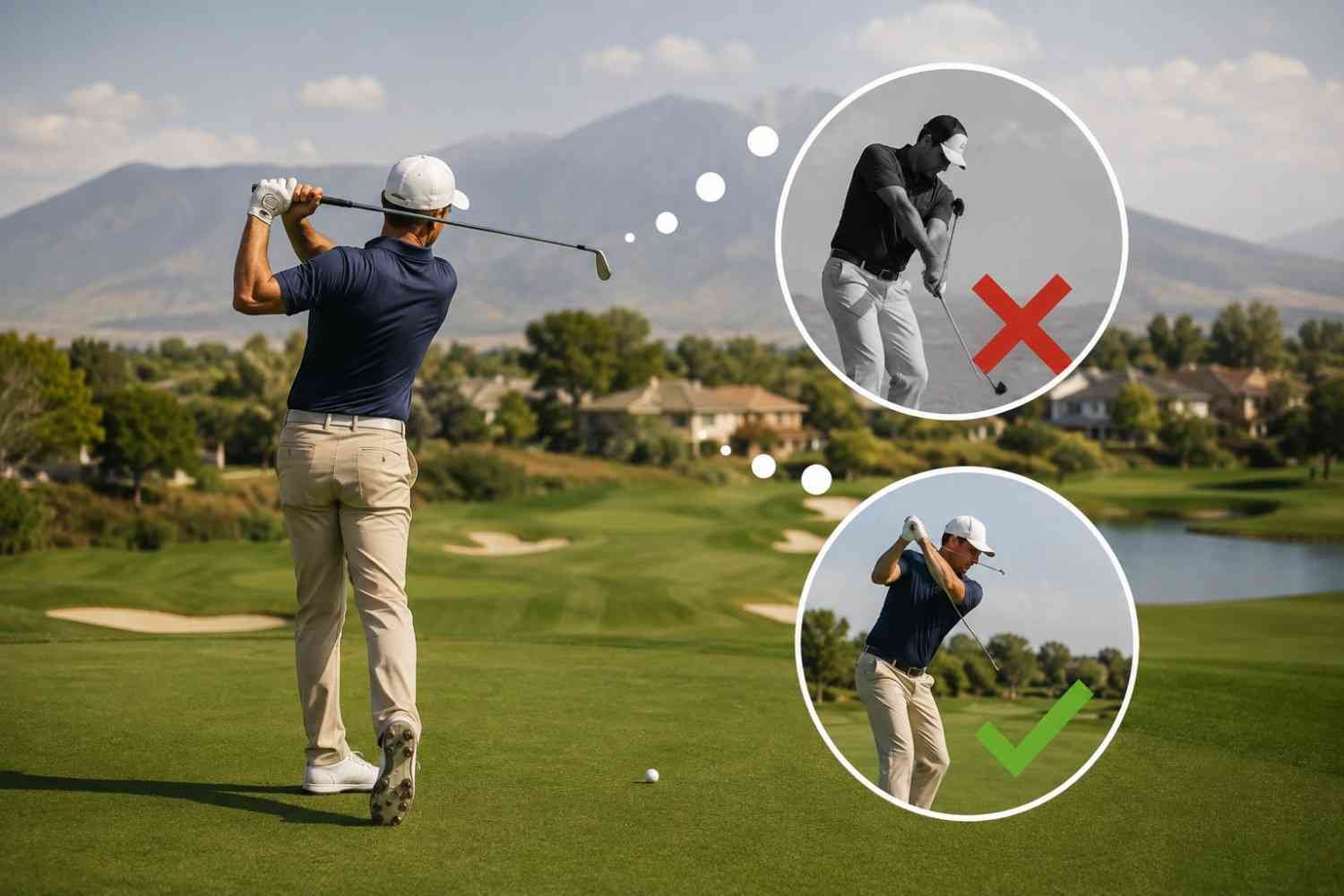
Golf practice can feel productive even when it is quietly making the game harder. It is easy to stand on the range, hit the same club toward the same target, and walk away feeling like you put in good work. But if those repetitions do not address what is actually costing you strokes, you may simply be getting better at repeating the wrong thing.
The faster path to improvement usually starts with practicing with more purpose, not just spending more hours hitting balls. Once you know where your game is leaking strokes, you can build practice around feedback, realistic situations, and skills that actually show up during a round. That shift can make your range time more useful and help you stop carrying the same mistakes from one round to the next.
Start by Finding What Is Actually Hurting Your Game
Before changing your swing, figure out what needs changing. A bad round can leave you with a dozen theories about what went wrong, but guessing is a poor way to plan your next practice session.
Start tracking simple stats such as fairways hit, greens in regulation, total putts, penalties, and where your misses tend to finish. You might discover that your driving is not the main problem at all. Maybe you are leaving too many approach shots short, missing chips on the wrong side, or turning three-foot putts into unnecessary bogeys.
That information gives you a starting point. Instead of spending an hour practicing a skill you already handle reasonably well, put more attention toward the area that repeatedly costs you shots.
Use Video to Check What You Feel
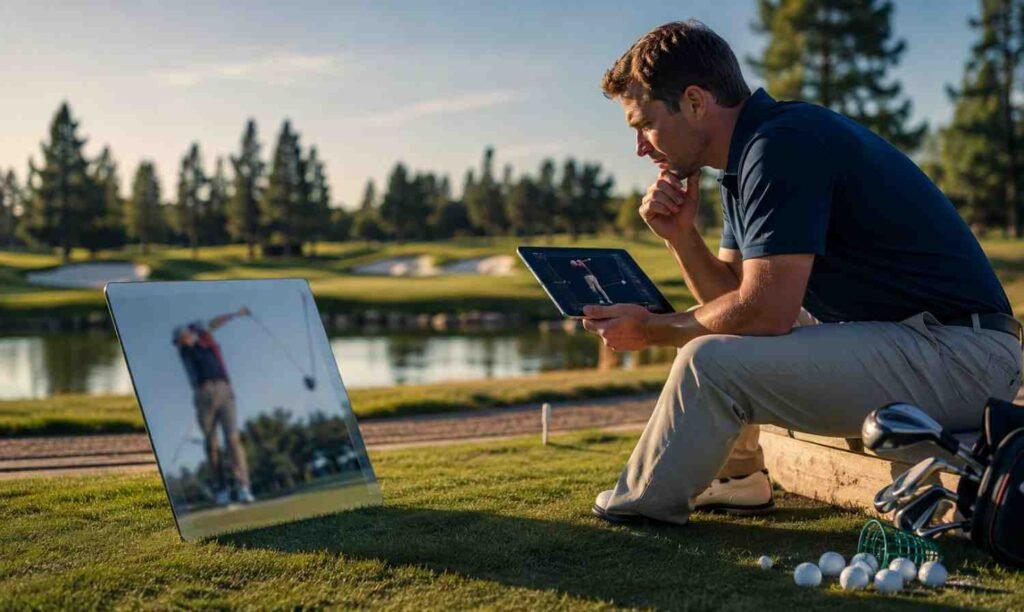
Your golf swing can feel completely different from how it looks. That is why recording a few swings from face-on and down-the-line angles can be so useful.
You do not need to become obsessed with slow-motion analysis. Look for obvious patterns. If you are working on a swing change, compare your movement with what your instructor has asked you to change. Video can also help you avoid building an entire practice session around a feeling that does not actually produce the movement you want.
Stop Hitting the Same Shot Over and Over
One of the easiest ways to make range practice feel better than it really is involves hitting the same club toward the same target repeatedly.
You hit a 7-iron. Then another. Then another. After 20 shots, you are comfortable with the club, the distance, the target, and the lie. Of course the swings start feeling easier. But a golf course rarely gives you that kind of repetition.
That is where random practice becomes useful. Rather than hitting 30 identical shots, change the situation between repetitions.
- Switch clubs and targets regularly instead of hitting the same shot repeatedly.
- Go through your pre-shot routine before each ball, including choosing a target and committing to the shot.
The point is not to make every range session complicated. It is to make some of your practice resemble the decisions you actually have to make on the course. Research into motor learning has also found that practice that feels more difficult can sometimes produce stronger retention and transfer than highly repetitive practice.
Spend More Time Where You Actually Lose Strokes

Golfers naturally gravitate toward the fun part of practice. Drivers and long irons feel satisfying when you catch them well, so it is easy to spend most of a range session working on the full swing.
But your score is not built entirely from full swings.
Short-game shots, wedges, and putting can account for a huge share of the shots you play. That makes your practice balance worth reconsidering. If you spend nearly all your available time on the range while barely touching your wedges and putter, your practice may not reflect where you can realistically save strokes.
A useful starting split is:
- Short game and putting: 60% — Work on distance control, short putts, chipping, and choosing sensible landing areas.
- Wedges from 30–100 yards: 20% — Focus on consistent contact and controlling carry distances.
- Full swing: 20% — Work on your main miss, target awareness, and the swing change you are currently developing.
This does not need to become a rigid rule. A golfer struggling badly with driving may need to temporarily devote more time to the driver. The important part is matching practice time to an actual weakness instead of automatically giving every club equal attention.
Make Feedback Part of Your Practice
Practice without feedback can become a guessing game. You hit a shot, decide it felt good or bad, and move on without knowing whether the ball actually did what you intended.
That is where personalized golf swing feedback can be valuable, particularly when you are working through a specific movement issue rather than trying to overhaul your entire swing at once.
Your feedback does not always need to come from a coach, either. A smartphone video, launch monitor, practice aid, or simple scorecard can reveal patterns that are difficult to notice while standing over the ball.
The key is knowing what you are measuring. If your goal is better driver accuracy, track dispersion and start direction. If wedge distance control is the issue, pay attention to carry distances instead of only whether the shot looked good. For data-driven golf improvement, the goal is not to turn every practice session into a spreadsheet. It is to replace vague impressions with useful information.
Even a basic golf shot can show whether your recurring miss is actually changing over several rounds. That makes it easier to decide whether a drill deserves more time or needs to go.
Put Some Pressure Back Into Practice

The range is forgiving. A poor shot usually costs you nothing beyond another golf ball. The course is different.
There are bunkers, water, trees, out-of-bounds markers, awkward lies, and a scorecard sitting in your pocket. If you only practice when there are no consequences, you can develop skills that disappear as soon as the pressure changes.
You can create some of that pressure yourself.
Turn Practice Into a Game
Pick two targets that represent the edges of a fairway. Hit 10 drives and give yourself a point only when the ball finishes between them. Record the score and try to beat it during your next session.
At the short-game area, try an up-and-down challenge. Hit chips from several different locations and see how often you can get down in two strokes. The point is not to manufacture tournament-level pressure. It is to give each shot a purpose and a consequence.
Once you start thinking about a score instead of simply hitting another ball, your decision-making becomes more involved. That is much closer to what happens during an actual round.
Know When to Practice and When to Play
One of the biggest mistakes golfers make is taking a technical swing thought onto the course.
The practice tee is where you can work on mechanics. You can rehearse a movement, hit several repetitions, film your swing, and make adjustments. You have time to think about things like club position or wrist movement.
The first tee is different.
Once you start playing, shift your attention toward the target and the shot you want to hit. Instead of thinking, “Keep my wrist flat,” focus on something external, such as starting the ball at a particular tree or landing it beside a specific target.
That separation matters for golf shot tracking for improvement because trying to consciously control every part of your swing during a round can make you less responsive to the shot in front of you. Take the swing you have that day, make smart decisions, and let practice handle the technical work later.
Build Practice Around Transfer, Not Just Comfort
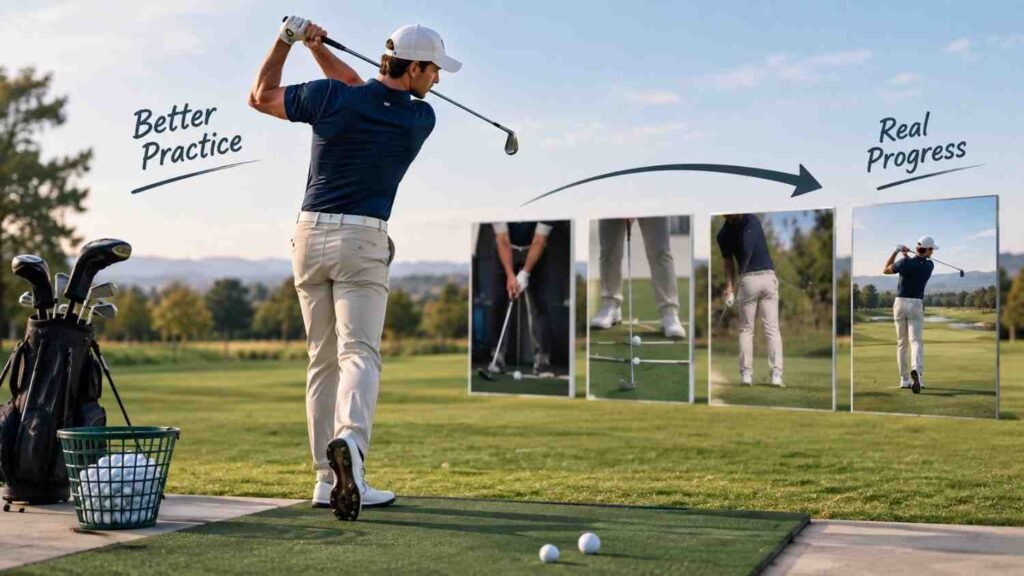
A good practice session should eventually become harder than simply hitting the perfect shot over and over. Change the target. Change the club. Change the distance. Give yourself one chance instead of five.
Most importantly, give yourself a reason for every shot.
If you are working on a swing change, spend part of the session rehearsing that movement without worrying about immediate perfection. Then gradually test it with different targets and situations. If the skill only works when you stand in exactly the same place and hit the same club 15 times, it is not ready to be trusted on the course.
The real test comes when you can execute without needing the practice environment to feel comfortable.
Why Better Practice Beats More Practice
Improvement in golf is rarely about finding one magical drill and repeating it until your swing suddenly looks different. It is about becoming more honest about what needs work, using feedback to understand the problem, and then creating repetitions that resemble the decisions and pressure of actual play. When practice becomes intentional, you stop measuring success by how many balls you hit and start measuring it by whether the skill survives after you leave the range.
You do not necessarily need more practice. You need more useful practice.
Frequently Asked Questions: How to Stop Practicing the Wrong Golf Skills and Improve Faster
1. How do I know if I’m practicing the wrong golf skills?
Look at your recurring mistakes and basic performance stats before choosing what to practice. If you repeatedly lose strokes in one area but spend most of your practice time working on something else, your routine probably needs to change.
2. Is hitting more golf balls the best way to improve?
Not necessarily. Repetition has value when you are learning a movement, but endless identical shots can create false confidence. Mix technical work with varied targets, different clubs, and course-like situations.
3. Should I practice one golf skill at a time?
It depends on what you are trying to accomplish. Focused practice works well when learning or changing a specific movement. Once that skill becomes more comfortable, introduce different targets and situations so it can transfer to the course.
4. How often should I change my golf practice routine?
Do not change it simply for the sake of variety. Keep a routine long enough to see whether a particular weakness is improving, then adjust based on your results. If your practice is no longer addressing your biggest weakness, it is time to rethink the structure.