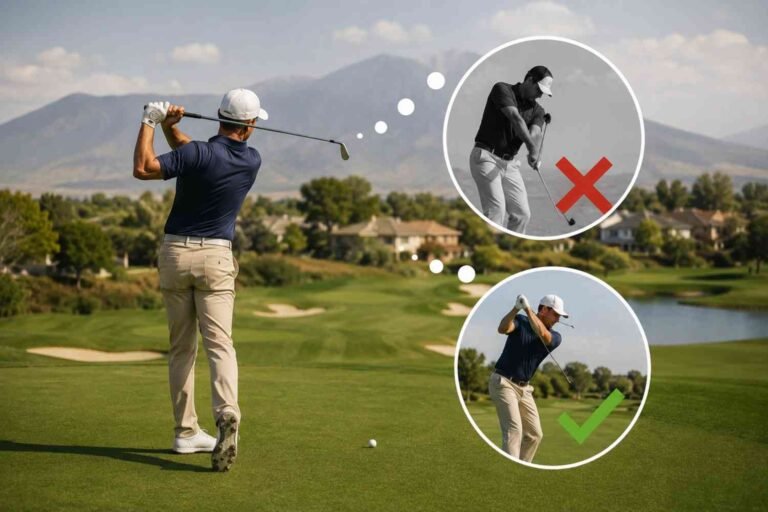
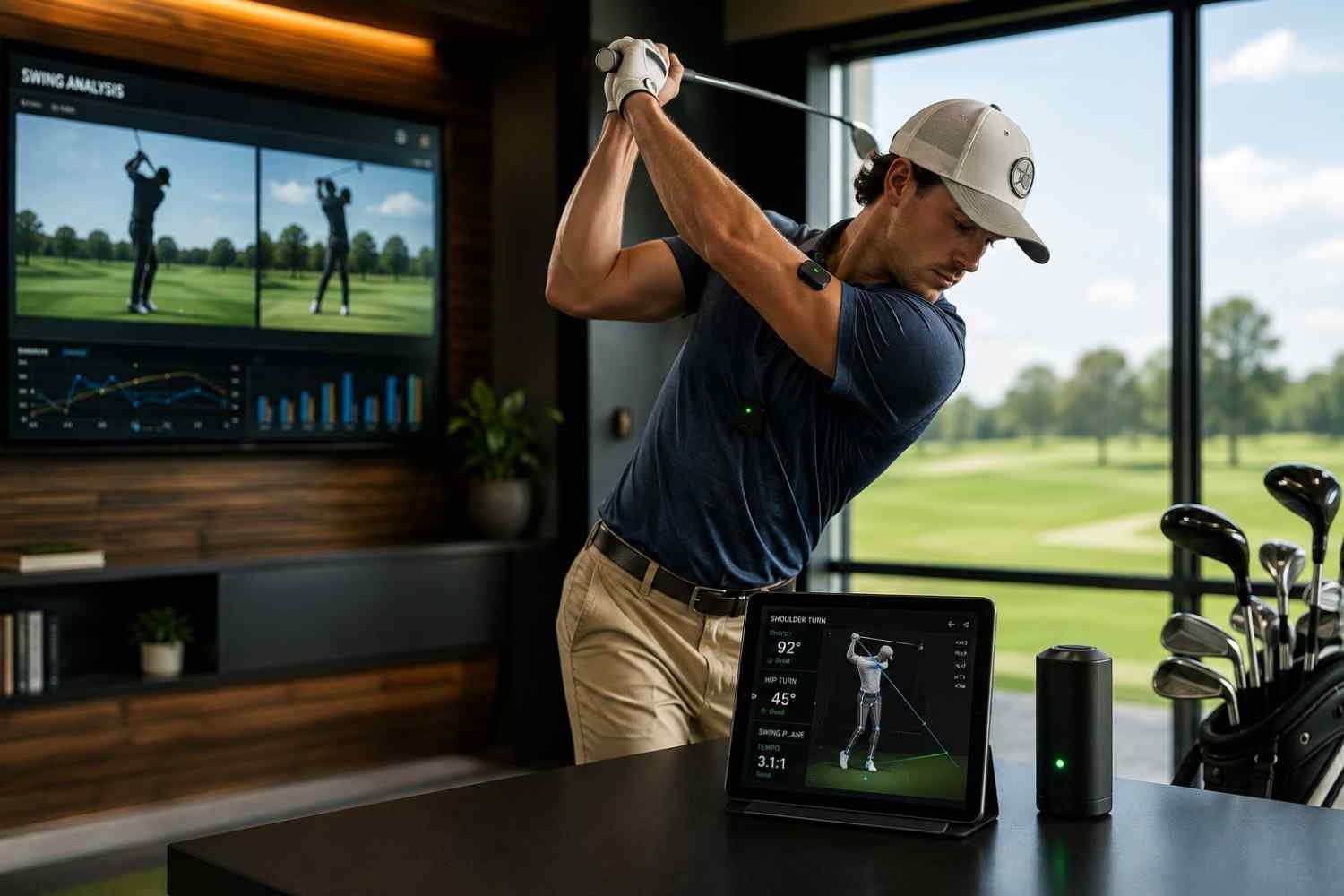
I used to find it frustrating when a swing felt completely different from how it looked on video. I could feel like I was keeping my head steady or starting the downswing correctly, then watch the recording and see something else happening. That gap between feel and reality made generic swing advice difficult to apply because I did not always know which part of my own motion needed attention.
I eventually found that feedback became much more useful when I stopped trying to fix everything at once. A video, a few useful numbers, and a clear understanding of my usual miss could tell me far more than another list of swing tips. Instead of changing my entire motion after one poor shot, I could identify a pattern, work on one adjustment, and then see whether that change actually improved the result.
What Personalized Golf Swing Feedback Really Means
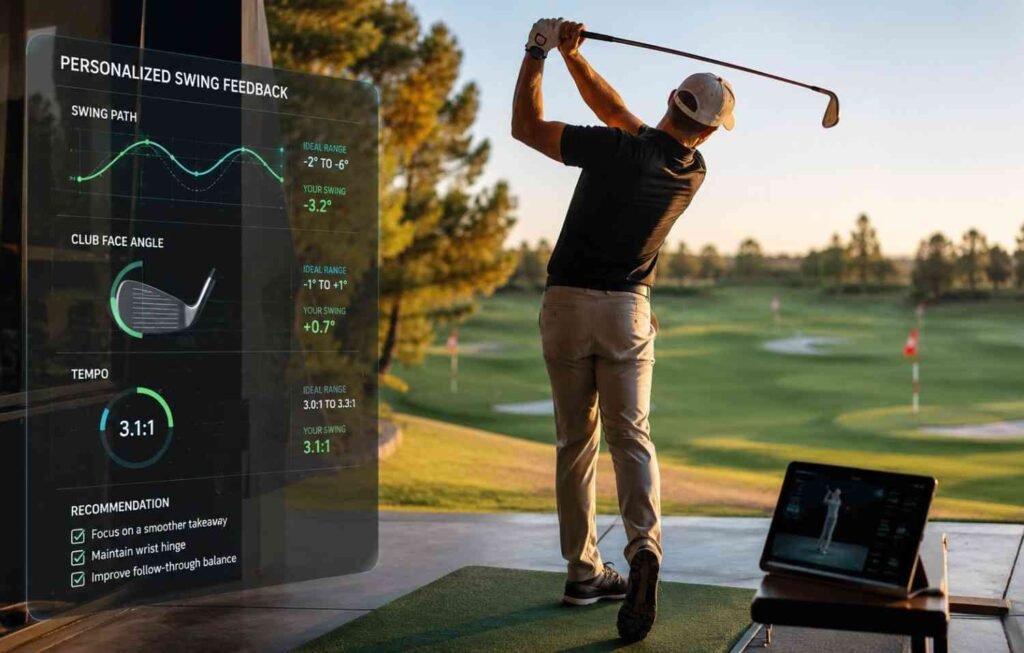
Personalized golf swing feedback is more than watching your swing and looking for something that seems wrong. It connects your movement, club behavior, ball flight, and individual goals.
Two golfers can hit the same slice for completely different reasons. One might deliver the club with an open face, while another could have a different path or release pattern. That is why copying a correction that worked for another golfer does not always solve your problem.
Useful feedback should answer three basic questions: What is happening, why might it be happening, and what should you practice next?
That approach also makes improvement easier to measure. Instead of chasing a perfect-looking swing, you can work toward a more consistent start direction, better contact, tighter dispersion, or a ball flight that matches the shot you want.
Work on One Meaningful Change
One of the easiest ways to make swing practice confusing is to fix five things during the same session.
If your feedback points toward an overly steep downswing, make that the priority. If contact is the bigger problem, work on centeredness instead. Give the change enough time to become familiar before deciding that it failed.
Exaggeration can also have a place in practice. If a movement needs to become shallower, making an intentionally exaggerated shallowing motion for a few swings can help you recognize the sensation. The goal is not to keep using the exaggerated movement forever. It is to help your body experience a different pattern before gradually returning toward a more functional version.
That same principle applies when working on how to improve driving accuracy and distance. A driver swing does not need to become dramatically faster to produce better results. Improving centered contact, controlling the face, and reducing excessive curvature can make the existing speed much more useful.
Look for Trends Instead of One Perfect Swing
A single swing can tell you very little.
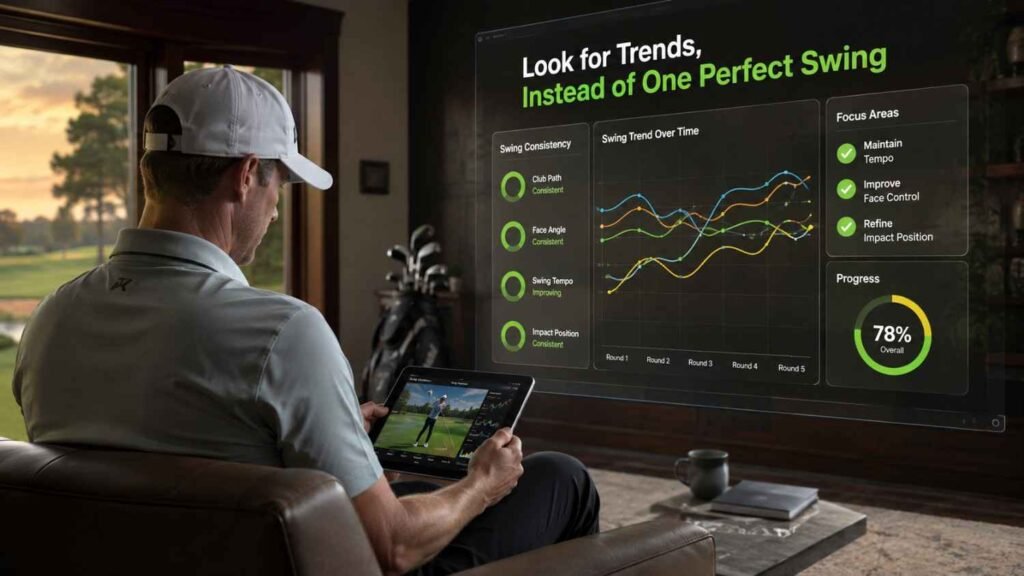
You may hit a great shot after making a poor movement, or hit a bad shot while making a change that is eventually going to help. That is why personalized feedback works better when you look at patterns over several practice sessions.
Keep track of a few simple measures that matter to your goal. For a driver, that might be carry distance and dispersion. For iron play, it could be strike location and distance control. For a swing change, you may want to monitor one specific movement alongside the resulting ball flight.
This creates a feedback loop. You make a change, collect enough swings to see a pattern, and then decide whether the adjustment is helping. It is a much more reliable process than judging an entire swing change by the first five balls you hit.
Make Feedback Useful in Real Playing Conditions
A swing that looks good on the range still has to work when the conditions change.
Wind is a good example. You may need to change trajectory, club selection, or target depending on the direction and strength of the wind. Trying to force your normal stock shot into every condition can create unnecessary problems.
Personalized feedback should therefore help you understand your tendencies rather than make you dependent on one perfect swing. If you know how your normal ball flight behaves, you can make better decisions when conditions are less predictable.
This becomes particularly useful when learning golf techniques for windy conditions. Instead of rebuilding your swing every time the wind picks up, you can use what you already know about your contact, launch, and shot shape to choose a more suitable trajectory.
Check Contact Before Chasing More Speed
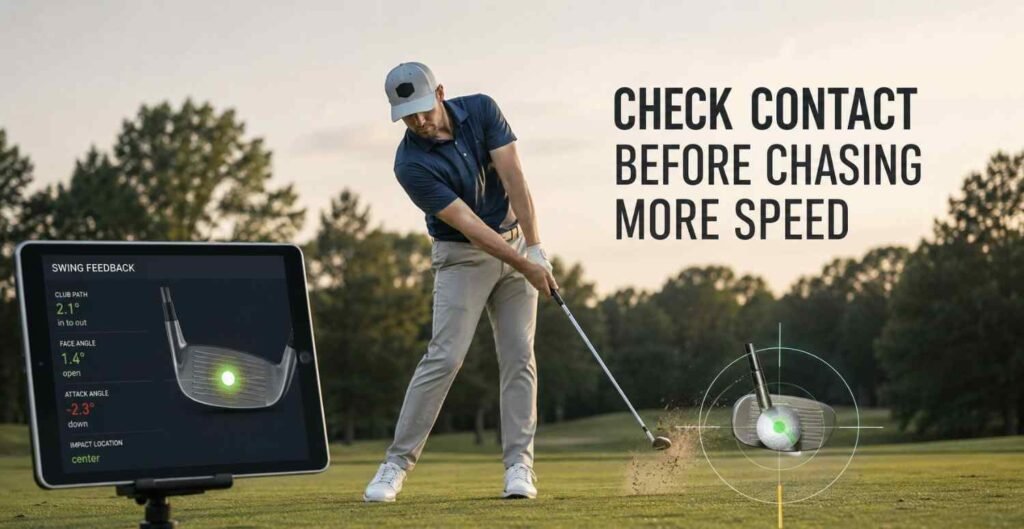
Golfers often assume they need more speed when the real problem is where the club contacts the ball.
A strike away from the center of the clubface can reduce energy transfer and change launch, spin, and direction. If you can improve contact without adding speed, the ball can travel more efficiently, and your dispersion may improve at the same time.
Video and impact data can help you see whether your practice is actually improving contact. If your swing feels faster but your strike pattern is moving around the face, more speed may not be the answer yet.
For golfers working on how to improve centered strike in golf, the useful question is not simply whether the ball went farther. Look at where you are making contact and whether that pattern becomes more consistent as your practice progresses.
Know When Technology Helps
Modern golf technology can make personalized feedback much more detailed. Video apps can identify movement patterns, while launch monitors provide club and ball data. More advanced systems can combine motion capture with three-dimensional measurements to show how different parts of the body move through the swing.
That information can be valuable, but more data does not automatically mean better feedback.
A golfer can easily become distracted by numbers that have little connection to the actual problem. If your main issue is inconsistent contact, spending an entire session worrying about a small change in hip rotation may not be productive.
Technology works best when it helps answer a specific question. Use it to confirm a pattern, measure progress, or decide what to practice next.
Combine Technology With Human Judgment
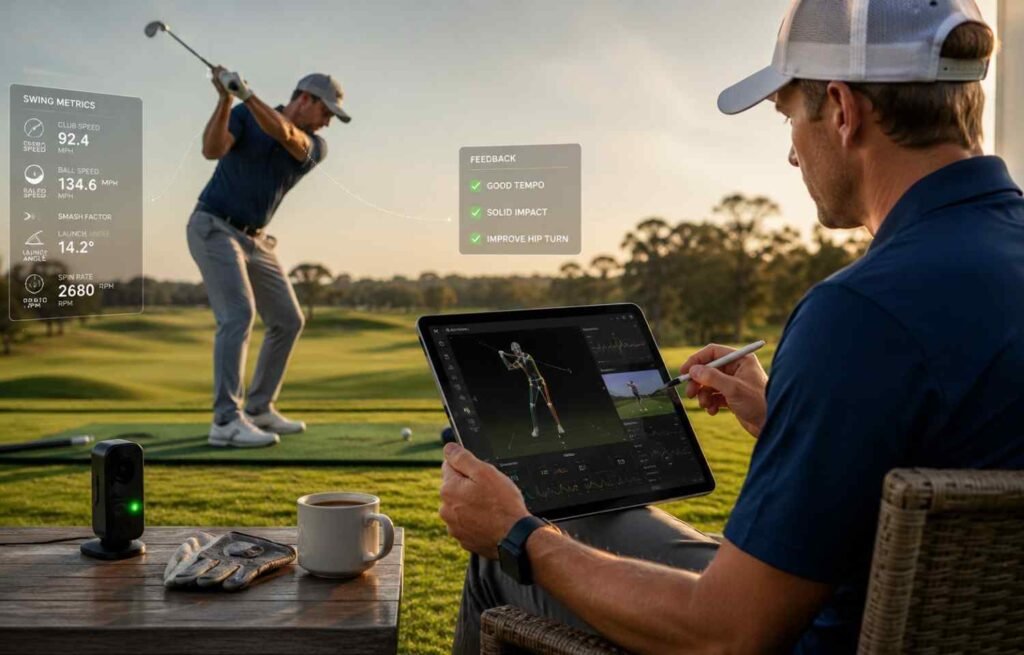
Automated feedback can identify patterns quickly, but context still matters. A coach can consider your experience, physical abilities, goals, typical misses, and playing conditions when deciding what a particular movement means.
Remote swing analysis can also be useful when you want another set of trained eyes without scheduling an in-person session. The key is to provide consistent video and enough information about the shot to make the feedback meaningful.
The strongest approach is often a combination of tools. Use video to see the movement, data to understand the impact, ball flight to confirm the result, and coaching when you need help deciding what to change.
Build a Feedback Routine You Can Repeat
Personalized feedback becomes much more useful when it fits into a simple routine. Record a few swings, identify one recurring pattern, choose one adjustment, and then test it across enough shots to see whether the result changes.
Do not chase a perfect swing after every bad shot. Golf improvement is rarely that linear. A useful change may initially feel strange, and a good-looking swing can still produce a poor result.
The real goal is to understand your own swing well enough to practice with purpose. When feedback tells you what to work on and your practice tells you whether it is working, improvement becomes a much clearer process.
FAQs: How to Use Personalized Golf Swing Feedback to Improve Your Swing
1. What is personalized golf swing feedback?
It is feedback based on your individual swing, ball flight, contact, goals, and recurring tendencies rather than generic advice. It helps identify a specific area to practice.
2. Is video enough to analyze a golf swing?
Video can reveal movement patterns that are difficult to feel, but it has limits. Combining video with ball flight or launch-monitor data can provide a more complete picture.
3. How often should I analyze my swing?
You do not need to analyze every session. Reviewing your swing periodically can help identify trends, especially when you are working on a specific change.
4. Can AI analyze a golf swing?
Yes. Some modern tools use computer vision and motion data to identify swing positions and movement patterns. The feedback is most useful when you apply it to a clear practice goal.
Why Better Feedback Creates Better Practice
The value of personalized swing feedback is not really in having more information. It is in knowing which information deserves your attention. When you understand the difference between what you feel and what actually happens, you can stop guessing at every change and start testing adjustments with a clear purpose.
A better swing does not have to look perfect. It needs to produce a more reliable result for your game. The right feedback can help you find that path with fewer unnecessary changes.