There is a special kind of frustration in watching a golf ball splash into a pond, settle just a few feet from the bank, and remain perfectly visible while staying completely out of reach. I have been in that situation enough times to know that stretching with a club or edging closer to slippery water is rarely worth it.
That is where the best golf ball retriever for water hazards can quickly earn its place in the bag.
I do not judge a retriever by brand name or maximum length alone. For real-world pond recovery, I look at how securely the head captures the ball, how stable the telescoping shaft feels underwater, whether the locking mechanism stays dependable, and whether the tool is compact enough to carry every round.
In this blog, I break down the strongest options for U.S. golfers and explain which mechanical designs work best in deep water, mud, weeds, and low-visibility conditions.
Which Golf Ball Retriever Works Best in Deep Water?
For maximum reach, I would start with the I GOTCHA Ultimate XL, an 18-foot option that stores compactly. For gripping security, I would consider the I GOTCHA Jawz and its rubberized head.
For very long pond edges, the Search’N Rescue Blue Rescue reaches up to 19 feet and uses stainless steel rings plus a lock bar to secure the ball. Callaway is my premium-build pick, while Prowithlin’s spring-release models offer a value-focused alternative.
Which Head Mechanism Is Best for Muddy or Murky Water?
Spring-release and ring-style systems can work well around water because they close or lock around the ball instead of asking you to balance it in an open cup. MyGolfSpy rated spring-release designs highly for ball security, which can be particularly useful when dealing with situations covered by the Lost Ball Rule in Golf.
Hinged scoop or cup heads are simpler. I like them when the ball is visible in shallow, still water. They become harder to aim when glare, weeds, or stirred-up silt hide the ball.
Wire-cage heads are another option. Search’N Rescue has offered an orange-coated steel wire cage retriever, giving golfers a larger capture area when precise alignment is difficult. The Water Weasel takes a different approach with rotating discs and a rubber insert and is marketed for mud, sand, and murky water.
Should I Choose a Twist-Lock or Push-Button Shaft?
I prefer a positive locking system that stays fixed once I set the length. Callaway’s current retriever uses a twist-and-lock mechanism with adjustable lengths.
I would not automatically reject a push-button design. Telescoping-pole references describe twist, flip, and button locks as legitimate systems. Around muddy water, I would focus on keeping sand, silt, and algae out of the sliding sections and drying the tool before storage.
How Rigid Should a Long Golf Ball Retriever Be?
A long golf ball retriever is useful only if I can control the head at full extension. Water creates drag, and thin sections can flex enough to make aiming frustrating. MyGolfSpy warns that overly whippy shafts are harder to use and rated Callaway highly for stability.
For frequent water use, I prefer stainless steel or quality aluminum alloy. Callaway uses a stainless steel mechanism and aluminum alloy designed to resist bending at full extension.
Does a Bright Retriever Head Help in Murky Water?
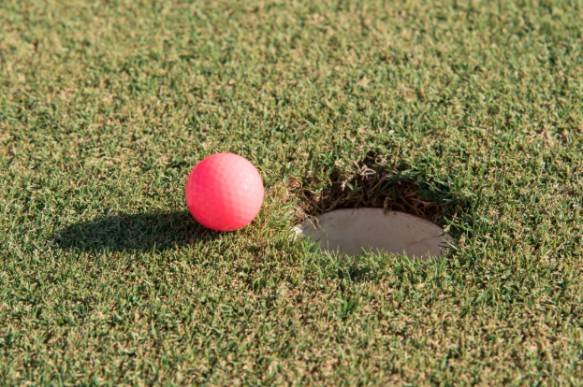
Yes. A high-visibility head gives me a better reference point when dark water, reflections, or mud make depth difficult to judge. Search’N Rescue has used bright orange heads on water-retrieval models.
If I regularly play courses with muddy ponds or shaded creeks, I would choose orange, yellow, or another high-contrast tip.
How Long Should a Golf Ball Retriever Be?
For most weekend golfers, I think 12 to 15 feet is practical. It reaches beyond many pond banks without becoming as awkward as the longest 18- to 19-foot models. If my home course has broad lakes or steep banks, I would accept the extra bulk of a longer telescopic golf ball retriever.
Collapsed length matters too. A compact golf ball retriever is easier to keep in the bag every round. Golf Monthly and MyGolfSpy both treat storage and extension as meaningful buying factors, especially when choosing equipment alongside the Best Golf Balls for Slow Swing Speed.
Is a Golf Ball Retriever Worth Buying?
For golfers who regularly lose premium balls near water, I think so. A golf ball pickup tool can recover balls without forcing you toward a slippery bank. I would never enter deep water or risk a fall just to save a ball, just as I would take care when learning How to Repair Ball Marks on the Green without damaging the putting surface.
I would choose the head mechanism that matches my course, a rigid shaft, dependable lock, corrosion-resistant materials, visible head, and practical collapsed size.
Frequently Asked Questions (FAQs)
1. What is the best golf ball retriever for water hazards?
The right choice should combine enough reach for your course with strong ball security and a shaft that remains controllable when extended. I would favor the Ultimate XL for reach, Jawz for grip, Blue Rescue for long-distance retrieval, Callaway for stability, and Prowithlin for spring-release value.
2. Are spring-loaded golf ball retrievers better than scoops?
They can be better when ball security is the priority because spring-release mechanisms are designed to capture the ball rather than simply cradle it. A hinged scoop can still work well in clear, shallow water.
3. Can golf ball retrievers rust?
Metal parts can corrode if they stay wet or dirty. I would rinse off pond residue when necessary, dry the shaft and head, and avoid storing the retriever wet. Stainless steel and weather-resistant aluminum are sensible materials for frequent water use.
Final Verdict
If I were buying today, I would not shop by brand alone. I would match the retriever to the water I actually face: long reach for broad ponds, a secure spring or jaw mechanism for difficult pickups, a wider cage or rolling design for low visibility, and a rigid telescoping shaft for better control.
That gives me useful water hazard golf equipment rather than another accessory that stays buried in the garage.