When I compare hybrid vs fairway wood for high handicappers, I generally give the hybrid an early advantage. Its shorter shaft, compact head, forgiving construction, and iron-like setup can make consistent contact easier when your long game is still developing. That does not mean I would remove every fairway wood from the bag.
A higher-lofted 5-wood or 7-wood can be extremely useful when you need more carry, a higher flight, or an alternative to driver.
For most higher-handicap golfers, I see the smartest setup as a combination rather than a strict either-or choice.
Are Hybrids Easier to Hit Than Fairway Woods for High Handicappers?
For many golfers, yes. Hybrids normally have shorter shafts than fairway woods, which can make it easier to control the clubface and find the center more consistently. Stix also identifies hybrids as a particularly forgiving choice for beginners and high-handicap players.
The swing can feel more familiar, too. Instead of trying to sweep the ball from the turf as I would with a fairway wood, I can play a hybrid more like an iron and make a slightly descending strike. Honma specifically notes that golfers can use an iron-style descending blow with hybrids, while fairway woods tend to suit players with a more sweeping action.
That combination of control and a familiar swing is why I would normally start a struggling high handicapper with a hybrid.
Which Launches Higher: A Hybrid or Fairway Wood?
This comparison needs more nuance than simply saying hybrids launch higher.
Hybrids use center-of-gravity placement and forgiving head construction to help golfers launch shots more easily than traditional long irons. Their shorter shafts can also make solid contact easier.
However, fairway woods have large heads and designs intended to promote launch, and higher-lofted models such as 5-woods and 7-woods can produce an especially high trajectory. Honma notes that the larger fairway-wood head can help increase launch, while hybrids combine high flight with additional spin.
For a slower-swinging golfer who struggles to generate height, I would therefore test a 7-wood against a comparable hybrid rather than assuming the hybrid automatically wins.
Is a Hybrid Better From the Rough?
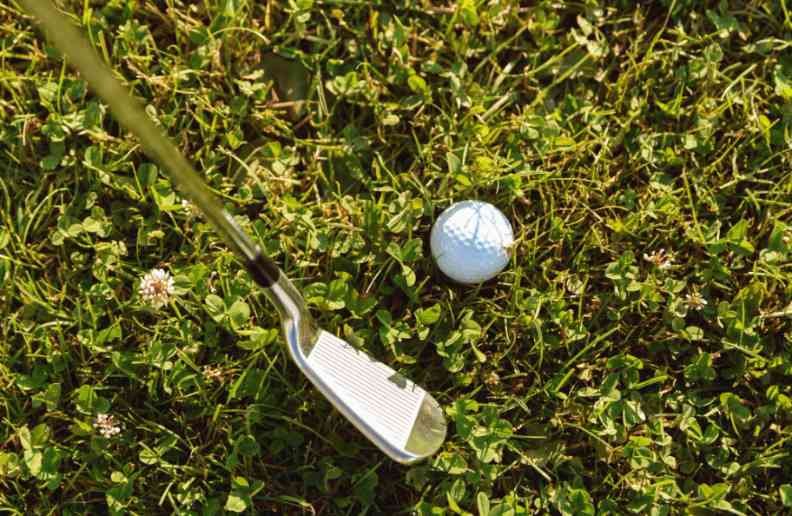
A hybrid is an excellent default choice when the lie becomes difficult. Its compact head and versatile sole make it useful when the ball sits down, and it can be easier to deliver with a steeper attack angle than a large fairway wood.
But I would not say a fairway wood is automatically poor from the rough. MyGolfSpy’s analysis of Shot Scope data actually challenged that common assumption and found situations where woods performed very well from rough.
My practical rule is simple: when the ball is buried or surrounded by heavy grass, I prefer the control of a hybrid. If it is sitting cleanly on top of light rough, a 5-wood or 7-wood can still be a realistic option.
Whichever club you choose, a poor strike from thick rough can still send the ball into trouble or out of sight. Knowing the lost ball rule in golf can help you handle those situations correctly, including when you need to return under stroke-and-distance procedures.
Which Club Gives High Handicappers More Distance?
Fairway woods usually have the distance advantage because their longer shafts can create more clubhead speed. That does not mean the difference will always be large for a high handicapper.
MyGolfSpy’s 5-wood-versus-3-hybrid data is particularly useful here. For golfers around a 25 handicap, the reported average distance was 167 yards with a 5-wood and 164 yards with a 3-hybrid—only a three-yard difference. The gap became much larger among lower-handicap golfers.
That reinforces something I consider more important than maximum distance: usable distance.
I would rather carry a hybrid that repeatedly gives me a playable 165-yard shot than a fairway wood that occasionally flies farther but produces more inconsistent contact.
When Should a High Handicapper Choose a Fairway Wood?

Fairway woods still deserve a place in many golf bags.
Off the tee, a 5-wood can provide meaningful distance while giving golfers an alternative when driver feels unreliable. From a clean fairway lie, the larger head and longer shaft can also help produce the carry needed on long par 4s and par 5s.
I particularly like fairway woods for golfers with a smooth, sweeping swing. Golfers who naturally brush the turf may find them more comfortable than hybrids, while steeper swingers may prefer the iron-like action of a hybrid.
A 5-wood or 7-wood is usually the first fairway-wood category I would test with a high handicapper because the additional loft can make launch easier than with a traditional 3-wood.
Should High Handicappers Ditch the 3-Wood and 3-Iron?
For many golfers, I think this is worth considering.
A low-lofted 3-wood can be demanding from the turf, while a traditional 3-iron requires reliable speed and center contact. Hybrids and higher-lofted fairway woods give golfers alternative ways to cover those longer yardages.
PXG (Parsons Xtreme Golf) recommends fairway woods when maximum distance is the priority and hybrids when forgiveness, higher launch, and versatility matter more. It also notes that a 19-degree hybrid, 5-wood, and 3-iron can occupy similar areas of the bag depending on the golfer.
Instead of keeping difficult clubs simply because they are traditional, I would build the bag around shots I can actually execute.
What Is the Best Hybrid and Fairway Wood Setup for a High Handicapper?
A practical setup for many recreational golfers could be driver, 5-wood or 7-wood, 4-hybrid, 5-hybrid, and then 6-iron through the shorter clubs.
That gives the fairway wood responsibility for longer, higher-launching shots while the hybrids replace harder-to-hit long irons.
Stix’s current guidance for high-handicap bag construction similarly emphasizes forgiveness and replacing difficult long irons with hybrids or fairway woods.
I would still check actual carry yardages before making changes. Two clubs that both fly 170 yards do not become useful simply because one says “5-wood” and the other says “3-hybrid.”
Is a 3-Hybrid or 5-Wood Better for High Handicappers?
I would choose a 3-hybrid when accuracy, control, and versatility matter most. I would choose a 5-wood when I need additional height or distance from good lies.
A golfer with slower speed may especially benefit from testing both because individual launch conditions can completely change the result. Golf Monthly also recommends looking at distance gapping rather than relying only on the number stamped on each club.
Frequently Asked Questions
1. Are hybrids more forgiving than fairway woods?
Hybrids are often easier for higher handicappers to control because they have shorter shafts and are designed to provide forgiveness from several lies. Fairway woods can still be highly forgiving, particularly modern higher-lofted models.
2. Is a 7-wood easier to hit than a hybrid?
It can be. A 7-wood’s additional loft and fairway-wood construction can produce a high flight, while a hybrid provides a shorter shaft and more compact profile. Your swing and strike pattern should decide the winner.
3. Can a high handicapper carry both a hybrid and fairway wood?
Absolutely. I actually prefer this approach for many golfers because the clubs can perform different jobs. A 5-wood or 7-wood can cover longer shots, while 4- and 5-hybrids can replace difficult long irons.
Which One Would I Put in the Bag?
My answer to hybrid vs fairway wood for high handicappers is that the hybrid wins as the safer starting point. Its shorter shaft, versatility, and iron-like setup can make consistent contact easier.
But I would not build the entire long-game setup with hybrids automatically. A 5-wood or 7-wood can add high launch and useful carry, especially from the tee and clean fairway lies.
For many golfers, the best combination is therefore one forgiving, higher-lofted fairway wood followed by one or two hybrids. I would choose those clubs based on average carry, dispersion, strike quality, and confidence—not simply the club number.