

I used to think the hardest part of a shot around the green was making a clean swing. After playing enough short-game shots, I started noticing that the bigger mistake often happened before the club ever moved. I would pick a wedge because it felt like the obvious choice, then realize the lie, green, and landing area were asking for something completely different.
I found that short-game decisions became much easier when I stopped asking, “Which club should I hit?” and started asking, “What does this shot need to do?” That small change takes some guesswork out of the process. Instead of forcing a favorite shot onto every situation, you can work backward from the lie, the available green, and the safest way to get the ball close.
Start With the Lie Before Choosing the Club
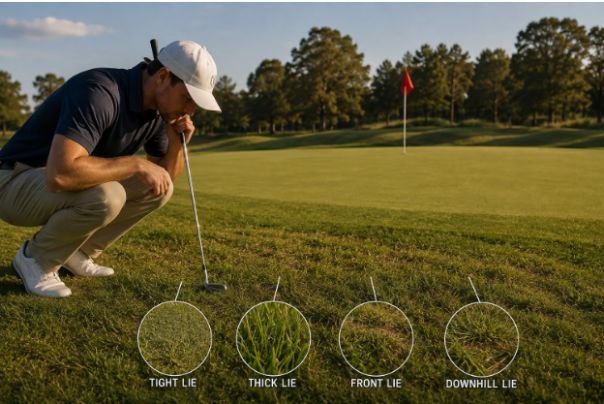
The lie is your first piece of information. Before thinking about loft or trajectory, look closely at how the ball is sitting.
A clean lie on short grass gives you plenty of options. You might putt it, use a low-lofted iron, or play a standard chip. A ball sitting down in thick rough is different. Grass can get between the clubface and ball, making clean contact harder and reducing your ability to control the launch and spin.
That is why the same 20-yard shot can call for completely different clubs.
If the ball sits cleanly and you have plenty of green between you and the hole, there is usually little reason to make the shot more complicated than necessary. When the lie is poor, the first goal may simply be getting enough loft to clear the grass and land the ball safely on the green.
Look at the Landing Area, Not Just the Hole
Once you understand the lie, look at the green.
A common mistake is staring at the flag and choosing a shot that flies directly toward it. Better short-game decisions start with picking a landing spot. You want to know where the ball should first touch the green and what should happen after that.
If you have a large section of green between the ball and hole, you can usually let the ball spend more time rolling. If the pin is close to the edge, a bunker or severe slope sits between you and the target, or you are short-sided, you may need more carry and less rollout.
Think of the shot as two parts: the flight and the roll. Your club needs to create the right balance between them.
That approach also makes short game distance control easier to develop because you are learning to predict how much of the shot happens in the air and how much happens on the ground.
Use the Putter Whenever the Situation Allows It

When the ball is just off the green, and the grass is short enough for the putter to move cleanly, the putter deserves serious consideration.
It removes many variables from the shot. You do not have to manage a large amount of loft, worry as much about contact, or judge a significant change in trajectory. You simply need to read the surface and control the pace.
That does not mean putting from off the green is always best. Long grass, uneven ground, a steep slope, or a poor path to the putting surface can make it difficult to control.
But when the path is clean, keeping the ball on the ground is often a smart starting point. Even Jack Nicklaus has advocated putting from off the green when the situation allows it.
Choose a Low-Lofted Chip When You Have Green to Use
If you cannot comfortably putt but have plenty of green available, a low-lofted chip is often the next option.
An 8-iron, 9-iron, pitching wedge, or gap wedge can produce a lower flight with more rollout than a sand or lob wedge. The ball spends less time in the air, and the smaller motion can make the shot easier to repeat.
This is especially useful when there is only a small amount of rough or fringe to carry. You do not need to make the ball fly all the way to the hole. Get it onto the green, then allow it to release.
Recent instruction from GOLF’s short-game teachers has made the same point: recreational golfers often reach for their highest-lofted club when a lower-lofted option could create a simpler shot with fewer opportunities for error.
Know When a Higher Pitch Makes Sense

A pitch shot has a place, but it should solve a problem.
Use more loft when you need to carry a bunker, clear thick rough, stop the ball quickly, or deal with a pin that leaves very little room for rollout. A 54-, 56-, 58-, or 60-degree wedge can give you the height and stopping power required.
The mistake is using that shot when you do not need it.
More loft generally means more carry and less predictable rollout. It can also require a larger, more precise motion. If a lower shot can safely reach the same target, there may be little benefit in taking the harder option.
GolfTEC’s basic decision framework follows this same progression: putt when you can, chip when you cannot putt, and pitch when you need additional carry or stopping power.
Let the Green Change Your Decision
The green itself can change the shot you choose.
A firm surface can produce a bigger first bounce, while a softer green may absorb more energy. Slopes matter too. A ball landing on a downhill section can release much farther than one landing into an upslope.
This is why the landing spot should never be treated as a fixed number of feet from the hole.
Instead, picture the first bounce. Ask where the ball will land, which direction the slope will send it, and how much room you have before reaching trouble.
Butch Harmon has emphasized looking at the lie, available green, and expected bounce when deciding which club to use around the green.
Pick the Shot With the Biggest Margin for Error

The best shot is not necessarily the one that could finish closest. It is often the one that gives you the most room for a slightly imperfect swing.
That distinction matters for everyday golfers.
A high flop that finishes three feet from the hole sounds great, but a slight miss could leave the ball in the rough or send it across the green. A low chip that finishes six feet away may be the better scoring decision if it has a much smaller chance of producing a disaster.
This is where golf short game consistency becomes more than a technique issue. Consistency also comes from making decisions that match your current ability. The shot you can execute eight times out of ten is usually more valuable than the shot you can pull off once when everything goes perfectly.
Build a Simple Decision Process
You do not need a complicated routine before every greenside shot. Give yourself a few questions and answer them in the same order.
- How is the ball sitting?
- Can I putt it?
- How much green do I have?
- What must the ball carry?
- Where should it land?
- How much should it roll?
- Which shot gives me the largest margin for error?
That process keeps club selection connected to the actual situation instead of personal habit.
Practice Different Clubs From the Same Spot
Shot selection improves when you learn what each club can do.
During practice, drop several balls around the green and play the same basic shot with a putter, 8-iron, pitching wedge, sand wedge, and lob wedge. Watch how the launch, landing, and rollout change.
You may discover that a club you rarely use around the green produces a much easier result. GOLF has recommended this kind of practice because experimenting with different clubs can help golfers become less one-dimensional and more creative around the green.
The goal is not to memorize one club for every distance. It is to understand your options well enough that the right choice becomes obvious.
FAQs: How to Choose the Right Shot Around the Green With More Confidence
Should I always use my lob wedge around the green?
No. Use it when you need height, carry, or stopping power. If you have room to roll the ball, a lower-lofted club may be easier to control.
When should I use a putter from off the green?
Use it when the grass between your ball and the green is short enough to let the putter move smoothly. Avoid it when thick grass or uneven ground can interfere with contact.
Is a chip better than a pitch?
Neither is automatically better. A chip works well when you have room for rollout, while a pitch makes more sense when you need additional carry or a softer landing.
How do I become better at choosing shots?
Practice the same location with several clubs and observe how each ball reacts. Over time, you will build a better understanding of trajectory, rollout, and your own comfort level.
Why Smarter Choices Make the Short Game Easier
Good short-game players are not always trying to hit the most impressive shot. They are reading the situation, recognizing what the golf course is giving them, and choosing an option that makes the next shot easier. The lie tells you what is possible, the landing area tells you what is needed, and your skill level tells you how aggressive you should be.
That mindset can take pressure out of shots around the green. Once you stop treating every miss as a wedge shot, you start seeing more options. A putter, low chip, bump-and-run, or higher pitch can all be the right answer when the situation calls for it.
And the more predictable your choices become, the more naturally they can fit into how to build a repeatable golf swing and a broader approach to playing consistent golf.