I used to treat a headwind as an invitation to swing harder. The result was usually a high, spinning shot that climbed into the air and finished well short of my target. Eventually, I learned that successful wind play is based on control, patience, and realistic club selection—not extra power.
Wind changes a ball’s distance, direction, height, and rollout. Instead of trying to defeat it, I now decide how it will affect the shot and choose the simplest response. The following approach can help everyday golfers avoid costly mistakes without requiring advanced shot-shaping skills.
Understand How Wind Changes Ball Flight
A headwind creates greater resistance against the ball. It can increase the effect of spin, exaggerate hooks and slices, and reduce carry distance. A tailwind normally adds distance, but it can also reduce stopping power because the ball may fly with less effective spin and land at a shallower angle.
Crosswinds influence both the starting line and curvature. A fading or slicing the ball can move considerably farther when the wind blows in the same direction as its natural curve.
The higher a ball flies, the longer it remains exposed. This is why controlled shots generally produce more predictable results than powerful, high-launching swings.
Check the Wind Before Choosing a Club
Throwing grass into the air reveals what the breeze is doing near the ground, but that may not represent the conditions above the trees. I also check treetops, moving clouds, flags, water and the movement of other players’ shots.
Elevation must also be considered. A downhill shot may offset part of a headwind, while an uphill target can make that same wind considerably more punishing.
Use a Simple Wind-Distance Calculation
A helpful starting estimate is to add approximately 1% to the playing distance for every 1 mph of direct headwind. For a 150-yard shot into a 10 mph wind, begin by treating the shot as approximately 165 yards.
A direct tailwind usually provides less assistance than a headwind causes damage. A common estimate is to subtract approximately 0.5% for every 1 mph of helping wind. Therefore, a 150-yard shot with a 10 mph tailwind may play closer to 143 yards.
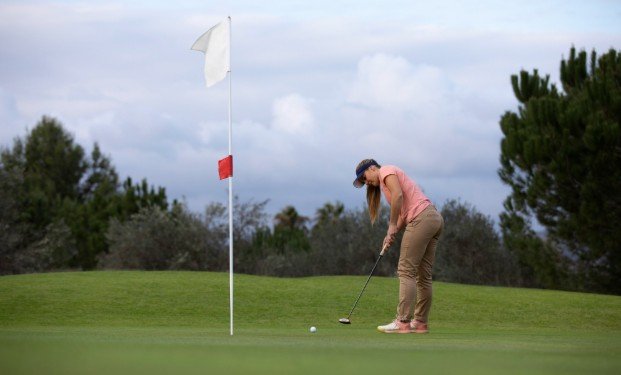
These calculations are intended for full shots and should not be used to predict the wind effects of short range putting. On short putts, wind usually has little influence unless conditions are particularly strong or the green is highly exposed.
These figures are guidelines rather than guarantees. Launch height, spin, strike quality, temperature and individual club distances all influence the outcome. Use them as starting points and adjust after observing early shots.
Take More Club and Make a Smaller Swing
The familiar phrase “when it is breezy, swing easy” remains useful. Swinging harder can add speed and spin, causing the ball to balloon and lose distance.
Avoid moving the ball dramatically backward. A small adjustment may lower the trajectory, but moving it too far back can steepen the strike and create unwanted spin. Solid contact is more valuable than an artificially low launch.
Adjust Your Strategy for Each Wind Direction

Playing Into a Headwind
Choose more club, reduce swing effort and aim toward a safe part of the target. Allow additional room for your normal curve because a headwind can exaggerate sideways movement.
Do not automatically attack a tucked pin. The middle of the green is often the percentage play, especially when hazards protect the front.
Playing Downwind
Select less club and expect additional rollout. Higher-lofted clubs can receive more assistance because they remain airborne longer, while low-flying clubs may not gain as much carry as expected.
Approach shots may release after landing, so consider the safest landing area rather than aiming directly at the hole.
Managing a Crosswind
Whether playing a links course vs parkland course, most recreational golfers should work with a crosswind instead of trying to manufacture an advanced shot against it. Aim into the wind and give the ball room to return toward the target.
Use the side of the teeing area that provides the widest angle away from trouble. If the wind pushes toward a hazard, aim more conservatively and accept a longer next shot.
Hit a Controlled Knockdown Shot
A knockdown can reduce the time a ball spends in strong wind. Select one or two clubs more than normal, grip down slightly and position the ball only a little behind its usual location.
Place slightly more pressure on the lead foot and make a compact swing. Keep the hands moving through impact and finish with the arms and club below their normal height. The objective is a controlled strike, not a hard punch.
Practice this shot at reduced distances before attempting it during an important round.
Adapt Around the Green

Wind should influence short-game decisions too. A bump-and-run with an 8-iron or 9-iron is often more predictable than a high pitch because it gets the ball onto the ground quickly.
When putting in powerful wind, widen the stance and flex the knees slightly for stability. Exposed, fast greens may require adjustments to both line and speed. Wait for sudden gusts when permitted, but remain considerate of pace of play.
Avoid Common Windy-Golf Mistakes
The most damaging errors include swinging harder, choosing insufficient club, aiming directly at dangerous flags and expecting normal scores. Another mistake is changing several swing mechanics at once.
Make one clear decision, choose a conservative target and commit. Wind affects every golfer, so patience can become a genuine scoring advantage.
Frequently Asked Questions
1. How do beginners learn how to play golf in windy conditions?
Beginners should take more club into a headwind, swing smoothly, aim toward larger targets and avoid complicated shot shapes. Practising controlled three-quarter swings is an excellent starting point.
2. Should I tee the ball lower in the wind?
A slightly lower tee can produce a flatter driver flight, but teeing it excessively low may create extra spin from contact low on the clubface. Make a small adjustment and prioritise centred contact.
3. Does wind affect putting?
Yes. Strong winds can influence balance, speed and line, particularly on exposed or fast greens. A wider stance can improve stability.
Final Thoughts
I have found that the secret to how to play golf in windy conditions is accepting that the round requires different expectations. I take enough club, reduce my swing effort and choose targets that leave room for error.
Wind will still produce unpredictable results, but a calm routine prevents one difficult shot from becoming a damaging hole. Work with the conditions, favour solid contact and let smart decisions protect the score.