
I know how uncomfortable a packed course can feel. Players are waiting behind me, another group is occupying the fairway, and every tee box seems to have a line. Even when I am playing at a reasonable speed, that pressure can make me rush shots and enjoy the round less.
Learning how to play a crowded golf course is not about swinging as quickly as possible. It is about staying prepared, maintaining the correct position, making safe decisions, and avoiding unnecessary delays. When the entire course is backed up, I cannot control the traffic. I can only ensure my group does not make it worse.
Determine Whether Your Group Is Actually Slow
The group behind is not always the best measure of your pace. Your primary reference should be the group directly ahead.
However, if a complete hole opens ahead while the group behind continually waits, your group may be out of position. Start playing more efficiently and try to close the gap. If that is not possible, look for a safe place to let the faster group pass.
Many golfers make the mistake of rushing simply because another group is visible behind them. Visibility does not automatically mean your group is slow.
Arrive Early and Prepare Before Your Tee Time
A smooth round starts before the opening shot. Arrive early enough to check in, organize your equipment and upgrade, use the practice area, and reach the first tee when requested.
Keep extra balls, tees, a ball marker, divot tool, glove, water, and necessary clothing accessible. Searching through every pocket after play begins wastes small amounts of time that quickly accumulate.
Confirm the course’s expected pace before starting. Many busy public and resort courses expect an 18-hole round to take approximately four to four and a half hours, although course design, weather, cart restrictions, and traffic can increase that time.
Use Ready Golf Safely
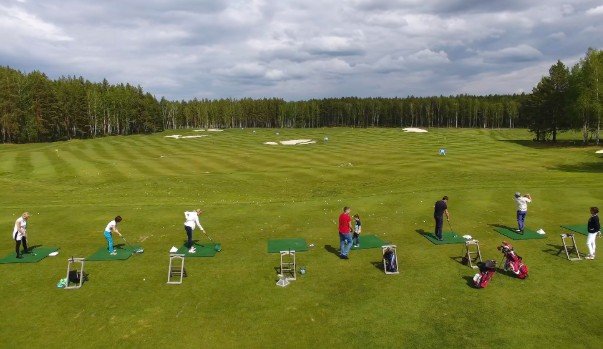
Ready golf means playing when you are prepared rather than strictly waiting for the player farthest from the hole. It is generally appropriate during casual stroke play when everyone agrees and nobody is placed in danger or distracted.
Ready golf does not mean hitting while another golfer is addressing the ball. Safety and courtesy remain more important than saving a few seconds.
Prepare While Another Player Hits
Use waiting time productively. Check the wind, estimate the yardage, select a club, put on your glove, and plan the shot while another golfer is playing.
Once the path is clear and it is your opportunity to hit, begin the routine promptly. One purposeful practice swing is normally enough. Current golf guidance recommends making a stroke within 40 seconds after becoming able to play, with most routine shots requiring less time.
Watch Every Tee Shot
Follow the flight of your partners’ shots as well as your own. Choose a visible landmark near the landing area, especially when a ball enters rough or trees.
Several people watching a shot can prevent a lengthy search. Carry an extra ball and play a provisional when the original might be lost outside a penalty area or out of bounds.
Move Efficiently Between Shots
Playing efficiently does not require running. Walk with purpose, move toward your ball when it is safe, and begin evaluating the next shot before reaching it.
When sharing a cart, drop one player near their ball with several possible clubs. The other player can continue to their own ball instead of making the entire group wait at each location.
Under cart-path-only conditions, take the rangefinder and several clubs across the fairway. Walking back to the cart because the yardage or lie requires a different club creates an avoidable delay.
Handle Lost Balls Without Delaying Everyone
The official search period for a lost ball is three minutes. It begins when the player or caddie starts searching.
Help a partner search after preparing for your own shot, but do not turn every search into an expedition. If the ball cannot be found within the permitted time, follow the applicable rule and continue.
For a casual round, the course may use a local rule providing an alternative to returning to the location of the previous stroke. Check the scorecard or ask the golf shop before assuming that option is available.
Know When Playing Through Will Help
Understanding how to play a crowded golf course requires recognizing when playing through solves a problem and when it merely rearranges the line.
Offer to let another group pass when your group has lost its position, there is open space ahead, and the faster group can move away. A par 3 or a tee box beside a green often provides a convenient opportunity.
Do not pressure the group ahead to let you through when they are also waiting on every shot. On a completely packed course, passing one group rarely improves the overall pace.
If a serious gap develops several groups ahead, contact the course marshal rather than beginning an argument. Course staff can see more of the traffic pattern and decide whether a group needs assistance.
Stay Focused During Long Waits
Slow rounds can damage timing and concentration. Instead of repeatedly checking the group behind, create a reset routine for every shot.
Remain relaxed, take a few gentle movements to stay loose, and begin the normal pre-shot routine only when the landing area is nearly clear. Avoid taking numerous practice swings during a long wait because they can cause fatigue and make the actual shot feel less natural.
Never hit merely because you feel pressured, especially when practicing golf swing contact drills. If a well-struck shot could reach the players ahead, wait until they are safely outside your range.
Avoid Common Crowded-Course Mistakes
Do not stand directly beside a tee box while another group is hitting. Leave enough space for players to swing and speak without feeling surrounded.
Avoid lengthy conversations with staff who run a beverage cart when the hole ahead has opened. Silence the phone, postpone photos and social posts, and save longer stories for genuine waits or the clubhouse.
On the green, begin reading the putt without disturbing another player. Finish short putts when appropriate, repair ball marks, replace the flagstick if necessary, and move toward the next hole.
Frequently Asked Questions
1. How to play a crowded golf course without holding people up?
Keep pace with the group ahead, use ready golf safely, prepare before your turn, limit ball searches, manage the cart efficiently, and leave each green promptly. Do not rush a shot when players remain within range.
2. Should I let a single golfer play through?
Letting a single through makes sense when your group has open space ahead and the player can move away. If the course is completely backed up, playing through is unlikely to improve the round.
3. How long can I search for a lost golf ball?
The permitted search time is three minutes from when you or your caddie begins searching. Playing a provisional ball can prevent a long return to the previous spot.
4. What should I do if the group behind keeps pressuring me?
Check your position relative to the group ahead. If you are maintaining that position, remain calm and play safely. If you have lost a hole, increase efficiency or let the group behind pass when practical.
Final Thoughts
I enjoy busy rounds much more when I stop treating every golfer behind me as a warning. My real responsibilities are to remain in position, prepare before it is my turn, follow current rules, and never sacrifice safety for speed.
A crowded course may still produce a long round, but it does not need to produce a stressful one. When I use the waiting time wisely and keep unnecessary delays out of my routine, I protect my rhythm and make the experience better for everyone.