

Many golfers spend years chasing a more consistent swing. They tweak their grip, adjust their stance, and watch countless instructional videos, yet the same issues keep showing up. Thin shots, slices, loss of power, and lingering back discomfort often return no matter how many technical changes are made.
What many players overlook is that the body has to be capable of producing the positions a good golf swing requires. If your hips are stiff, your shoulders lack range of motion, or your mid-back does not rotate properly, even the best swing advice becomes difficult to execute. That is why mobility exercises every golfer should know have become a major focus for coaches, fitness professionals, and players looking to improve performance without rebuilding their swing from scratch.
Why Mobility Has Such a Big Impact on Consistency?
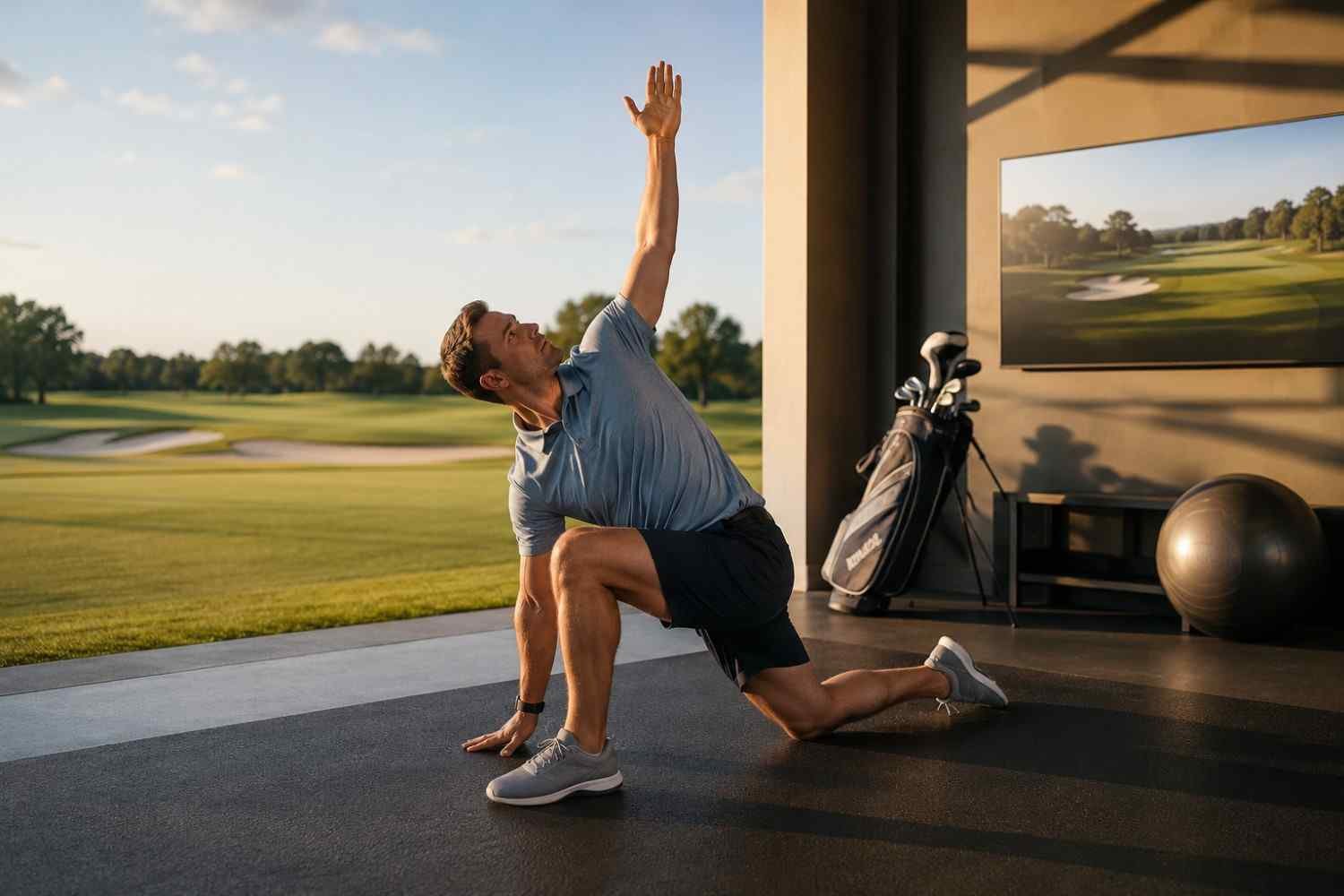
A golf swing is a rotational movement that relies on multiple joints working together. When one area becomes restricted, another area often compensates.
For example, limited thoracic spine mobility frequently causes golfers to rotate excessively through their lower back. Restricted hips can make it harder to transfer weight efficiently through impact. Poor shoulder mobility may alter club position during the backswing and downswing.
These compensations often lead to inconsistent contact, reduced power, and increased strain on the body.
Mobility differs from flexibility. Flexibility refers to how far a muscle can stretch, while mobility describes how well a joint moves through its intended range of motion with control. Golfers need both, but mobility tends to have the greatest influence on swing mechanics.
This is one reason many players eventually discover that improving movement quality can have a bigger impact than constantly searching for another swing tip.
The Areas That Matter Most in a Golf Swing
Not every joint contributes equally during the swing. Certain areas play a much larger role in generating rotation and maintaining balance.
The thoracic spine, located in the middle portion of the back, is responsible for much of the rotation needed during the backswing and follow-through. When this area becomes stiff, the lower back often absorbs forces it was never designed to handle repeatedly.
The hips act as the engine of the swing. Strong hip rotation allows golfers to create separation between the upper and lower body, which contributes to both speed and control.
The shoulders help position the club throughout the swing. Limited shoulder mobility can force compensations that affect clubface control and ball striking.
Improving these areas creates a foundation for building strength for a more consistent swing, since strength is most effective when supported by proper movement.
Four Mobility Exercises That Deliver Real Results

Open Books for Thoracic Spine Rotation
Thoracic rotation is one of the most important movement patterns in golf. Without it, creating a full shoulder turn becomes far more difficult.
Lie on your side with your knees bent at 90 degrees and stacked together. Extend both arms straight out in front of you. Slowly rotate your top arm backward while keeping your knees in place. Follow your hand with your eyes as your chest opens toward the ceiling.
Perform 2 to 3 sets of 8 to 10 controlled repetitions on each side.
Many golfers notice improved rotational freedom after incorporating this drill consistently for several weeks.
90/90 Hip Switches
Hip mobility directly influences your ability to rotate through impact and generate efficient power.
Sit on the floor with both knees bent at 90 degrees. One leg should be positioned in front of you while the other rests to the side. Keeping your torso upright, rotate your hips and switch both knees to the opposite side without using your hands for support.
Perform 10 to 15 switches daily.
This exercise develops both internal and external hip rotation, which are critical for a fluid golf swing.
Half-Kneeling Thoracic Rotations
This drill trains upper-body rotation while keeping the lower body stable, closely resembling the separation golfers need during the swing.
Begin in a half-kneeling position with one foot planted in front of you. Place a golf club across your shoulders. Rotate your torso toward the front leg while keeping your hips stable.
Complete 3 sets of 8 to 10 repetitions per side.
The movement encourages rotational control while reinforcing proper movement patterns.
Shoulder External Rotation Drill
The shoulders influence club positioning throughout the swing. Restrictions in this area can lead to compensations that affect consistency.
Stand with your elbows bent at 90 degrees and your upper arms parallel to the ground. Slowly rotate your forearms backward while squeezing your shoulder blades together.
Perform 20 to 30 repetitions daily.
This simple exercise can improve shoulder range of motion and help golfers move more naturally through the swing.
Making Mobility Part of Your Routine

One reason golfers abandon mobility work is that they assume it requires lengthy workouts.
In reality, consistency matters more than duration.
A focused 10-minute routine performed several times each week often delivers better results than a single long mobility session once in a while. Many players perform these drills before practice sessions, after workouts, or even while watching television in the evening.
The key is repetition. Mobility improvements occur gradually, and the golfers who see the biggest benefits are usually the ones who make these exercises a regular habit rather than a temporary fix.
Physical therapists and golf fitness specialists frequently emphasize that better movement creates better opportunities for sound mechanics. As mobility improves, golfers often find it easier to repeat their swing and maintain posture throughout the round.
FAQs: Mobility Exercises Every Golfer Should Know for More Consistency on the Course
1. How often should golfers perform mobility exercises?
Most golfers benefit from 10 to 15 minutes of mobility work at least four to five days per week.
2. Can mobility exercises increase swing speed?
Improved mobility can help golfers create better rotation and movement efficiency, which may contribute to increased clubhead speed.
3. What area should golfers focus on first?
The hips and thoracic spine are often the most important starting points because they drive rotational movement.
4. Do mobility exercises help reduce back pain?
Many golfers experience less strain when movement restrictions improve, especially when thoracic and hip mobility are addressed.
Why the Best Swings Usually Move Freely
Golfers often look for consistency in their hands, their setup, or their swing thoughts. While those elements matter, the ability to move efficiently may be even more important. A body that rotates freely allows golfers to maintain posture, transfer energy effectively, and repeat movements with less effort. Mobility does not replace technique, but it makes good technique easier to achieve.
Sometimes the most effective swing improvement starts long before you pick up a club.