

Swinging harder into a 20 mph headwind does not make the ball travel further it actually shortens your shot. In fluid dynamics, increasing clubhead speed increases the ball’s backspin rate, generating excess aerodynamic lift that causes the ball to balloon, stall, and drop straight out of the sky.
If you want to master how to play golf in the wind, you have to stop fighting the air and start working with its physics. Whether you are tracking a drive through a camera lens or stepping up to the tee box yourself, understanding vector forces, trajectory management, and drag coefficients changes how you read every gust on the course.
The Physics of Flight: Why Air Density and Spin Control Everything
To understand golf ball flight in variable conditions, we need to look at fluid mechanics. A standard golf ball with dimples relies on the Magnus effect to stay airborne. As the ball rotates, it creates high pressure underneath and low pressure on top, generating lift.
When you play into a strong breeze, that lift amplifies exponentially. Extra spin turns a manageable 150-yard shot into an unpredictable, high-climbing miss.
Airflow (Headwind) ===>
___________
.-‘ Lift ‘-.
/ ^ \
| (O) Spin | ===> Increased Drag & Ballooning
\ /
‘-.___________.-‘
Research from the National Aeronautics and Space Administration (NASA) on aerodynamics shows that drag forces scale with the square of relative velocity. If your ball speed is 140 mph and you hit into a 20 mph headwind, the ball experiences aerodynamic forces as if it were traveling at 160 mph.
This creates massive atmospheric resistance. To keep the ball flight stable, you must reduce spin rather than increase power.
Decoding Wind Direction: Headwinds, Downwinds, and Crosswinds
Adapting your game to environmental shifts requires treating wind as a vector with both direction and magnitude.
This kind of directional adjustment is especially critical on a links golf course, where exposed, treeless layouts leave every shot fully at the mercy of shifting gusts.
The table below outlines how atmospheric forces alter ball flight and the precise mechanical adjustments needed for each scenario.
| Wind Direction | Aerodynamic Impact | Primary Adjustment | Swing / Setup Modification |
| Headwind | Amplifies backspin and drag; causes high ballooning trajectory. | Club up 1–2 options; choke down on the grip. | Ball back in stance; smooth 75% tempo. |
| Downwind | Reduces relative airspeed and lift; flattens ball descent angle. | Tee higher with driver; take 1 less club on approach. | Full aggressive turn; allow for extended rollouts. |
| Crosswind | Side-spin creates heavy lateral drift; exaggerates hooks/slices. | Aim into the breeze; let the wind carry the ball back. | Wider stance base; solid balance through finish. |
Editor’s Note: A vector scatter chart comparing lateral drift distance (yards) against wind speed (mph) would work well here to visualize crosswind deflection across different club lofts.
Tactical Adjustments for Blowing Conditions
Mastering how to play golf in the wind comes down to controlling three core variables: stance balance, ball position, and swing tempo.
[ Headwind Setup ]
Stance: Slightly Wider | Ball: 1-2 Inches Back | Hands: Forward Press
o o
/|\ /|\
/ \ / \
[ Feet ] <— [ Ball ]
Ball Position and Stance Dynamics
To keep shot trajectories penetrating, move the ball roughly one to two inches back from its normal position in your stance for iron shots. This encourages a slightly flatter, downward impact angle.
Widen your feet by an inch or two as well. A broader base lowers your center of gravity, keeping you anchored when sudden cross-gusts strike mid-backswing. Getting an accurate distance reading before making these adjustments is easier with a best golf GPS watch for beginners, so club selection reflects the actual yardage rather than a guess.
Widen your feet by an inch or two as well. A broader base lowers your center of gravity, keeping you anchored when sudden cross-gusts strike mid-backswing.
The Power Paradox: Smooth Beats Hard
When facing heavy breezes, instinct tells golfers to swing harder. Science says otherwise.
Swinging at 75% to 80% effort lowers impact velocity, which significantly reduces backspin rates. Lower spin keeps the ball beneath the turbulent upper air currents, yielding a predictable flight path.
The Visual Illusion: Reading Wind Fields Like a Lens

Photographers and cinematographers understand how light, shadows, and perspective can deceive the eye. Wind on a golf course presents a similar optical challenge.
Air movement at ground level rarely matches the wind field 80 feet up in the air. Tossing grass into the air only measures surface friction—it tells you nothing about upper-atmosphere velocity.
To read upper-air movement accurately:
- Observe Tree Tops: Watch the highest canopy branches near your target to judge true wind speed and direction.
- Track Cloud Movement: High-altitude clouds give you a clear look at macro weather fronts.
- Watch Water Bodies: Ripples on hazards highlight wind corridors created by surrounding terrain.
Understanding environmental physics is just as vital off the course. Educational initiatives by the U.S. National Park Service highlight how microclimates, topography, and wind corridors alter local ecosystems the exact same factors that shape airflow across coastal links courses.
A 4-Step Pre-Shot Checklist for Blowing Conditions
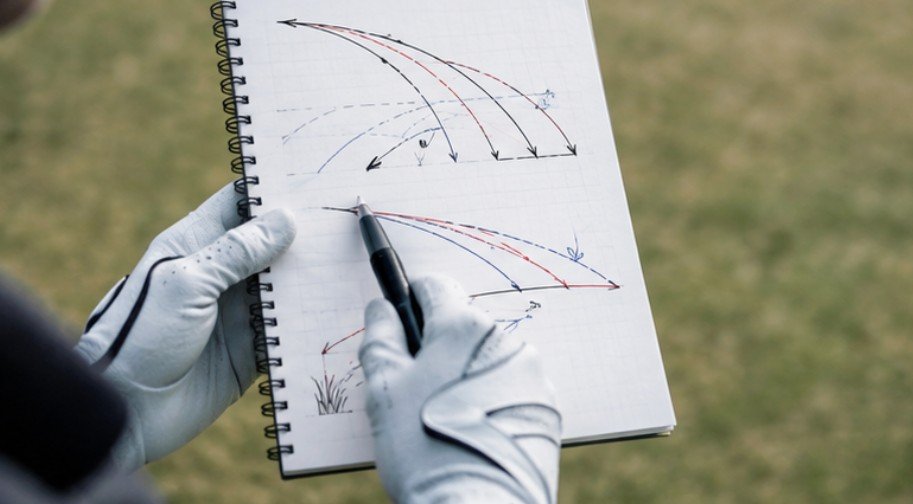
Before executing any shot in significant breeze, walk through this operational decision framework:
- Calculate Relative Wind Speed: Determine if the breeze is direct or diagonal. Diagonal winds carry roughly 70% of the force of a direct headwind or crosswind.
- Select the Right Tool: Rule of thumb: add 1 club for every 10 mph of headwind. Into a 20 mph breeze, put away the 8-iron and pull a smooth 6-iron.
- Set the Alignment Line: In crosswinds, choose an aim point out in the wind field and let environmental drift pull the ball back toward your target line. Never fight a crosswind unless strictly necessary.
- Commit to Tempo: Take a short practice stroke focused purely on smooth acceleration, keeping your finish low and compact.
Misconceptions and Limitations: When Advice Fails

Standard advice says to move the ball back in your stance to beat the wind. However, moving the ball too far back steepens your attack angle, which actually increases spin rates and causes the ball to climb higher. Keep setup tweaks subtle. Getting this wrong is a common example of practicing the wrong golf skills reinforcing a flawed adjustment on the range rather than fixing the actual cause of the miss.
Similarly, wind plays a huge role in putting on a performance. A 25 mph gust can easily knock a ball off line on fast greens.
Sports biomechanics studies archived by the National Institutes of Health (.gov) emphasize how peripheral stability affects fine motor control. On the greens, widen your putting stance to steady your lower body against heavy gusts.
Frequently Asked Questions
1. Can you play golf in 20 mph winds?
Yes. A 20 mph wind requires roughly two extra clubs into a headwind, smoother tempo, and wider stance balance, but it remains fully playable for golfers who adjust shot trajectory.
2. Can you play golf in 40 mph winds?
Yes, but high wind speeds fundamentally change the game. Shots balloon rapidly, greens dry out, and putting becomes unpredictable. Success relies on ground-game chip shots and low-punch trajectories.
3. What is the wind rule in golf?
The general baseline rule is to adjust club selection by one full club for every 10 mph of headwind or tailwind, while aiming into crosswinds to let drift work for you.
4. How much does a 20 mph wind affect a golf ball?
A 20 mph headwind can reduce total shot distance by 20 to 30 yards while significantly magnifying lateral curve, requiring a lower-spinning, penetrating ball flight to counteract drag.
Mastering the Elements, Not Fighting Them
Playing golf in heavy wind is an exercise in environmental physics and discipline. Instead of fighting atmospheric drag with raw physical effort, work alongside natural forces through smart club selection, balanced stance adjustments, and controlled swing tempo.
Lowering backspin rates keeps your ball trajectory penetrating, stable, and accurate regardless of conditions. The next time gusts sweep across the fairway, embrace the challenge, smooth out your rhythm, and let science carry your game through the storm.