
I remember how uncertain a first round can feel. I worried about where to stand, when to hit, what to wear, and whether I was slowing everyone down. Fortunately, good etiquette is not about playing perfect golf.
It is about remaining safe, respecting other players, caring for the course, and keeping the round moving. This guide to golf course etiquette for beginners explains the written and unwritten expectations that can help any new golfer walk onto the first tee with confidence.
What Does Golf Etiquette Mean?
Golf etiquette is the considerate behavior players follow before, during, and after a round. It differs from the formal Rules of Golf, which determine how the game is played and scored. Etiquette focuses on safety, pace, courtesy, and course care.
Every venue may also have local policies covering clothing, carts, starting times, and restricted areas. Check its website or call before arriving if anything is unclear.
Before the Round
1. Check the Dress Code
Clothing requirements vary considerably. Some venues require collared shirts and golf trousers or shorts, while others welcome modern athletic clothing. Never assume that jeans, sandals, sleeveless shirts, or metal spikes are permitted.
2. Arrive Early
Arrive approximately 20 to 30 minutes before the scheduled tee time. This provides enough time to check in, organize equipment, warm up, and reach the first tee without delaying another group.
You do not need a long practice session to feel prepared. A simple 5-minute golf warm-up before tee time can loosen key muscles, help you find your swing rhythm, and still leave enough time to arrive at the opening hole comfortably before your starting time.
3. Carry the Essentials
Bring enough balls, tees, a ball marker, a pitch-mark repair tool, water, and suitable weather protection. Borrowing an occasional item is acceptable, but repeatedly searching for equipment interrupts the round.
Keeping those essentials organized is much easier when your bag suits the way you actually play. A practical golf bag buying guide for everyday players can help you compare storage, weight, club organization, and carrying features before choosing a bag for regular rounds.
4. Choose Sensible Tees
Select tees based on ability and hitting distance rather than pride. Playing an unnecessarily long course creates difficult shots and delays. Beginners often enjoy the round more from a shorter, manageable set of tees.
The same thinking should happen before booking. Learning how to choose the right golf course can help beginners find a layout with suitable yardage, manageable hazards, comfortable facilities, and a pace that better matches their experience level.
On the First Tee

5. Introduce Yourself
When paired with unfamiliar golfers, offer a friendly introduction. A beginner can simply say, “I’m still learning, so please let me know if I stand in the wrong place or affect the pace.” Most players appreciate that honesty.
6. Understand the Playing Order
Traditionally, the player with the best score on the previous hole starts the next hole. After tee shots, the player farthest from the hole usually plays first. During a casual round, the group may agree to use ready golf, allowing a prepared player to hit first when it is safe.
7. Stand in a Safe Position
Never stand directly in front of a player, close to the club’s path, or somewhere distracting. Remain still and quiet outside the player’s peripheral vision. Also watch where your shadow falls because it can interfere with the ball or target line.
Keep the Round Moving
8. Follow the Group Ahead
Good pace is measured by your position behind the group ahead, not merely by staying in front of the group behind. Prepare while others play, choose a club promptly, and limit practice swings.
9. Use Ready Golf Responsibly
Ready golf does not mean hitting whenever you want. Communicate with the group, make sure nobody is in danger, and never play while another golfer is addressing the ball.
10. Know When to Pick Up
A difficult hole can produce repeated shots. In a casual round, agree on a reasonable maximum score, such as double par. Once that number is reached, pick up the ball and rejoin play. Formal competitions may follow different procedures.
11. Handle Lost Balls Efficiently
Watch every shot carefully and use landmarks to remember where it landed. If a ball may be lost outside a penalty area or out of bounds, announce and play a provisional ball. Avoid making the entire group wait through repeated searches.
12. Let Faster Groups Play Through
If there is open space ahead and another group is consistently waiting, offer to let it pass. Move safely aside, allow its players to complete the hole, and continue after they are out of range.
Protect Players and the Course
13. Never Hit Into the Group Ahead
Wait whenever there is a realistic chance that your shot could reach another player. If a ball unexpectedly travels toward someone, shout “Fore!” immediately and loudly. Do not wait to see where it lands.
14. Repair Fairway Divots
Follow the venue’s preferred method. Replace an intact piece of turf and press it down, or fill the damaged area with the provided mixture. Avoid assuming that the same repair method applies everywhere.
15. Repair Pitch Marks
A pitch mark is the indentation a ball creates when landing on a putting green, and repairing it responsibly matters whether you are visiting a local course or exploring golf’s hottest trend at best resorts. Use a repair tool to work the surrounding edges gently toward the center, then smooth the surface. Do not lift the middle because that can damage the roots.
16. Rake the Bunker
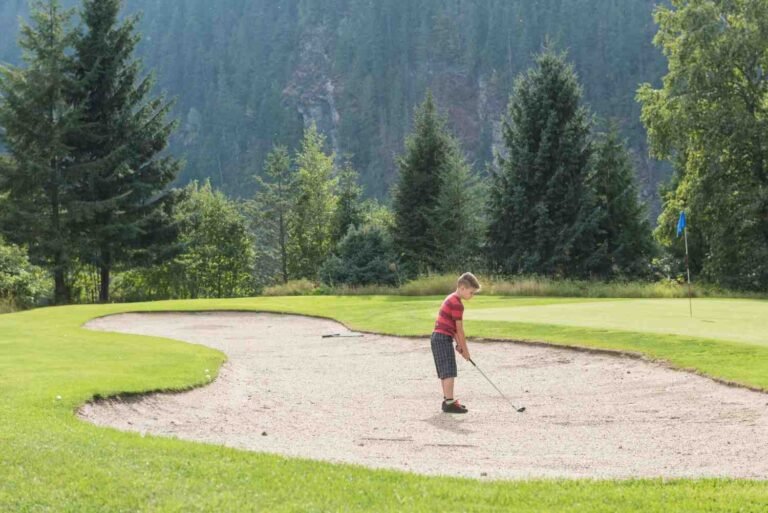
Enter a bunker from its lower side when possible. After playing, rake the disturbed sand and every footprint, then leave the rake where the venue directs. Avoid climbing a steep bunker face because it can damage the edge.
17. Follow Cart Restrictions
Observe directional signs, ropes, paths, and restricted zones. Keep carts away from greens, bunkers, tees, wet ground, and vulnerable turf. If a 90-degree rule applies, remain on the path until level with the ball, cross directly to it, and return promptly.
Behave Properly on the Putting Green
18. Protect Every Player’s Putting Line
Do not step on the path between another player’s ball and the hole. Mark and lift your ball if it may interfere. Remain still during putts, control your shadow, and place bags or carts toward the next tee without positioning them on the green.
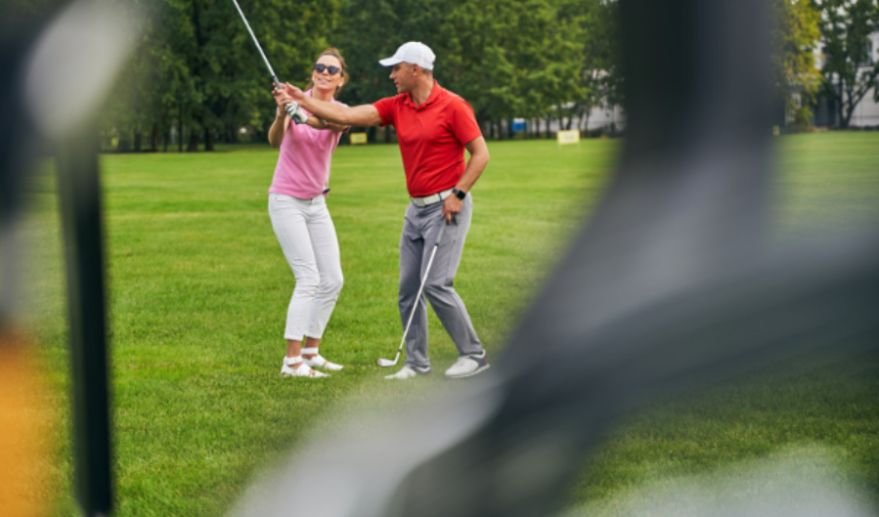
These golf course etiquette for beginners principles also include silencing phones, asking permission before playing music, avoiding unsolicited swing advice, controlling frustration, complimenting good shots, disposing of rubbish, and treating staff respectfully. On the final green, thank the group and leave the area promptly.
Frequently Asked Questions
1. What is the most important golf etiquette rule?
Safety comes first. Never swing when someone is nearby, never hit toward a group within range, and immediately shout “Fore!” when a wayward ball could endanger someone.
2. Can beginners play slowly?
Beginners are not expected to play brilliantly, but they should remain prepared. Take limited practice swings, move promptly between shots, and pick up during a casual round when a hole becomes unmanageable.
3. What should I avoid on a putting green?
Avoid stepping on putting lines, talking during strokes, dragging your feet, dropping equipment, blocking another player’s view, or driving a cart close to the surface.
4. Is music acceptable during a round?
Only when the group agrees. Keep the volume low enough that other groups cannot hear it, and follow any venue-specific restrictions.
5. What is golf course etiquette for beginners in simple terms?
It means staying safe, maintaining a reasonable pace, respecting fellow golfers, following local policies, and leaving every part of the course in good condition.
Final Thoughts
I believe beginners enjoy golf much sooner when they stop worrying about perfect shots and concentrate on being considerate partners. Arriving early, staying ready, communicating openly, protecting the course, and recognizing safety risks will prevent most awkward situations.
Skill develops gradually, but respectful behavior can begin on the very first tee. Follow these habits, ask politely whenever you are unsure, and you will be welcomed by almost any group.