

Golf has a way of pulling people back onto the course before they’re truly ready. After a few days of reduced pain, it’s tempting to assume the injury has healed and that a full round won’t cause any problems. Unfortunately, that’s often where recovery takes a wrong turn.
Many golf injuries don’t happen because of one dramatic moment. They develop gradually through repetitive swings, overuse, and accumulated strain on muscles, tendons, and joints.
When recovery is rushed or handled incorrectly, a minor issue can linger for months. Understanding the most common recovery mistakes can help golfers heal more effectively, rebuild strength, and return to the game with greater confidence.
Why Recovery Takes Longer Than Most Golfers Expect

Golf may not look as physically demanding as contact sports, but it places significant stress on the body. Every swing requires rotational movement, core stability, balance, and coordination.
The lower back, shoulders, hips, elbows, and wrists all work together to generate power and control.
One reason golf injury recovery can feel frustrating is that pain often fades before tissues are fully repaired. A golfer might feel better after a week or two, but muscle healing, mobility restoration, and strength rebuilding typically take longer.
Recovery isn’t just about reducing discomfort; it’s about restoring the body’s ability to handle the demands of the game again.
Mistake #1: Rushing Back Too Quickly
The most common recovery mistake is returning to full swings before the body is ready.
Many golfers judge recovery based solely on pain levels. If the discomfort decreases, they assume it’s safe to resume practice or play. However, reduced pain doesn’t always mean muscles have regained their full strength and function.
Returning too soon can place stress on tissues that are still healing. Small muscle strains may develop into recurring problems, and minor inflammation can become chronic irritation.
In many cases, golfers end up missing more playing time because they rushed the process.
A better approach is to wait until you can move through a full range of motion without pain and gradually increase activity levels before returning to competitive play.
Golfers coming back after an injury may also benefit from learning to choose a golf course for beginners, since shorter, easier layouts can reduce physical strain during the first few rounds back.
Mistake #2: Total Static Immobilization
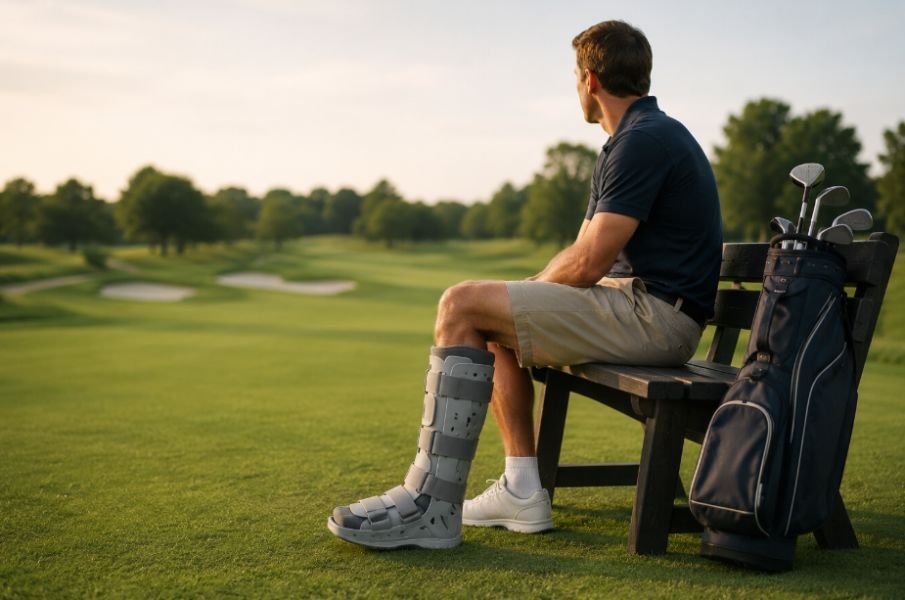
Rest is important, but complete inactivity can create a new set of problems. Some golfers respond to injury by avoiding movement altogether.
While short periods of rest may be necessary, spending weeks on the couch often leads to stiffness, reduced mobility, and muscle weakness.
The body responds positively to appropriate movement during recovery. Gentle walking, mobility drills, and light rehabilitation exercises help maintain circulation and support tissue repair.
Active recovery also prevents muscles from losing their functional capacity. The goal isn’t to train through pain. It’s to keep the body moving in ways that promote healing rather than hinder it.
Mistake #3: Masking Pain With Medication
Pain relievers can be useful tools during recovery, but they should not become a strategy for staying on the course.
Some golfers rely heavily on nonsteroidal anti-inflammatory drugs (NSAIDs) before a round to reduce discomfort. While these medications may temporarily ease symptoms, they can also hide important warning signs from the body.
Pain exists for a reason. It often signals that tissues need more time to recover. Ignoring those signals and continuing to play at full intensity may worsen an existing muscle strain or overuse injury.
Medication should support recovery and rest periods, not serve as permission to continue activities that aggravate the injury.
Mistake #4: Skipping the Post-Round Warm Down

Most golfers understand the importance of warming up before a round. Far fewer pay attention to what happens afterward.
Once the final putt drops, many players head directly to the clubhouse and skip any recovery work. This can leave muscles feeling tight and stiff the following day.
A simple cooldown routine helps the body transition out of activity. Gentle mobility exercises, dynamic stretching, and controlled movement patterns encourage blood flow and support recovery.
Even ten minutes focused on the hips, torso, shoulders, and lower back can make a noticeable difference. Consistent warm-down habits often improve flexibility and reduce soreness over time.
Mistake #5: Dehydration and Poor Nutrition
Recovery doesn’t stop when the round ends. What happens afterward plays a major role in muscle repair.
Muscles need adequate hydration and nutrition to rebuild damaged fibers. When golfers neglect water intake or consume insufficient protein, the recovery process can slow considerably.
Protein provides the amino acids necessary for muscle repair, while hydration supports circulation and overall tissue health. A balanced recovery meal that includes lean protein, complex carbohydrates, and fluids can help the body recover more efficiently.
Many golfers focus heavily on swing mechanics and training plans but overlook the basics that support athletic recovery every day.
Building a Smarter Recovery Routine

Recovery should not be viewed as time away from golf. Instead, it can be an opportunity to build a stronger foundation for long-term performance.
As golfers rebuild strength and mobility, learning how to hit straighter golf shots consistently can also reduce unnecessary swing strain and support a more controlled return to the course.
A smart recovery routine includes mobility work, strength rebuilding, adequate sleep, proper nutrition, and gradual progression back into play. These habits help restore functional strength while reducing the likelihood of setbacks.
Golfers who invest time in learning how to stay fit for golf often discover that recovery and injury prevention go hand in hand. Consistent conditioning, core stability exercises, and mobility training can improve both performance and durability throughout the season.
Small daily actions tend to produce better results than occasional intense efforts. Recovery is rarely about doing more. It’s about doing the right things consistently.
Frequently Asked Questions:
1. How long does muscle recovery for golf injury usually take?
Recovery timelines vary depending on the severity of the injury, age, fitness level, and rehabilitation approach. Minor strains may improve within a few weeks, while more significant injuries can require several months.
2. Is it okay to play golf if the pain is mild?
Mild pain should not automatically be ignored. Persistent discomfort may indicate incomplete healing. It’s generally safer to address the cause of the pain before returning to full play.
3. What exercises help during golf injury recovery?
Gentle mobility drills, walking, physical therapy exercises, core stability work, and progressive strength training are commonly recommended. The appropriate exercises depend on the specific injury.
4. Can hydration really affect muscle recovery?
Yes. Proper hydration supports circulation, nutrient delivery, and tissue repair. Dehydration can contribute to fatigue, reduced performance, and slower recovery.
Why Patience Often Produces the Best Comeback
The golfers who recover most successfully are rarely the ones who push hardest immediately after an injury. They’re usually the players who respect the healing process, pay attention to warning signs, and focus on rebuilding strength before chasing performance.
Recovery isn’t simply about getting rid of pain. It’s about restoring confidence, mobility, and the ability to play without constantly worrying about setbacks.
A few extra weeks of smart recovery can be far more valuable than months spent dealing with a recurring injury.