

Golf can look peaceful from the cart path, but inside a player’s mind, one round can feel like a full mental workout. A missed putt, a rushed tee shot, a water hazard, or even a quiet group watching from the next fairway can turn a relaxing day into a stressful one.
I have learned that the real challenge is not only hitting better shots, but staying calm enough to make better decisions.
That is why understanding how to reduce stress while playing golf can completely change the way you handle pressure, protect your swing rhythm, and actually enjoy the game from the first tee to the final green.
Why Does Golf Feel So Stressful?
Golf creates stress because it gives you time to think between shots. You walk to the ball, replay your mistake, worry about the next swing, and wonder what your playing partners think. That space between shots can turn normal golf nerves into performance anxiety.
Score pressure makes the game feel heavier too. Add first tee jitters, crowded municipal courses, league-night pressure, slow play, and hot weather, and your nervous system can stay on alert for hours.
How Can You Calm Down Before The First Tee?

A stressful round often starts before the first swing. If you rush from the parking lot to the tee box, your body never gets a chance to settle. Arrive early enough to check in, stretch, roll a few putts, and take easy practice swings.
Before the first tee shot, pick a clear target, take one smooth rehearsal swing, exhale slowly, and commit. Many golfers hold their breath during setup, which locks the chest, jaw, and shoulders.
A complete exhale right before the backswing can release physical stress and help your swing feel less forced.
What Is The Best Pre-Shot Routine For Golf Anxiety?
A strong pre-shot routine gives your brain a job before pressure takes over. Without one, your mind jumps from the water on the right to your grip, takeaway, score, and the group watching from behind.
Keep the process simple. Stand behind the ball, visualize the shot, choose a target, align the clubface, take a deep breath, make one relaxed practice swing, step in, and hit. Practice this sequence on the range so it feels natural on the course. Once you step into the ball, stop negotiating with yourself.
How Do You Release Tension In Your Golf Swing?
Stress usually shows up first in your body. Tight hands create a rigid motion, tight shoulders shorten the turn, and a tight jaw can spread tension into your arms without you noticing.
Before each shot, perform a quick body check. Relax your face, loosen your jaw, drop your shoulders, and soften your hands. For grip pressure, imagine holding a tube of toothpaste.
The same relaxed-hand idea also matters around the green, where tense wrists and rushed motion can lead to poor contact, so golfers should learn how to stop chunking chip shots with crisp contact.
Hold the club gently enough that you would not squeeze anything out, but firmly enough that the club stays secure.
Rhythmic breathing also helps while walking between shots. Try inhaling for five seconds, holding for two seconds, and exhaling for five seconds. This pattern can calm your heart rate and stop one bad shot from following you to the next ball.
Why Should You Target What You Want, Not What You Fear?

One of the biggest mental game mistakes is aiming your thoughts at danger. When you tell yourself, “Don’t hit it in the water,” your brain still focuses on the water. A better command is, “Swing to the center of the fairway,” or “Finish toward the safe side of the green.”
This small shift helps you play with intention instead of fear. Pick a positive target on every shot, even when trouble surrounds the hole.
Smarter targets reduce stress because they remove unnecessary risk, especially on busy US public courses where lost balls can slow down the group.
How Can You Stop Score From Controlling Your Mood?
Score matters, but it should not control your entire experience. I have played better and enjoyed golf more when I focused on process goals instead of score goals. Instead of thinking, “I need par here,” I think, “Choose a smart target, keep a smooth tempo, and finish balanced.”
For casual rounds, track good decisions, solid contact, calm recoveries, or smart club choices. On a nine-hole round after work, this mindset can make the game feel lighter and more useful for improvement.
How Do You Play Your Own Game Under Pressure?
Stress grows when golfers compare themselves to playing partners. If someone outdrives you by 40 yards, you may swing harder than usual and lose rhythm. If someone attacks a risky carry, you may copy it even when it does not fit your game.
Play your own game. Choose clubs and targets that match your skill, not your ego. When you are in trouble, avoid recovery shots you have never practiced. Punch back to the fairway, aim for the center of the green, or take the safe route that removes decision fatigue.
How Do You Reset After A Bad Shot Or Slow Play?
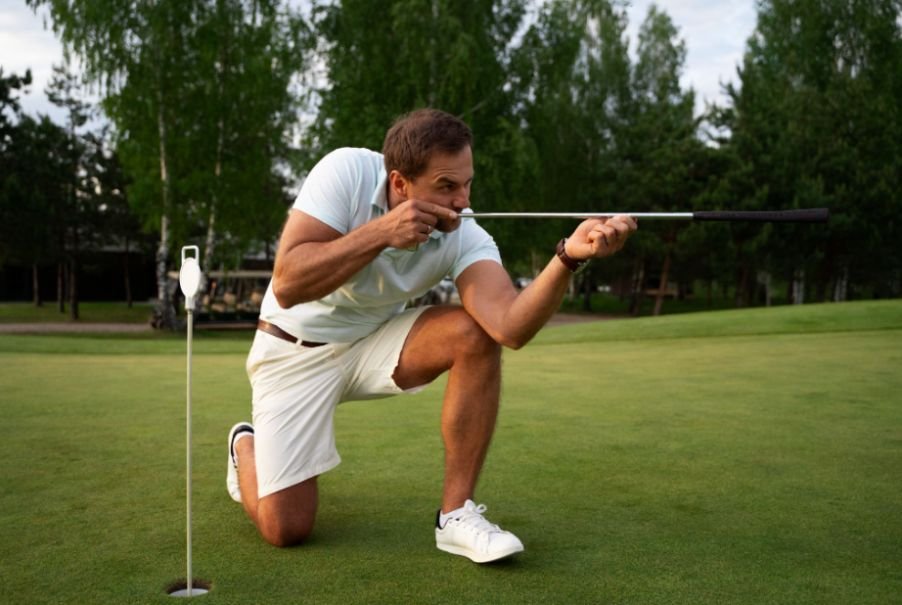
Bad shots are guaranteed. After a poor swing, give yourself a few seconds to react, then reset. Breathe, accept the result, choose the next smart shot, and move. This is where understanding stress response helps, because your body may tighten and rush before your mind catches up.
Slow play needs the same approach. Do not stand over the ball too early while waiting on the group ahead. Learning what is a good pace of play in golf can also help you stay patient, avoid rushing, and understand when your group needs to move a little faster.
Stay loose, sip water, talk casually, and start your routine only when it is your turn.
FAQs
1. Why do I get nervous before playing golf?
You may feel nervous because golf exposes every shot and gives you time to worry about score, hazards, mistakes, or other players watching.
2. How do I calm my nerves before a golf shot?
Take a slow exhale, relax your jaw and grip, choose a positive target, and follow the same short pre-shot routine every time.
3. Can stress make my golf swing worse?
Yes, stress can tighten your hands, rush your tempo, reduce balance, and make your swing feel stiff instead of free.
4. Should I stop keeping score if golf stresses me out?
For casual rounds, track good decisions, solid contact, or calm recoveries instead of only the final number.
Final Thoughts
The real secret to how to reduce stress while playing golf is not one magic trick. It is a repeatable system. Breathe with control, release physical tension, trust your pre-shot routine, target what you want, and play the shot that fits your game.
These habits also become easier when you understand what to know before playing a public golf course, including pace, etiquette, tee selection, and staying patient around other groups.
Golf will always test your patience, but it should still feel enjoyable. When I stop chasing perfect shots and start managing the next shot, I leave the course calmer, sharper, and more excited to play again.