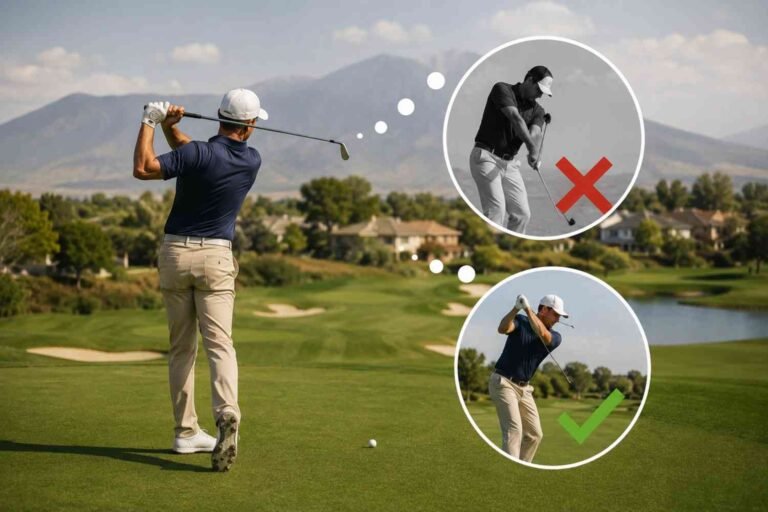

If your wedge keeps slamming into the turf before the ball, your swing is bottoming out too early. That is the real answer behind how to stop chunking chip shots. You do not need to scoop, lift, or swing harder. You need to move the low point of your swing arc in front of the golf ball.
I used to hate short chips because one fat strike could ruin a good hole. The fix became much easier once I stopped blaming nerves and started checking three things: weight, sternum, and wrist action.
Why Chunked Chip Shots Happen
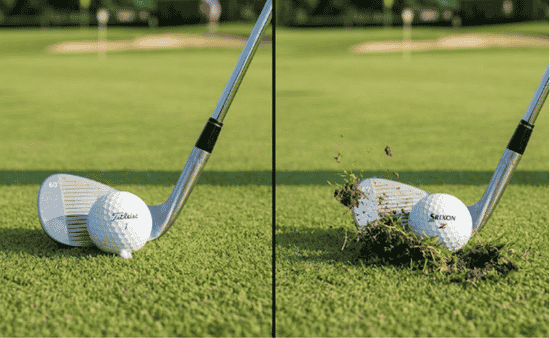
A chunked chip shot happens when the club hits the ground before it reaches the ball. Golfers also call this a fat chip or heavy contact. The ball usually travels only a few feet because the turf steals the club’s speed.
The main cause is a low point that sits behind the ball. That usually comes from leaning back, flipping the wrists, slowing down, or setting up too crouched. When your upper body tilts away from the target, the club wants to bottom out early. When your wrists flip, the clubhead passes your hands too soon and digs.
The goal is simple. Strike the ball first, then brush the grass after it.
Fix Your Chipping Setup Before You Swing

A better chip starts before the club moves. Most chunking fixes fail because the golfer tries to save the shot during the downswing. I prefer to fix the setup first, because it makes the correct strike feel almost automatic.
Use the 60/40 Weight Rule
Set 60% to 70% of your weight on your lead foot. For a right-handed golfer, that means the left foot. Keep it there during the whole motion.
Do not shift back like you would on a full swing. A chip shot does not need a big weight transfer. It needs a stable base and a low point that stays forward.
A narrow stance helps. Place your feet only a few inches apart. This reduces sway and keeps your body from drifting behind the ball.
Play the Ball Middle-to-Back
For a standard chip, place the ball in the middle of your stance or slightly back. If you struggle with heavy contact, move it closer to the inside of your trail big toe.
This ball position encourages forward shaft lean. Your hands should sit slightly ahead of the ball at address. That does not mean pressing the handle aggressively. It means the grip is closer to your lead thigh than your belly button.
That small change helps the club meet the ball before the turf.
Stand Tall Enough to Avoid Digging
Many golfers crouch too low over chip shots because they think it gives them control. It often does the opposite. A low, collapsed posture makes the club dig deeper into the grass.
Stand closer to the ball with relaxed arms. Let the hands hang naturally. Your chest should feel slightly ahead of the ball, not tilted behind it.
If you grip down for control, do not bend lower to reach the ball. Move closer instead.
Swing Mechanics That Create Ball-First Contact

Once your setup is stable, the swing should feel compact and quiet. The best chipping motion uses the chest, shoulders, and arms together.
Keep the Wrists Quiet
Flipping the wrists is one of the fastest ways to chunk a chip. The clubhead drops early, the leading edge hits the grass, and the ball barely moves.
Keep your lead wrist firm through impact. It should not cup or collapse. Your wrists can feel soft, but they should not scoop.
Let the loft of the club lift the ball. Your hands do not need to help.
Rotate Through the Shot
Your chest should turn toward the target after impact. If your body stops, your hands will try to finish the swing alone. That usually creates a flip, a chunk, or a thin shot.
Think of your shirt buttons rotating through the ball. Your hips do not need to fire hard, but they should not freeze. If you struggle with this movement, practice how to rotate hips in golf swing properly so your body keeps moving through the strike.
The club should feel like it is being carried by your torso, not thrown by your hands.
Match the Backswing and Follow-Through
For a basic chip, keep the backswing and follow-through similar in length. A long backswing with a short follow-through often means deceleration. That makes the club drop early into the turf.
Use a smooth tempo. Take the club back with your shoulders and arms. Then turn through with enough speed to finish.
Do not jab at the ball. Clip it.
My Front Pocket Checkpoint for Cleaner Chips
This is the simplest visual I use when I want to stop hitting chips fat.
At setup, the grip end of the club should point near your lead hip or front pocket. At impact, it should still point there. If the grip points toward your belly button at impact, your wrists have flipped.
That one checkpoint tells you a lot. It shows whether your hands stayed ahead, whether your sternum stayed forward, and whether the clubhead passed your hands too early.
Try this without a ball first. Set up with weight forward, ball position back, and the grip aimed at your lead pocket. Make three slow swings and freeze at impact. If the grip is still pointed forward, you are in a strong position for crisp contact.
This is the original test I trust most because it is easy to feel. You do not need a launch monitor, mat, or coach standing beside you.
Three Drills That Stop Fat Chip Shots Fast
Drills work best when they give instant feedback. These three are simple enough for a backyard net, a practice green, or a quiet corner of the range.
The Crossed-Legs Drill
Take your normal chipping setup. Then cross your trail leg behind your lead leg. This forces your weight onto the lead side and makes it hard to lean back.
Hit short chips from this position. Start with tiny swings. Your goal is not distance. Your goal is clean contact.
After ten shots, return to your normal stance and copy the same forward-weight feeling.
The Towel Behind the Ball Drill
Place a small towel three to four inches behind the ball. Hit chips without touching the towel.
If you hit the towel, your low point is too far back. If you miss the towel and brush the grass after the ball, your low point has moved forward.
My favorite version is a 10-ball audit. Hit ten chips and count how many miss the towel. Once you can clip seven out of ten cleanly, move the towel closer by one inch.
That makes progress measurable instead of emotional.
The Toe-Down Tight-Lie Fix
Tight lies make chunking feel scarier because there is less grass under the ball. For these shots, stand closer and raise the handle slightly. The heel of the club should lift, so the toe sits lower.
This toe-down position reduces turf contact. It also makes the club less likely to dig. Use a putting-style motion and keep the wrists quiet.
The ball will come out lower and softer, which is useful when you have green to work with.
Common Chipping Mistakes That Bring the Chunk Back
The first mistake is trying to lift the ball. A chip shot already has loft. When you scoop, the club bottoms out behind the ball.
The second mistake is leaning back. Many golfers do this because they want the ball to pop up. Instead, it moves the low point behind the ball and creates heavy contact.
The third mistake is stopping the body. Keep rotating. Even on a short chip, your chest should face the target after impact.
The fourth mistake is using too much wedge. A lob wedge is not always the smart play. If the landing area is open, a pitching wedge, 9-iron, or 8-iron can create a simpler bump-and-run.
The fifth mistake is rushing the routine. Before every chip, check weight forward, ball middle-to-back, sternum slightly ahead, and grip near the lead pocket.
That routine is how to stop chunking chip shots without guessing.
FAQs
1. Why do I keep chunking chip shots?
You keep chunking chip shots because your swing’s low point is behind the ball, usually from leaning back, flipping your wrists, or decelerating.
2. Should my weight be forward when chipping?
Yes, keep 60% to 70% of your weight on your lead foot so the club can strike the ball before the turf.
3. Where should the ball be to avoid fat chip shots?
Place the ball in the middle of your stance or slightly back, especially when you need cleaner ball-first contact.
4. How do I stop flipping my wrists when chipping?
Keep the grip pointing toward your lead pocket through impact and rotate your chest toward the target.
Stop Digging, Start Clipping
Chunked chips feel embarrassing, but they are not mysterious. The club is simply reaching the ground too soon. Once I move my weight forward, keep my sternum ahead, quiet my wrists, and rotate through, the strike improves fast.
The next time you practice, do not hit fifty random chips and hope one feels good. Use the towel drill, count ten balls, and track clean contact. That small test will teach you how to stop chunking chip shots faster than another desperate swing thought.