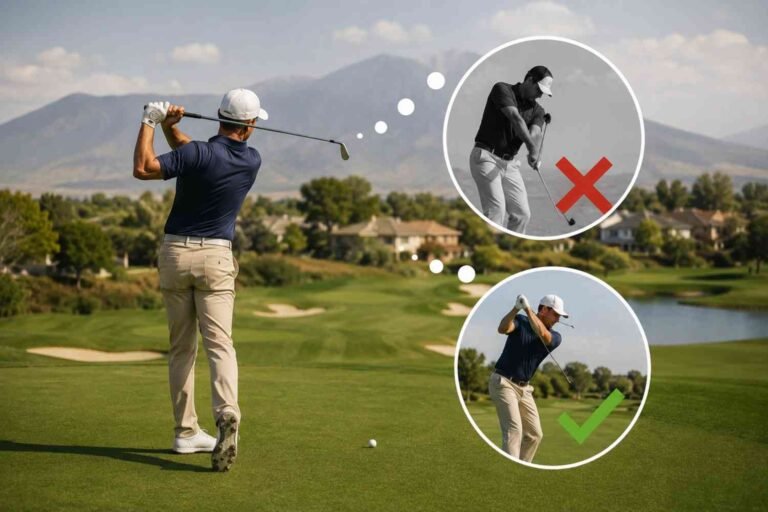

I used to think a solid golf strike was mostly about finding the sweet spot and making a smooth swing. Then I started paying closer attention to where the club actually met the ball. Some shots felt almost identical during the swing but produced completely different results. A slight heel strike could cost distance, while a thin or heavy iron shot could ruin an otherwise good hole.
What helped me most was treating contact as a skill instead of something that would magically improve with more full swings. Once I started watching my strike pattern, paying attention to where the club brushed the ground, and using simple feedback during practice, the problem became easier to understand. I did not need to rebuild my entire swing. I needed to learn how to return the club to the right place more consistently.
What a Centered Strike Actually Means
A centered strike means contacting the ball near the intended area of the clubface. But face contact is only one part of solid ball striking.
With irons, the club should generally contact the ball before reaching the lowest point of the swing and then continue into the turf. If the low point occurs too far behind the ball, you can hit the ground first and produce a heavy shot. If it moves too far forward or the club rises too early, thin contact can follow.
That means a golfer can work on hitting the center of the face while still struggling with inconsistent turf contact. Both pieces need attention.
Learn to Control Your Low Point
For iron shots, low-point control is one of the biggest pieces of consistent contact. The goal is not simply to “hit down” on the ball. You want the bottom of the swing to occur slightly forward of it so the ball gets struck before the turf.
A simple drill can make this easier to understand. Draw a line on the ground perpendicular to your target, then place the ball just behind that line. Make small swings while trying to brush the ground on the target side of the line.
You can also place a tee a few inches ahead of the ball and use it as a visual reference. The goal is to strike the ball first and then brush the ground around the forward marker. This type of drill gives you immediate feedback about where your swing bottoms out.
Start with half-swings. Speed makes it harder to notice what is happening.
Keep Your Body Moving Instead of Hanging Back
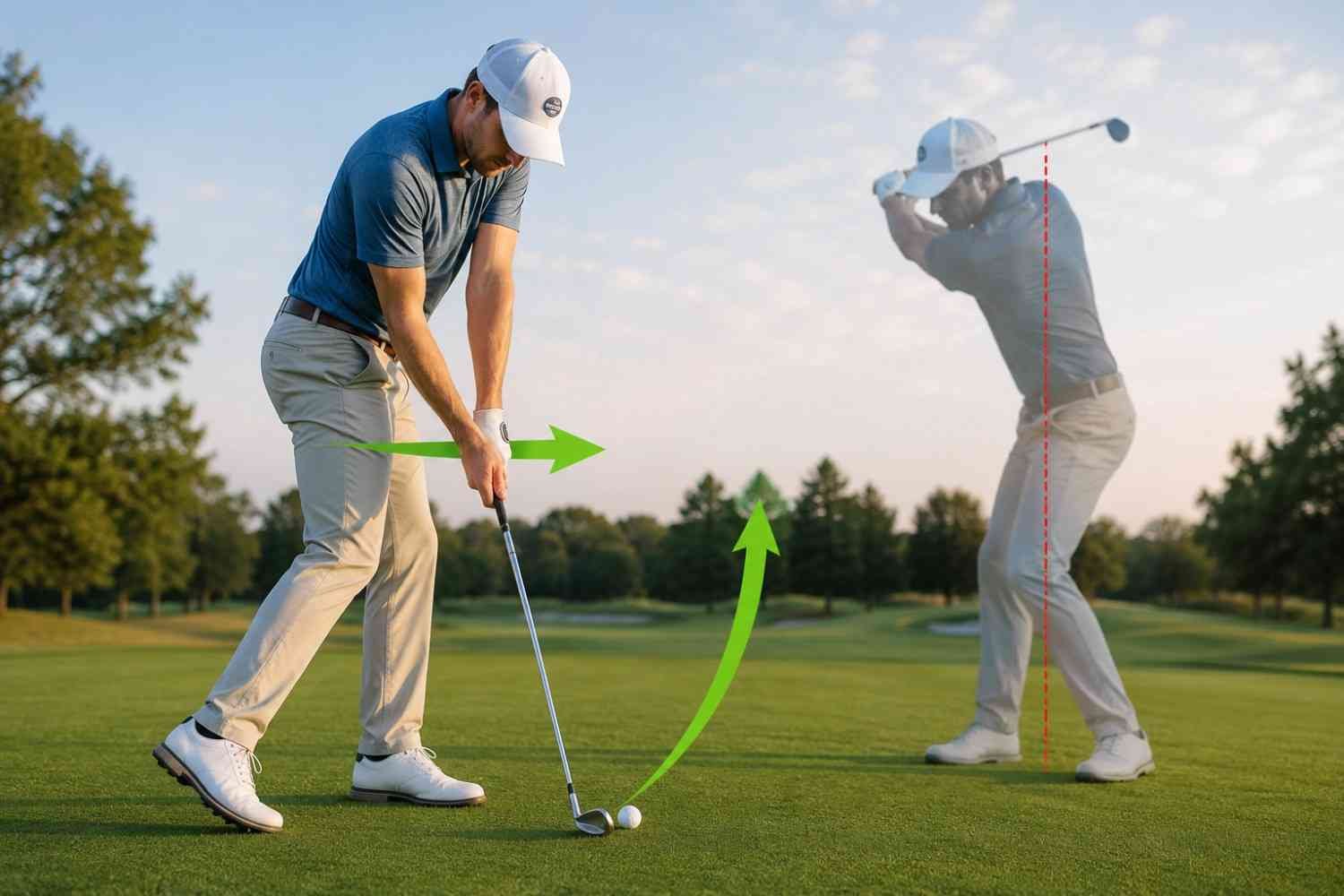
A common contact problem occurs when the golfer stays behind the ball too long during the downswing. That can move the low point backward and make clean iron contact harder.
Rather than trying to force your hands into a specific impact position, think about pressure moving toward your lead side while your body continues rotating. Your hips can open as you move through the shot instead of sliding excessively toward the target.
You also want to avoid standing up through impact. Maintaining your posture gives the club a more predictable relationship with the ground. Current instruction on low-point control connects forward pressure, rotation, and posture with a more reliable strike.
This does not mean keeping your head frozen. Good swings contain movement. The goal is controlled movement rather than unnecessary sway.
Train Your Clubface Awareness
Once your low point starts improving, work on learning where the clubface is meeting the ball.
Try an intentional heel-to-toe drill. Make short swings and deliberately strike a few shots toward the toe. Then make a few toward the heel. Finally, return to the center.
This may sound strange, but it gives your brain different reference points. When you experience an obvious toe or heel strike, a centered strike becomes easier to recognize. You can combine this with impact spray so you feel it has immediate visual confirmation.
A tee gate is another useful option. Place two tees slightly wider than the clubhead and create a narrow path around the ball. Make controlled swings without hitting either tee. The exercise encourages more awareness of the clubhead’s movement through the hitting area.
Build Practice Around Contact, Not Just Repetition

Hitting 50 balls with the same club can feel productive, but repetition alone does not guarantee better contact. Once you understand your main strike problem, give your practice a clear purpose.
Start with slow or half-swings. Then gradually increase speed while keeping the same contact goal. Change clubs and distances instead of waiting until the end of the session to test whether the improvement transfers.
This is where how to build a golf practice routine that works becomes useful. Centered contact should have a place in the routine, but it should not consume every practice session. Spend part of the time on technique, part on feedback-based contact drills, and part on hitting realistic shots toward specific targets.
Skill-based practice can also benefit from changing the type of shot rather than repeating one identical swing. Varying contact and shot conditions helps turn a mechanical improvement into a usable skill.
Take Better Contact to the Course
Range contact and course contact are not always the same. On the course, you have a lie, a target, a scorecard, and usually more pressure to produce a result.
That is why your practice should eventually include a target and a consequence. Pick a target, choose a club, go through your normal routine, and hit one shot. Then change the situation rather than immediately hitting another identical ball.
Your pre-shot routine can help here. Stand behind the ball, pick the target, make your decision, and commit. Once you address the ball, avoid filling your mind with several mechanical thoughts.
Using golf tips that help you play better under pressure can also make your improved contact more useful during actual rounds. The objective is not to create a perfect swing when you feel nervous. It is to rely on a simple process that keeps your attention on the target and the shot.
Don’t Chase Perfect Contact

Even very consistent golfers do not hit the exact center of the clubface every time. Your goal should be to make your strike pattern tighter, not to eliminate every imperfect shot.
If your misses are becoming smaller and your distance control is improving, you are moving in the right direction. A slightly off-center shot that still finishes safely is far more useful than spending an entire round trying to manufacture a perfect strike.
This mindset matters because golfers sometimes respond to poor contact by adding more swing thoughts. That can make the motion tighter and less athletic. Use feedback during practice, but keep your on-course swing simple.
The same principle applies to strategy. How to play safer without becoming too conservative is part of turning improved contact into better scoring. A reliable strike gives you more options, but you still need to choose targets that match your actual dispersion and the trouble around the hole.
FAQs: How to Improve Centered Strike in Golf for More Consistent Contact
1. Why do I keep hitting the heel or toe?
Repeated heel or toe strikes can come from changes in your distance from the ball, posture, swing motion, or club delivery. Use impact spray to identify the pattern before changing anything.
2. Does low-point control improve centered contact?
It can improve overall contact, especially with irons. The club needs to reach the ball and turf in the correct sequence, so face contact and low-point control work together.
3. How often should I practice centered strikes?
Include a short contact-focused block in most practice sessions. Five to 15 focused minutes can be more useful than hitting dozens of balls without feedback.
4. Should I slow down my golf swing?
Start with slower swings when learning a new contact pattern. Once you can repeat it, gradually increase speed while checking whether the strike remains consistent.
Why Better Contact Starts With Better Awareness
Improving centered strike is less about chasing one perfect swing position and more about understanding what your club is doing at impact. When you know where the ball is meeting the face and where the club is contacting the ground, you have useful information to work with. From there, setup, posture, pressure, rotation, and practice can be adjusted with a clear purpose rather than random experimentation.
Solid contact eventually becomes less mysterious. You start recognizing the difference between a heel strike, a toe strike, a thin shot, and a clean one. That awareness gives you something valuable every golfer needs: a clearer path from practice to predictable shots.