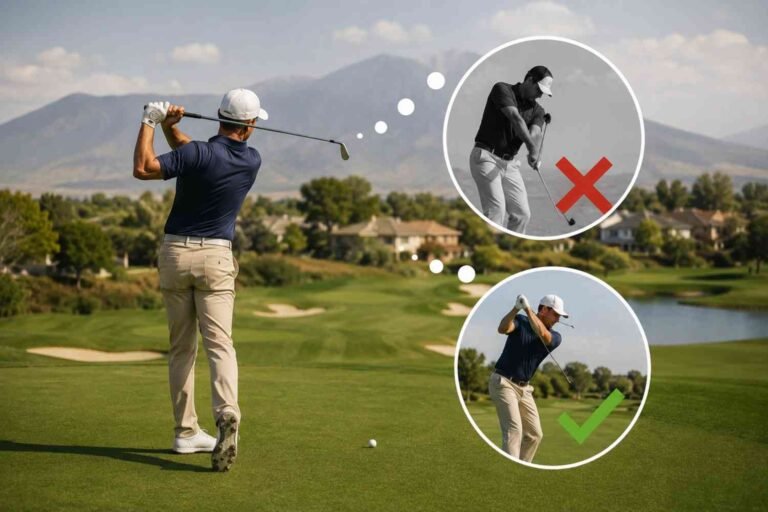
I used to think playing safer meant taking a shorter club, aiming away from trouble, and avoiding anything that looked remotely risky. That approach did help me avoid a few bad holes, but it also created a new problem. I was leaving myself long approaches, passing up realistic scoring chances, and sometimes making tentative swings because I was too focused on not making a mistake.
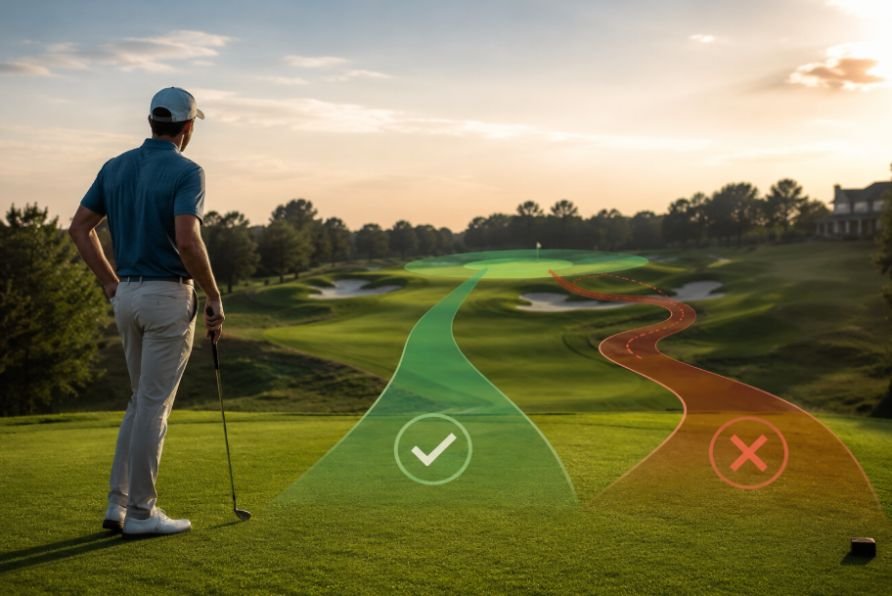
I eventually realized that smart golf is not really about playing scared. The better approach is to choose a target that gives me room for error, then make a confident swing toward it. A safer target can still come with an aggressive, committed swing. Once that distinction became clear, I started making decisions based on the actual risk and reward of a shot rather than automatically choosing the most conservative option.
Playing Safe Does Not Mean Playing Scared
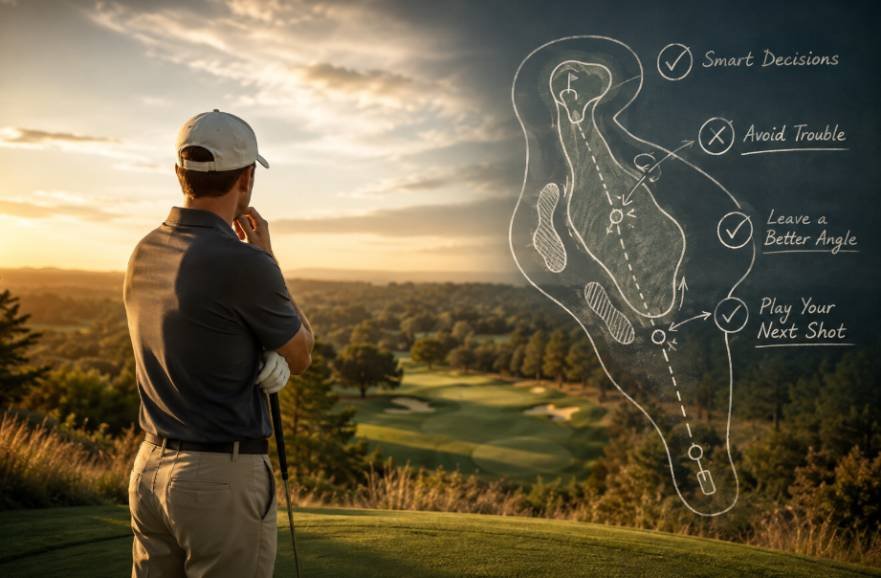
The biggest difference between smart and overly conservative golf comes down to how you define “safe.”
Safe does not necessarily mean short. It means choosing an option where your normal shot pattern has a good chance of producing a manageable result. You can aim away from a bunker and still hit driver. You can favor the center of a green and still make a full swing. You can choose the wider side of a fairway without trying to guide the ball there.
A useful mindset is to separate your target from your swing. Pick the target that gives you the best percentage play, then commit fully to the shot. Trying to make an easy swing toward a safe target can actually create more problems because deceleration and steering often lead to poor contact. Current course-management instruction also supports the idea of pairing conservative targets with confident swings.
Choose the Wider Side of the Hole
Your target should account for dispersion, not perfection.
Every golfer has a pattern. Some shots start straight and fade. Others draw more than expected. Longer clubs usually spread farther from side to side than wedges. Instead of aiming at the exact middle of a narrow corridor, find the area that gives your normal miss somewhere to go.
The tee box can help, too. If a dogleg bends left and trouble guards the inside corner, starting from the right side of the tee can open up the hole. If the danger sits on the right, moving left can create more visual and physical room.
You do not need to manufacture a different shot shape. Use the shot you already have and position yourself so that its natural curve works in your favor.
This is where golf course management tips become practical rather than theoretical. Good management is not about memorizing a list of safe choices. It is about knowing your tendencies, understanding the hole, and choosing a target where an ordinary swing has a reasonable chance of staying in play.
Give Yourself a Large Target Around the Green

Approach shots are where many golfers become unnecessarily aggressive. A flag sitting near water or a bunker can make the shot look inviting, especially when you are feeling confident.
But the flag is only one part of the green.
Start by identifying the largest useful section of putting surface. Then consider the pin position, your club’s normal dispersion, and the worst reasonable miss. If a slight pull sends the ball toward a bunker, shift your target. If the front of the green has trouble but the back is open, taking enough club to reach the safer portion may be better than trying to hit a perfect number.
The same thinking applies when you miss the green. Learning how to chip in golf gives you a dependable recovery option, which can make aiming for a safer section of the green or accepting a manageable miss much less intimidating.
That does not mean aiming at the center on every single approach. A short wedge with plenty of green around the pin can be a legitimate attacking opportunity. The farther away you are, and the more severe the surrounding trouble becomes, the more valuable a larger target becomes.
Know When Aggression Actually Makes Sense
Being smart does not mean eliminating aggressive shots from your game.
Some situations reward aggression because the downside is limited. A wide fairway, a reachable green with little trouble, or a short approach where you have strong control can all justify taking on more.
Golfers who often play shorter layouts may also find it useful to understand what is an executive golf course, since these courses typically create a different mix of shorter holes and strategic scoring opportunities.
Your current form matters as well. If you are striking the ball cleanly and controlling your distances, you may be able to accept more risk. If your contact has been inconsistent all day, widening your target can make more sense.
Think of risk as adjustable rather than fixed. The same shot can be a good decision one day and a poor one the next because your confidence, contact, and shot pattern have changed. Course-management research also supports adapting aggression to your actual ability and the conditions of the round.
Protect Yourself From the Big Mistake
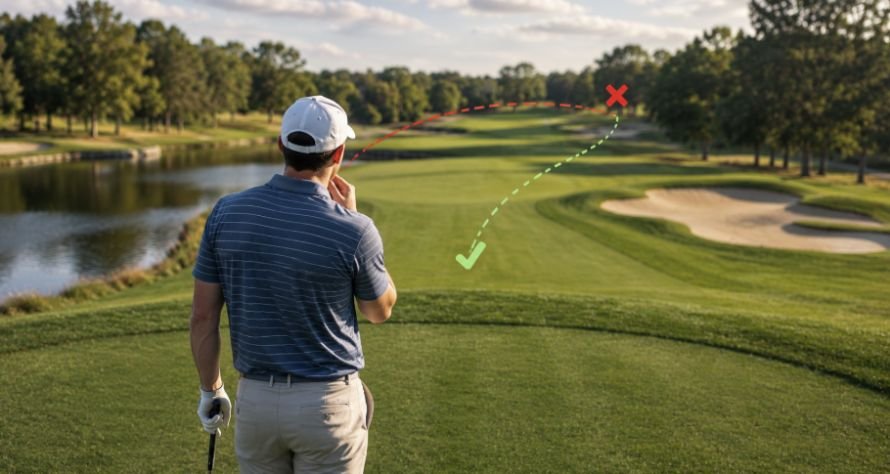
The place where conservative thinking becomes most useful is after something has already gone wrong.
If your tee shot finishes behind a tree, your goal does not have to be saving par at all costs. Trying to thread a long club through a tiny opening might produce a spectacular recovery, but it can also turn one bad shot into a lost ball and a much bigger number.
Look for the easiest route back to a normal position. If that means pitching out, take the medicine. You still have a chance to make bogey and move on.
The same applies around hazards. If you have little chance of clearing a penalty area with your current lie, do not let the possibility of a miracle recovery dictate the decision. Protecting yourself from doubles and triples is different from playing every shot conservatively. One protects your score. The other can limit your scoring opportunities.
Practice Your Risk Decisions, Not Just Your Swing
A good way to find the right balance is to test your decisions during practice.
Instead of asking only whether you hit the ball well, compare different strategies. Hit one shot toward an aggressive target and another toward a wider target. Try a driver and a shorter club from the same tee. Test different layup distances and record what happens.
This gives you evidence about your own game. You may discover that your supposedly “safe” club does not actually produce a tighter dispersion. You may also find that a particular approach distance gives you much better results than another.
That information makes using technology to make golf practice more effective much more valuable. A launch monitor, GPS system, or shot-tracking tool can show carry distance, dispersion, and tendencies that are difficult to judge by feel alone. The goal is not to collect numbers for their own sake. It is to use them to make better decisions.
Turn Smart Choices Into a Routine

You do not need to spend five minutes analyzing every shot.
Before hitting, check the lie, identify the biggest danger, choose your target, and decide what miss you can live with. Then choose the club that gives you a realistic chance of executing that plan.
Once you have decided, stop negotiating with yourself.
For practice sessions, golf simulator practice techniques can help you test this process in situations that resemble actual play. Build scenarios around narrow tee shots, tucked pins, forced layups, and different risk levels. Instead of trying to hit every virtual hole aggressively, decide in advance what target you want and why.
The more familiar this process becomes, the easier it is to stay committed when pressure appears on the course.
Frequently Asked Questions
1. Does playing safer mean using shorter clubs?
No. A longer club can be the safer choice when it leaves a better approach and keeps your normal miss away from serious trouble. Safety depends on the whole hole, not just distance.
2. Should I always aim for the center of the green?
The center is a strong default when the pin is surrounded by trouble, but it is not a rule for every shot. When the risk is low and your distance control is strong, attacking a more specific target can make sense.
3. How do I know when to take an aggressive shot?
Look at the reward, your probability of executing the shot, and the consequence of missing. Aggression makes more sense when the potential gain is meaningful and the downside is manageable.
4. What should I do after a bad shot?
Focus on reducing the damage rather than immediately recovering the lost stroke. A simple pitch-out or safe recovery can prevent one mistake from becoming a double or triple bogey.
Why the Best Strategy Still Leaves Room to Attack
Playing smarter does not mean turning every round into a defensive exercise. The real goal is to remove unnecessary risk while keeping the scoring opportunities that actually suit your game. A wide target, a favorable angle, or the right approach distance can make an aggressive swing much easier to justify. When you understand your dispersion and the consequences of a miss, you can be selective about where you attack instead of feeling like you have to attack everything.
Good course strategy should make you more confident, not more cautious. Choose the safer target when it improves your odds, choose the aggressive option when the reward is worth it, and then commit to whichever decision you make.