
I never think of breakfast before golf as a giant meal designed to “load up” for 18 holes. When deciding what to eat before a morning round of golf, I want enough fuel to feel alert without reaching the first tee with a heavy stomach.
My basic approach is simple: prioritize carbohydrates, add moderate protein, keep fat sensible, and adjust portion size to the tee time. USADA similarly recommends carbohydrate-focused, readily digestible pre-event meals while limiting foods that take longer to digest when activity is close.
The Simple Formula I Use for a Pre-Golf Breakfast
For most morning rounds, I build breakfast around three pieces: a carbohydrate source, a protein source, and fluid.
Carbohydrates provide useful pre-exercise fuel. Protein makes the meal more substantial, while familiar foods reduce the chance of digestive surprises.
The current Dietary Guidelines for Americans, 2025–2030 also emphasize whole, nutrient-dense foods such as fruits, whole grains, protein foods, dairy, and healthy fats.
That makes oatmeal with fruit, eggs with whole-grain toast, or Greek yogurt with berries more appealing to me than a huge diner breakfast.
| Breakfast component | Easy choices |
| Carbohydrates | Oats, toast, banana, berries |
| Protein | Eggs, Greek yogurt, milk |
| Healthy fats | Nuts, seeds, avocado, nut butter |
| Fluid | Water; electrolytes when conditions justify them |
Understanding what to eat before a morning round of golf becomes much easier once I stop searching for one magic food.
Match Your Breakfast to Your Tee Time
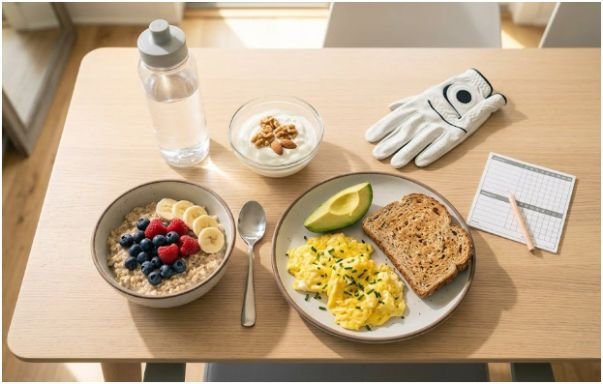
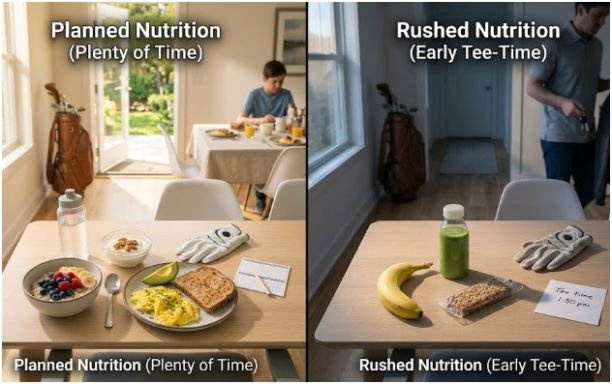
The closer I get to tee time, the smaller and simpler I make the meal.
Eating 1–2 Hours Before Golf
With an hour or two available, I prefer a normal breakfast.
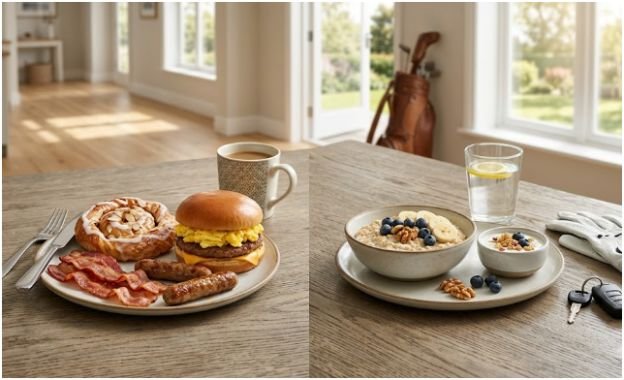
Oatmeal topped with banana and a small amount of nuts works well as a practical combination. Eggs with whole-grain toast and fruit provide another simple option. Greek yogurt with berries, oats, or granola can work when I want something colder and faster.
This timing also gives me room to eat slowly instead of inhaling breakfast while driving to the course.
Eating 30–60 Minutes Before Golf
When the alarm loses the battle and I have less than an hour, I scale things down.
A banana with a thin spread of peanut butter is easier than a large plate of eggs and potatoes. A fruit-and-yogurt smoothie can also work. Another option is a simple oat-based bar that is not overloaded with chocolate or added sugar.
USADA recommends adjusting food size and composition as exercise approaches because high-fat, high-fiber, and very protein-heavy meals can take longer to digest.
| Time before teeing off | My practical choice |
| 90–120 minutes | Oatmeal, berries, yogurt |
| 60–90 minutes | Eggs, toast, banana |
| 30–60 minutes | Banana, smoothie, small bar |
| Under 30 minutes | Small familiar snack plus water |
That timing-first approach is my preferred answer to what to eat before a morning round of golf because a 6:30 a.m. tee time requires a different strategy than 9:30 a.m.
Best Foods for Sustained Energy During Golf
I favor ordinary breakfast foods rather than anything marketed as special “golf fuel.”
Oats are convenient because I can prepare them quickly and pair them with fruit. Whole-grain toast is equally simple. Eggs or Greek yogurt add protein without requiring a complicated meal.
USADA notes that carbohydrate intake before exercise can help support fuel availability during prolonged activity.
I also think beyond breakfast. If I regularly feel flat late in a round, I look at the entire routine rather than blaming one meal. That includes sleep, training, recovery, and a realistic golf fitness routine for weekend golfers.
If I trained hard the previous day, I also consider recovery when deciding should you workout the day before golf.
How Much Should You Drink Before Morning Golf?
Food gets most of the attention, but I do not want to arrive at the course already thirsty.
USADA’s athlete nutrition guidance suggests roughly 14–18 ounces of fluid two to four hours before activity. That is around one normal bottle of water rather than an enormous last-minute drink.
I prefer sipping water after waking and continuing during the drive and warm-up.
For hot and humid summer rounds, fluids containing sodium and some carbohydrate may become more useful. USADA notes that these can help during prolonged exercise, especially in heat.
I would rather begin drinking early than chug a bottle on the first tee.
Foods I Avoid Before an Early Tee Time
Knowing what to eat before a morning round of golf also means knowing what I personally would not make my default.
A greasy breakfast sandwich, oversized plate of bacon and sausage, or fried meal can feel unnecessarily heavy close to playing. Very high-fat foods also digest more slowly, which is one reason USADA advises limiting them before training or competition.
I also avoid making pastries, doughnuts, or candy-style bars my entire breakfast.
Coffee is different. If I normally drink coffee, I see little reason to completely change that routine on golf morning. I simply avoid turning an early tee time into an excuse for several oversized coffees.
Competition morning is also a terrible time for food experiments. Familiar food wins.
What If You Cannot Eat a Full Breakfast?
Some golfers simply have little appetite at 5:30 a.m.
I would not force down a huge meal. Instead, I would split breakfast into stages.
I might have a banana or smoothie at home, then carry a sandwich, fruit, or another familiar snack for later. USADA athlete guidance similarly supports larger meals farther from competition and carbohydrate-rich snacks closer to activity.
This is especially useful for golfers asking what to eat before a morning round of golf when their tee time is almost immediately after sunrise.
My 7:10 A.M. Tee-Time Fueling Example
Here is the practical system I would use for a 7:10 a.m. round.
At 5:30, I would eat oatmeal with banana and Greek yogurt. I would begin sipping water with breakfast.
Around 6:30, I would arrive at the course and warm up. If I still felt hungry near 6:45, I would have half a banana or another small familiar carbohydrate source.
Then I would carry a snack instead of expecting breakfast to power every hole.
That is the key difference in my approach: I plan backward from the tee time rather than copying someone else’s breakfast.
I also pair nutrition with movement. A few mobility drills can be particularly useful after sitting at a desk all week, which is where golf posture exercises for desk workers fit into my pre-round preparation.
Don’t Let Breakfast Bogey Your Front Nine
When I think about what to eat before a morning round of golf, I keep the answer deliberately boring: familiar carbohydrates, moderate protein, sensible portions, and early hydration.
I do not need a complicated sports-nutrition ritual.
If breakfast is 90 minutes away, oatmeal, eggs, toast, fruit, or yogurt all make sense. If the first tee is only 30 minutes away, I go smaller and easier to digest.
The next time I book an early tee time, I would start with one simple change: set my breakfast alarm from the tee time backward. That makes better fueling much easier than trying to fix everything in the clubhouse parking lot.
Frequently Asked Questions
1. What is the best breakfast before an early morning golf round?
Oatmeal with fruit, eggs with toast, or Greek yogurt with fruit are simple combinations of carbohydrates and protein.
2. What should I eat 30 minutes before playing golf?
Choose a small familiar option such as a banana, smoothie, or simple carbohydrate-based snack that is comfortable to digest.
3. Should I play golf on an empty stomach in the morning?
Some people tolerate it, but I prefer at least a light snack before a long round, especially when I know hunger affects my concentration.
4. What to eat before a morning round of golf if I have a 6 a.m. tee time?
Keep it small and practical: try a banana, light smoothie, yogurt, or toast, then carry additional food for the course.