
I used to think better ball striking came from making a prettier swing. Then I noticed how a small change in where the club touched the ground could completely change the shot. Contact gives you feedback that a mirror cannot.
I also found that the best practice sessions were the ones where I had a clear task and immediate feedback. Golf swing contact drills give your practice a target and make solid contact something you can train.
Why Contact Matters More Than a Perfect-Looking Swing

A clean strike affects distance, launch, spin, direction, and confidence. You do not need a perfect swing, but you need consistent contact.
For iron shots, low-point control is a major piece. The club should generally strike the ball before reaching the bottom of its arc. When the low point stays behind the ball, fat shots become common.
Start With the Feet Together Drill
Bring your feet close together and make short shots with a wedge or short iron. Keep the swing controlled and focus on staying balanced.
A narrow stance reduces excessive movement and helps you coordinate your body and club. Do not hit hard. Find the center of the face and finish balanced.
Train Low Point With a Line
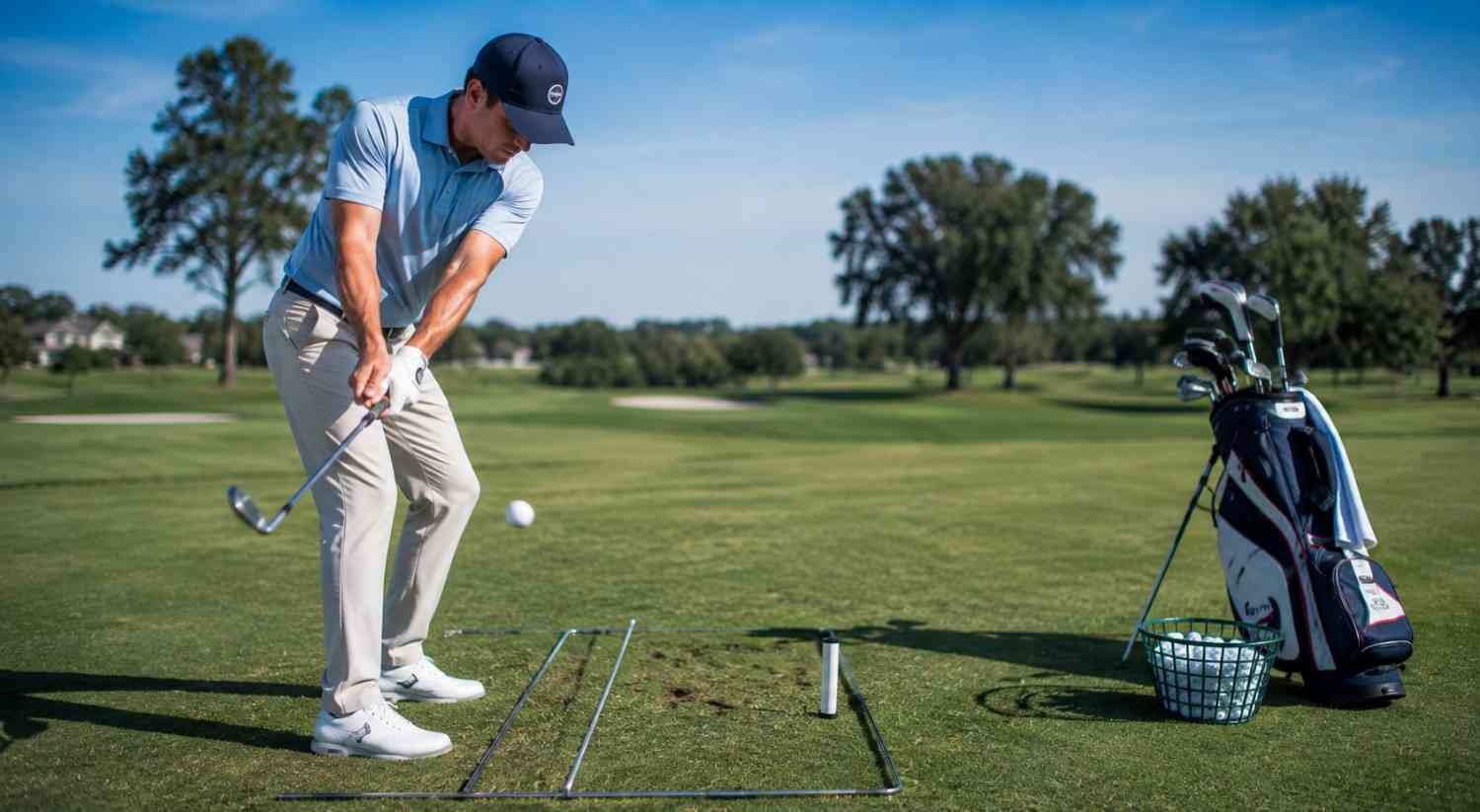
Draw a straight line on the ground perpendicular to your target line. Without a ball, make small swings and try to brush the grass across the line.
Once you can repeatedly strike the line, place a ball just in front of it and repeat the motion. It also gives feedback about turf interaction.
Use the Towel Drill for Ball-First Contact

If you regularly hit behind the ball, place a towel a few inches behind it. Make controlled swings while trying to strike the ball without hitting the towel first.
Start with half swings and modest speed. If you catch the towel, do not simply shove your hands toward the target. Look at pressure moving toward the lead side and your body continuing to rotate.
The towel turns an invisible problem into feedback.
Add the Low Point Laneway Drill
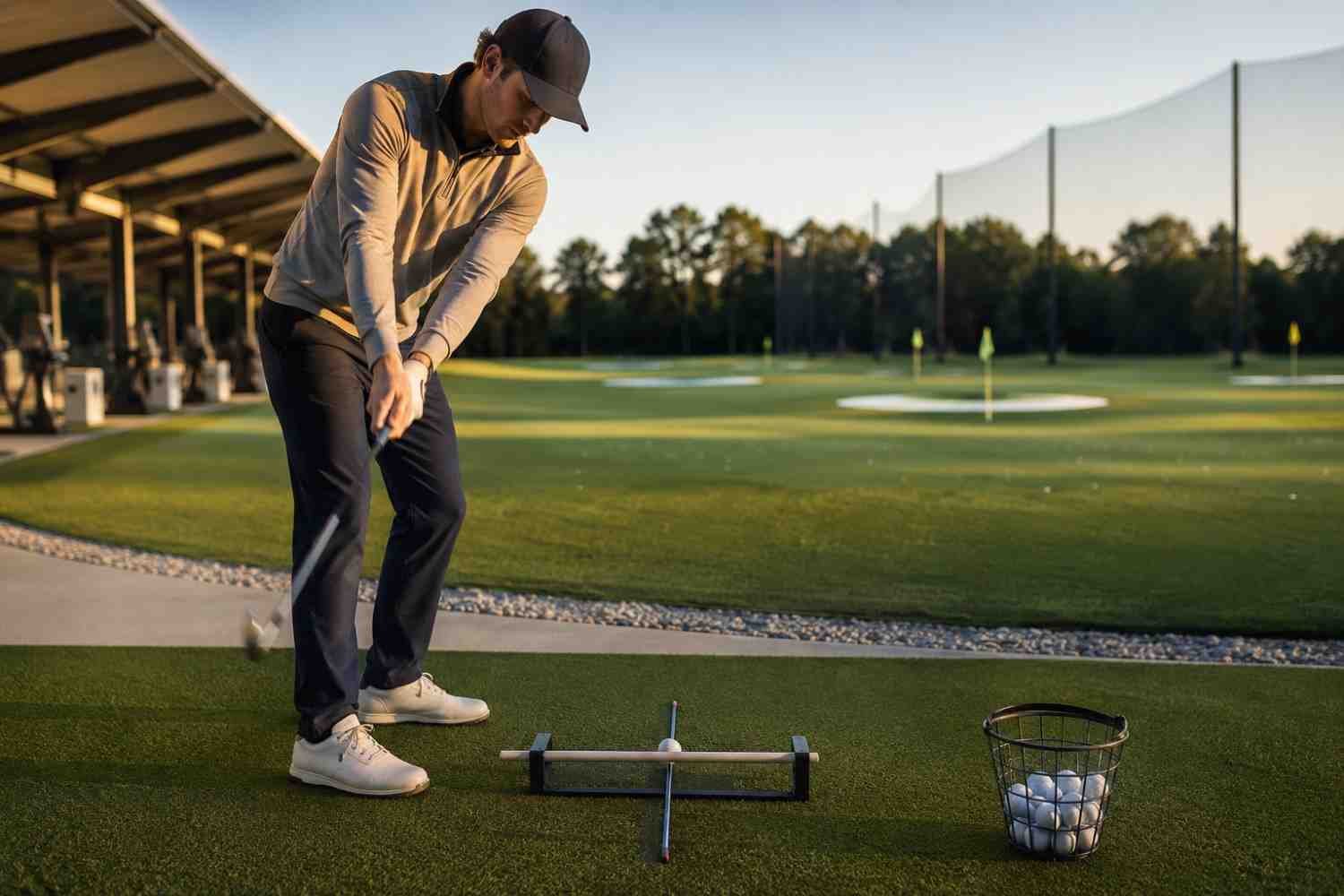
Create a narrow lane with two alignment sticks or clubs placed parallel to your target line. The lane provides a visual reference for controlled contact.
Begin with short swings and brush the ground in front of the ball. As contact improves, lengthen the swing. A drill should eventually lead to a normal shot.
You can combine this work with golf swing consistency drills for more repeatable contact.
Don’t Ignore Your Weight Shift
Poor contact often comes from where pressure goes during the downswing. If you stay heavily on your trail side, the club can bottom out too early.
Make slow half swings while feeling pressure move toward your lead foot before impact. Avoid a dramatic slide. Stay balanced and rotate.
The goal is to help the club reach the ball before the turf. This makes improving ball striking consistency less about one magic move and more about a repeatable sequence.
Practice Contact Before Adding Speed
A common mistake is increasing speed as soon as a few shots feel good. That can hide poor contact.
Start with half swings and look for a clean strike. Then move to three-quarter swings before full swings.
Change targets and clubs occasionally. That forces you to carry contact skills into situations closer to the course.
Watch the Divot, Not Just the Ball
Your divot can reveal what happened at impact. With an iron, a divot that begins behind the ball usually indicates that the low point was too far back. A divot beginning ahead of the ball is generally a better sign of ball-first contact.
Do not obsess over making a large divot. The goal is controlled turf interaction. When divots are hard to see, use the sound and feel of the strike.
Build a Simple Contact Session
Start with feet-together swings, brush a line without a ball, then use the towel drill. Finish with normal shots at different targets, gradually adding speed.
Focus on contact rather than distance during the drills. Once the strike becomes reliable, let your normal swing take over.
Common Mistakes to Avoid
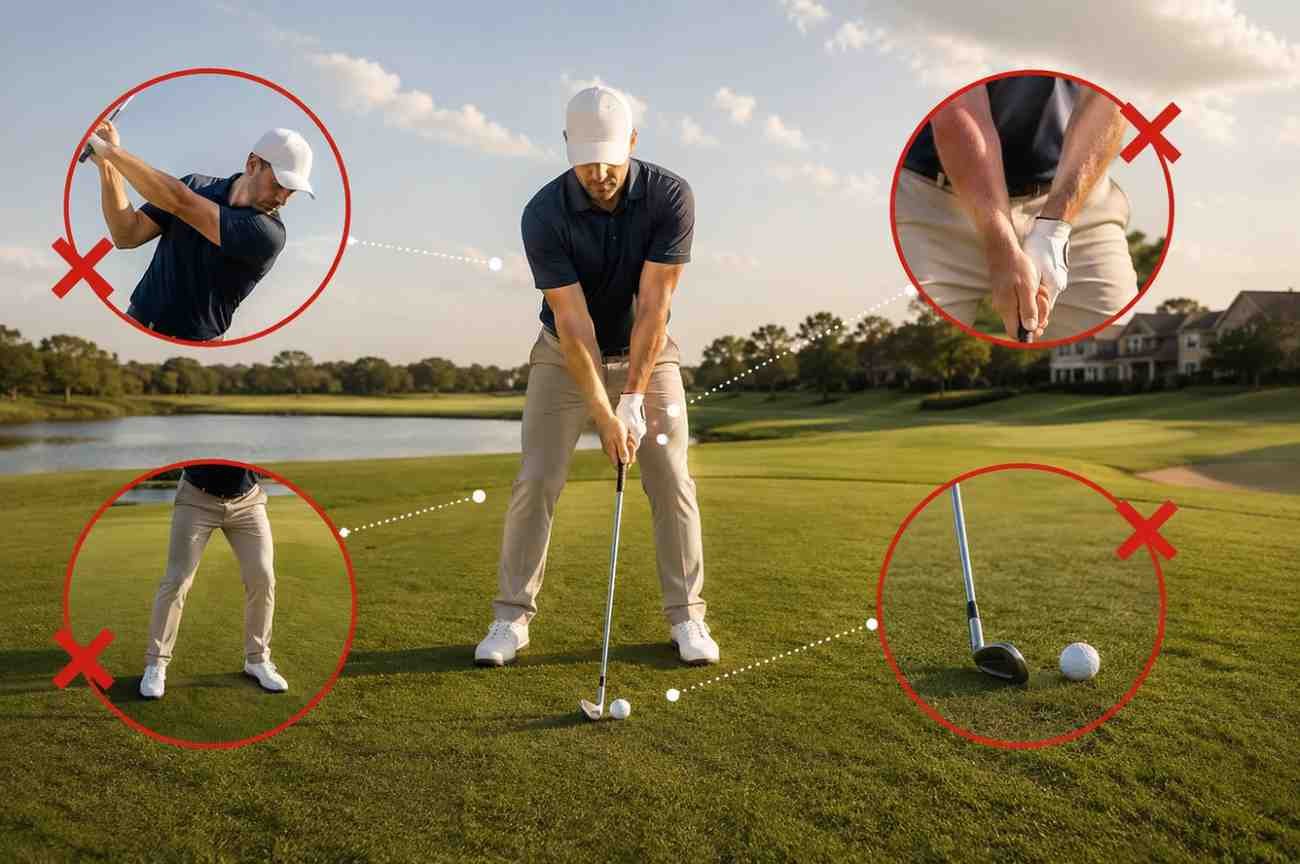
The biggest mistake is turning every drill into a search for a new swing. Pick one problem and give one drill enough repetitions to understand the feedback.
Another mistake is practicing only perfect shots. Mishits are useful information. A heavy strike can show that your low point moved back, while a thin shot can reveal another contact issue.
Do not chase speed before control.
FAQs: How Golf Swing Contact Drills Can Improve Your Ball Striking
1. How often should I practice contact drills?
Two or three focused sessions each week can be enough. Keep them short and purposeful.
2. Which drill helps fat shots?
The line and towel drills provide immediate feedback about where the club contacts the ground.
3. Should beginners use contact drills?
Yes. Simple drills can teach balance, low-point control, and centered strikes.
4. Should I use drills before every round?
A few slow rehearsal swings can help, but avoid major technical changes immediately before playing.
Why Better Contact Comes From Better Feedback
Good ball striking is rarely built by chasing one perfect swing thought. It comes from understanding impact and getting enough feedback to repeat useful patterns. A line, towel, narrow stance, or half swing can reveal more than mindless range balls.
Once contact becomes the focus, practice feels different. You notice strike quality, turf interaction, balance, and control instead of judging every shot only by distance. Those observations add up, making cleaner contact more dependable when the next shot actually counts.