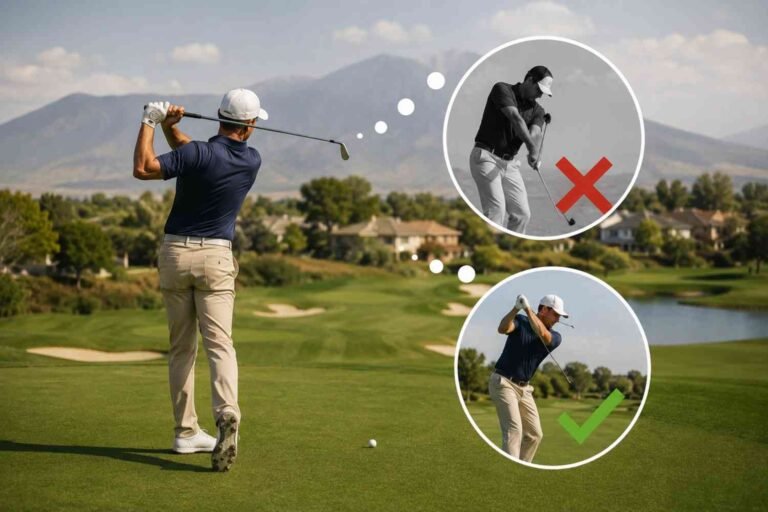

Why Weight Transfer Feels Hard for Most Golfers
The fastest way to learn how to improve weight transfer in golf swing is to stop thinking about “moving your body” and start feeling pressure under your feet. I used to slide my hips away from the target and call it a weight shift. It felt powerful, but my contact said otherwise.
My fat shots came from hanging back. My thin shots came from rushing forward. My slice showed up when my arms started down before my lower body. The fix was not a bigger move. It was better timing.
Good weight transfer is not a dramatic side-to-side sway. It is a pressure sequence. Your feet load the ground, your hips recenter, and your lead side accepts force before impact. When that happens, the club reaches the ball before the turf, and your swing feels less forced.
Biomechanics research often looks at ground reaction force and center-of-pressure movement in the golf swing. That sounds technical, but the playing feel is simple. The ground gives you something to push against. Your job is to use it at the right time.
The Pressure Clock That Fixed My Swing Timing

I like to teach weight transfer with a simple pressure clock. It gives each part of the swing a job. You do not need a launch monitor or force plate to feel it. You only need to notice where pressure sits under your feet.
Address: Start Balanced, Not Frozen
At address, I want my pressure close to 50/50. That does not mean stiff. It means athletic. My knees feel soft, my chest stays over the ball, and my feet feel connected to the turf.
A common mistake is starting with too much weight on the trail foot. That makes the backswing feel loaded before it even starts. Then there is nowhere useful to move. Start centered, then create the shift during motion.
Early Backswing: Load the Trail Foot Early
By the time the club reaches parallel in the takeaway, I want most pressure moving into my trail foot. For many players, that feels like 70% to 80% pressure on the trail side.
The key word is early. If you wait until the top to load the trail side, you often sway. Your upper body drifts outside the trail foot, and your low point becomes unstable.
A good trail-side load feels like pressure inside the trail heel and arch. It should not feel like your head is drifting away from the ball.
Transition: Recenter Before the Club Finishes Going Back
This is the part many weekend golfers miss. The best players begin moving pressure back toward the lead side before the backswing fully finishes. I call this the “recenter before release” move.
Your arms may still be finishing the backswing while your lower body starts falling into the lead side. It feels strange at first. It may feel like your feet are ahead of your hands. That is the point.
This move helps the downswing start from the ground instead of the shoulders. It also gives you time to rotate instead of lunging at the ball.
Impact: Get Pressure Into the Lead Foot
At impact, I want most pressure on the lead foot. Many coaches use a rough feel of 80% or more on the lead side for solid iron contact.
This does not mean throwing your chest at the target. Your chest can stay centered while your pressure moves forward. Your lead hip clears, your lead leg firms up, and the club strikes the ball with a downward, compressed blow.
If you are learning how to improve golf swing, this is the feel to chase: pressure forward, chest stable, hips clearing, finish balanced.
Best Drills to Improve Golf Swing Weight Shift
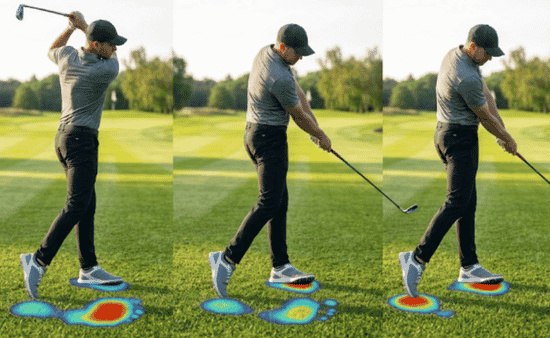
You do not fix weight transfer by reading about it. You fix it by rehearsing pressure until your body trusts the sequence.
Step-Forward Drill
The step-forward drill is my favorite for golfers who start the downswing with their arms.
Set up with your feet close together. Start your backswing. Before the club reaches the top, step your lead foot toward the target. Plant it, then swing through.
This teaches your lower body to move first. It also exposes poor timing fast. If your arms fire early, you will feel off balance. If your foot plants first, the swing becomes easier to sequence.
Use half swings at first. Ten slow reps are better than three rushed full swings.
Trail Heel Plant Drill
This drill helps golfers who never load the trail side early enough.
Set up normally, then lift your trail heel slightly. As you start the takeaway, plant the trail heel into the ground. You should feel pressure move into the inside of the trail foot.
The goal is not to stomp hard. The goal is to wake up the trail foot early. Once you feel that early load, make a smooth backswing and finish balanced.
This drill works well before hitting irons because it teaches pressure without encouraging a big sway.
Downswing Squat and Recenter Drill
This drill helps players who slide their hips too far toward the target.
At the top, feel a small squat into the ground. Then feel your lead hip move slightly back and around, not straight toward the target. Your lead side should accept pressure while your body rotates open.
I like to rehearse this without a ball first. Make a backswing, pause, squat lightly, push the lead hip back, and turn through. Then hit small shots with the same feel.
This is one of the most useful drills for clean contact because it improves low-point control.
Common Weight Transfer Mistakes That Ruin Contact

Most bad weight transfer patterns come from trying to create power in the wrong direction.
Swaying Instead of Shifting
Swaying happens when your body moves outside your trail foot in the backswing. Shifting happens when pressure moves inside your feet while your body stays controlled.
A sway often causes inconsistent contact because your swing center moves too much. You then need a perfect recovery move to reach the ball. Most golfers do not recover in time.
A simple check helps. Record your swing from face-on. If your head and upper body drift far away from the target, you are probably swaying.
Hanging Back Through Impact
Hanging back means your pressure stays on the trail foot as the club reaches the ball. This creates scoops, weak fades, thin shots, and heavy shots.
If your finish ends with your trail foot flat and your chest leaning back, you likely hung back. A good finish should feel posted on the lead side, with your trail heel up and your chest facing the target.
This is why pressure matters more than effort. You can swing hard and still leave your weight behind.
Starting Down With the Arms
When the hands start the downswing, the club often moves over the top. That can cause pulls, slices, and steep contact.
The better feel is feet, hips, torso, arms, club. It does not need to be exaggerated. Your lead foot accepts pressure, your hips begin to open, and your arms fall into place.
This lower-body sequence can also help with how to hit straighter golf shots consistently because the clubface and swing path become easier to control.
How Better Weight Transfer Helps You Hit Straighter Shots
Better weight transfer improves more than distance. It improves face control, swing path, low point, and finish balance.
When pressure reaches the lead side on time, the club can bottom out after the ball. That is why solid iron shots feel crisp. You strike ball first, then turf.
With the driver, the feeling changes slightly. You still shift pressure correctly, but you do not want to chop down steeply. The lead side still supports the turn, while your upper body stays behind the ball enough to launch it.
My own test is simple. If I can hold my finish for three seconds, my transfer was usually decent. If I fall backward, spin out, or step away, my pressure sequence broke down somewhere earlier.
That three-second finish test is not fancy, but it works. It gives you instant feedback without overthinking mechanics.
FAQs
1. What is the best drill for weight transfer in the golf swing?
The step-forward drill is the best starting drill because it teaches the lead foot to plant before the arms rush down.
2. Should weight be on the front foot at impact in golf?
Yes, most pressure should be on the lead foot at impact, especially with irons, to help create ball-first contact.
3. Is weight transfer the same as swaying?
No. Weight transfer is pressure moving under your feet, while swaying is your body drifting too far sideways.
4. How do beginners learn how to improve weight transfer in golf swing?
Beginners should start with half swings, early trail-foot pressure, and a balanced finish before adding speed.
Final Take: Stop Dancing, Start Pressuring the Ground
The secret is not a bigger slide, a harder turn, or a heroic lunge at the ball. The real answer to how to improve weight transfer in golf swing is learning when pressure should move.
Start balanced. Load the trail foot early. Recenter before the backswing finishes. Strike with pressure on the lead side. Then hold your finish like you meant it.
That is the difference between looking busy and actually using the ground. Your next range session should be simple: ten step-forward drills, ten trail-heel plants, ten slow swings with a three-second finish. If your contact gets cleaner, your feet just taught your swing a lesson.