
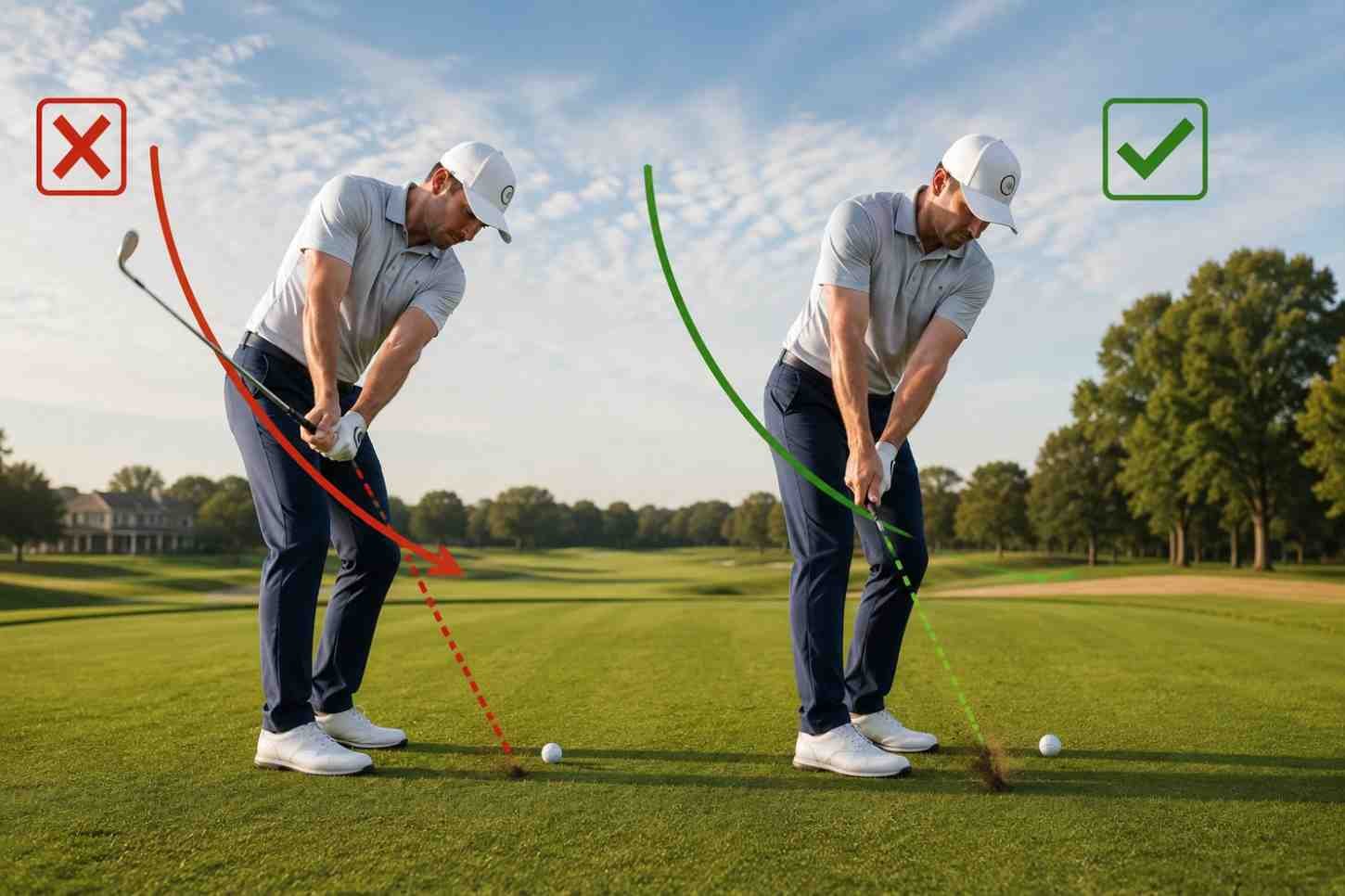
I first noticed how frustrating an over-the-top move can be when a swing felt fine at the top, but the club seemed to race outside the line as soon as the downswing started. The result was rarely the same twice. One shot sliced, another pulled left, and every few swings produced that weak contact that made the problem even more confusing.
I also found that trying to simply “swing from the inside” was not much help. That thought sounds easy until you’re standing over a golf ball trying to make it happen at full speed. The better approach is to change what happens during the transition, then use simple drills that give you immediate feedback without rebuilding your entire golf swing.
What Coming Over the Top Actually Means

Coming over the top happens when the club moves too far outside the desired path during the transition and approaches the ball from an out-to-in direction. Instead of the club working more from inside the target line, the downswing becomes steep and cuts across the ball.
The ball flight depends on what the clubface does at impact. An open face combined with an out-to-in path can produce a slice, while a more closed face can send the ball left as a pull or pull-hook. That is why two golfers can have a similar over-the-top movement but see completely different shots.
The issue is also about contact, not just direction. A steep, cutting motion can make it harder to consistently find the center of the clubface and control the angle of attack. That lost consistency often shows up as thin, fat, weak, or glancing strikes.
Why Golfers Come Over the Top
One of the biggest causes is poor sequencing during the transition. Golfers often start down by throwing the hands and shoulders toward the ball instead of allowing the lower body and pressure shift to begin the movement.
Trying to hit the ball harder can make the problem worse. When speed becomes the priority, the upper body can take control and pull the club outward. A golfer who already has an over-the-top tendency may then reinforce the same movement every time they swing aggressively.
Setup and backswing can contribute too. Poor alignment, an excessively inside takeaway, or a lack of appropriate shoulder tilt can make the transition more difficult. That does not mean every golfer needs to rebuild the backswing, though. Often, the most useful place to start is the first part of the downswing.
Change Your Downswing Sequence
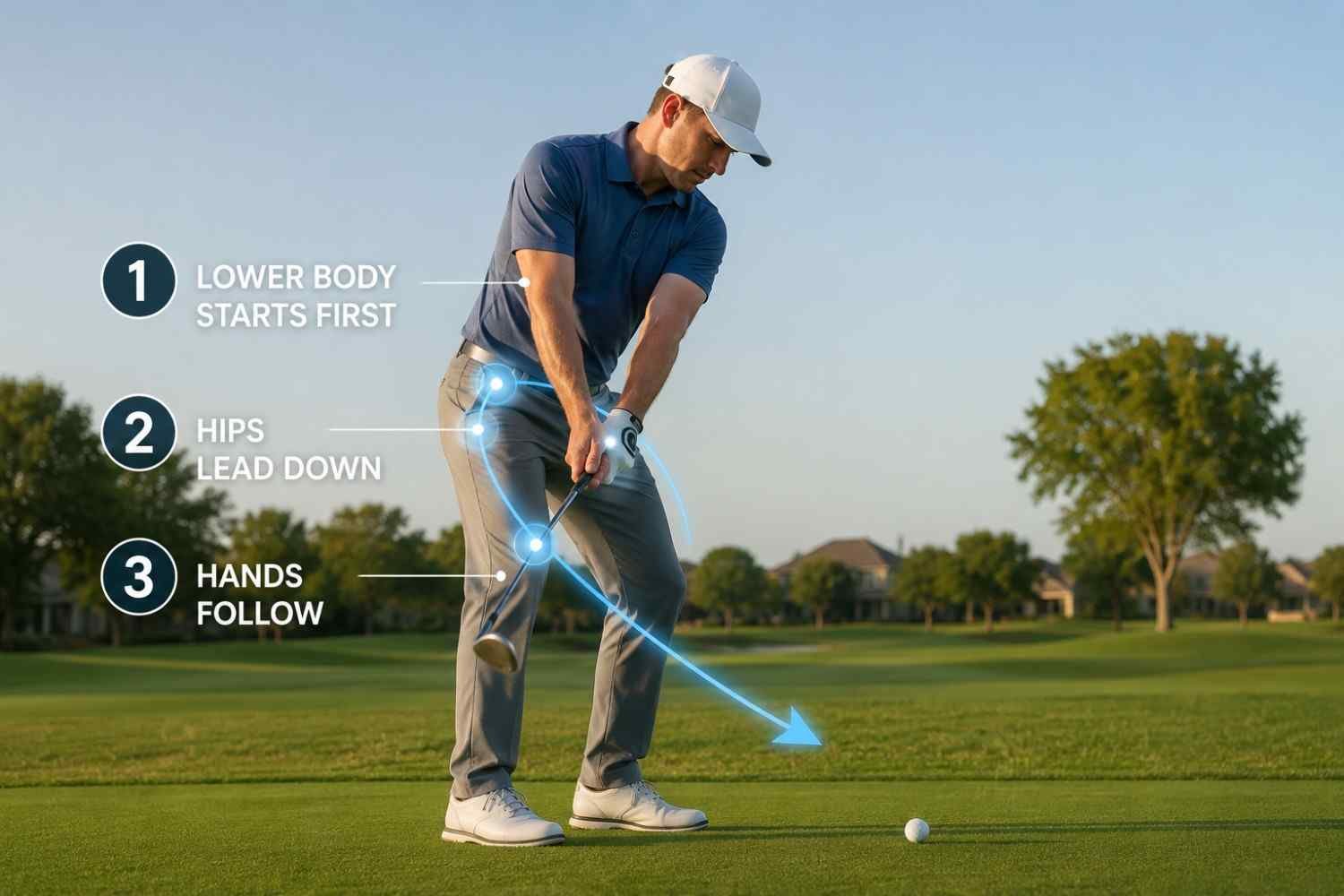
The goal is not to force the club dramatically behind you. Instead, create enough room for it to approach the ball on a more neutral path.
For a right-handed golfer, feel the pressure move toward the lead foot as the downswing begins. Let the hips begin to move and rotate while the arms remain relatively quiet for a moment. At the same time, allow the trail elbow to move down toward the trail side of the body rather than throwing it toward the ball.
That combination can help the club shallow naturally.
A useful feel is keeping your back turned toward the target for a fraction longer during transition. This can prevent the shoulders from immediately spinning open and dragging the club outside. It is a feel, not a position you should try to hold throughout the entire downswing.
The key is sequencing. Lower body movement, torso rotation, arm movement, and club release need to work together rather than having the hands and shoulders dominate immediately.
Try the Trail-Elbow Connection Drill
The trail elbow can be a useful reference when your arms tend to take over the transition.
Take your normal address position without a ball. Place your lead hand or fist near your trail hip, then make a backswing. As you move toward impact, rehearse bringing the trail elbow back toward that hip area.
For a right-handed golfer, that means the right elbow should feel connected to the right side rather than flying away from the body.
This drill is especially useful when the over-the-top movement feels automatic. You can practice it without hitting a ball, then progress to short chip-like shots and half swings. Once the movement becomes more familiar, gradually increase the length and speed of the swing.
The goal is not to trap the elbow against your ribs. You are simply learning what a more connected transition feels like.
Build the Change With Short Swings First
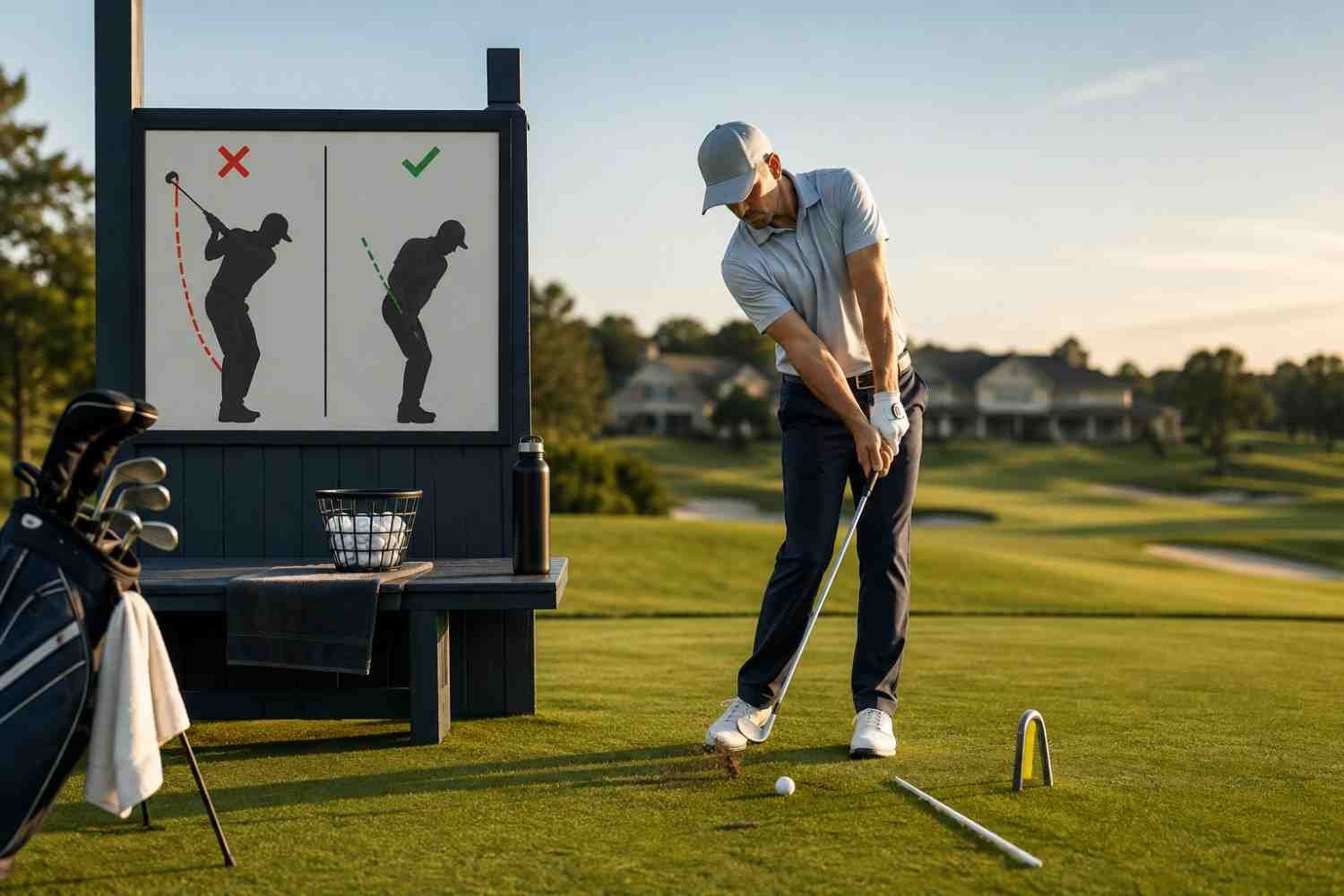
Take the new movement to the range gradually. Start with short shots using a wedge or short iron. Focus on making clean contact while keeping your swing speed comfortable.
Once you can repeat the motion, move into half swings. Then progress to three-quarter swings before returning to full-speed shots.
Pay attention to two things: where the ball starts and how solidly you strike it. You do not need every shot to draw. A straight or slightly curved shot with centered contact is often a better sign of progress than chasing a specific ball flight.
This is also where your practice can support golf swing consistency drills without turning every session into a mechanical checklist. The more predictable your movement becomes at slower speeds, the easier it is to reproduce when you eventually add speed.
Watch for These Common Mistakes
Trying to fix an over-the-top swing can create its own set of problems.
- Do not try to hold your back toward the target for the entire downswing.
- Do not force your trail elbow tightly against your ribs.
- Do not swing as hard as possible while learning the new movement.
- Do not judge every shot by whether it draws.
- Do not change your grip, stance, backswing, downswing, and release all at once.
A useful practice session should have one clear objective. If your focus is the transition, let the transition be the priority.
Take the New Swing to the Course

A movement that works on the range can disappear on the first tee when there is a fairway, trouble, scorecard, and a driver in your hands.
The answer is not to pile on more swing thoughts. Before each shot, choose one simple cue, such as “start down smoothly” or “miss the outside.”
Start with a controlled tempo and accept that the new movement may initially feel strange. Your old pattern has probably been repeated thousands of times, so it should not be surprising if the new one feels unfamiliar.
As contact improves, your confidence can grow with it. That is where improving ball striking consistency becomes more important than trying to create a perfect-looking swing. A repeatable strike gives you useful feedback and makes it easier to trust the motion under pressure.
How to Know You’re Making Progress
A disappearing slice is one possible sign, but it is not the only measurement that matters.
Look for more centered contact, fewer shots that start sharply left, and less dramatic curvature. You may also notice that your swing feels less rushed from the top.
Another good sign is that your misses become smaller. Golf improvement does not always mean hitting perfect shots. Sometimes it means turning a wild slice into a manageable fade or a weak pull into a playable shot.
If you can reproduce that improved contact without consciously controlling every part of the downswing, the change is becoming more natural.
FAQs: How to Stop Coming Over the Top in Golf for More Consistent Contact
1. Why do I keep coming over the top?
Poor downswing sequencing is a common reason. Starting the transition with the shoulders and arms can pull the club outside and create an out-to-in path.
2. Does coming over the top always cause a slice?
No. The clubface also affects the result. An over-the-top path can produce a slice, pull, or pull-hook depending on the face position.
3. How long does it take to fix an over-the-top swing?
There is no fixed timeline. Consistent practice with slow swings and useful feedback can help, but the amount of time varies with the golfer and the cause of the movement.
4. Should I try to swing inside-out?
Use an inside-out feel only as a practice aid if you need it. The long-term goal is a neutral, repeatable club path rather than an extreme inside-out motion.
Better Contact Starts With a Better Transition
Coming over the top can feel like a huge swing problem because it affects path, contact, direction, and confidence at the same time. But you do not necessarily need to rebuild everything. Improving the transition, allowing the lower body to lead, and giving the trail arm a better route can create a more reliable delivery without filling your head with technical thoughts.
The best change is the one you can repeat when the ball is actually in front of you. Start slowly, use drills that provide feedback, and let solid contact become the measure of progress.