

I used to think an inconsistent golf swing meant I needed to rebuild my mechanics from the ground up. Then I noticed something more practical: some of my best shots happened when I stopped trying to control every part of the swing. When the motion felt smooth, balanced, and unhurried, contact usually followed.
That changed how I practiced. Instead of hitting ball after ball and hoping consistency would appear, I started using short drills that gave each swing one clear job. Feet together helped my balance, tempo counts calmed my transition, and connection drills made the arms and body feel less separate.
Why Rhythm Matters for Swing Consistency

Consistency is less about making every swing identical and more about repeating useful movement patterns. Tempo, balance, sequencing, and clubface control all influence how reliably you return the club to the ball.
A rushed transition can pull the swing out of sequence. Too much effort can make the arms race ahead of the body. Losing balance can change your low point and contact. Rhythm gives those moving parts a common pace.
Start With the Feet-Together Drill
The feet-together drill is a way to feel what a balanced golf swing should be.
How to Do It
Place your feet together or with the shoes lightly touching. Grip down slightly on a short iron and begin with half-swings. Keep the motion comfortable rather than trying to hit hard.
Focus on finishing in balance. Then hit a few normal shots while keeping that centered feeling. Feet-together practice is commonly used to reinforce balance and coordination between the arms and body.
Use an Arm-Connection Drill
When the arms separate too much from the body, the swing can become difficult to repeat. A small foam ball or rolled towel between the upper forearms provides a simple connection cue.
Keep the Connection Soft
Place the object between your forearms and make short swings without squeezing it aggressively. Remove the towel once the connected feeling becomes familiar.
Try a Four-Count Tempo Drill
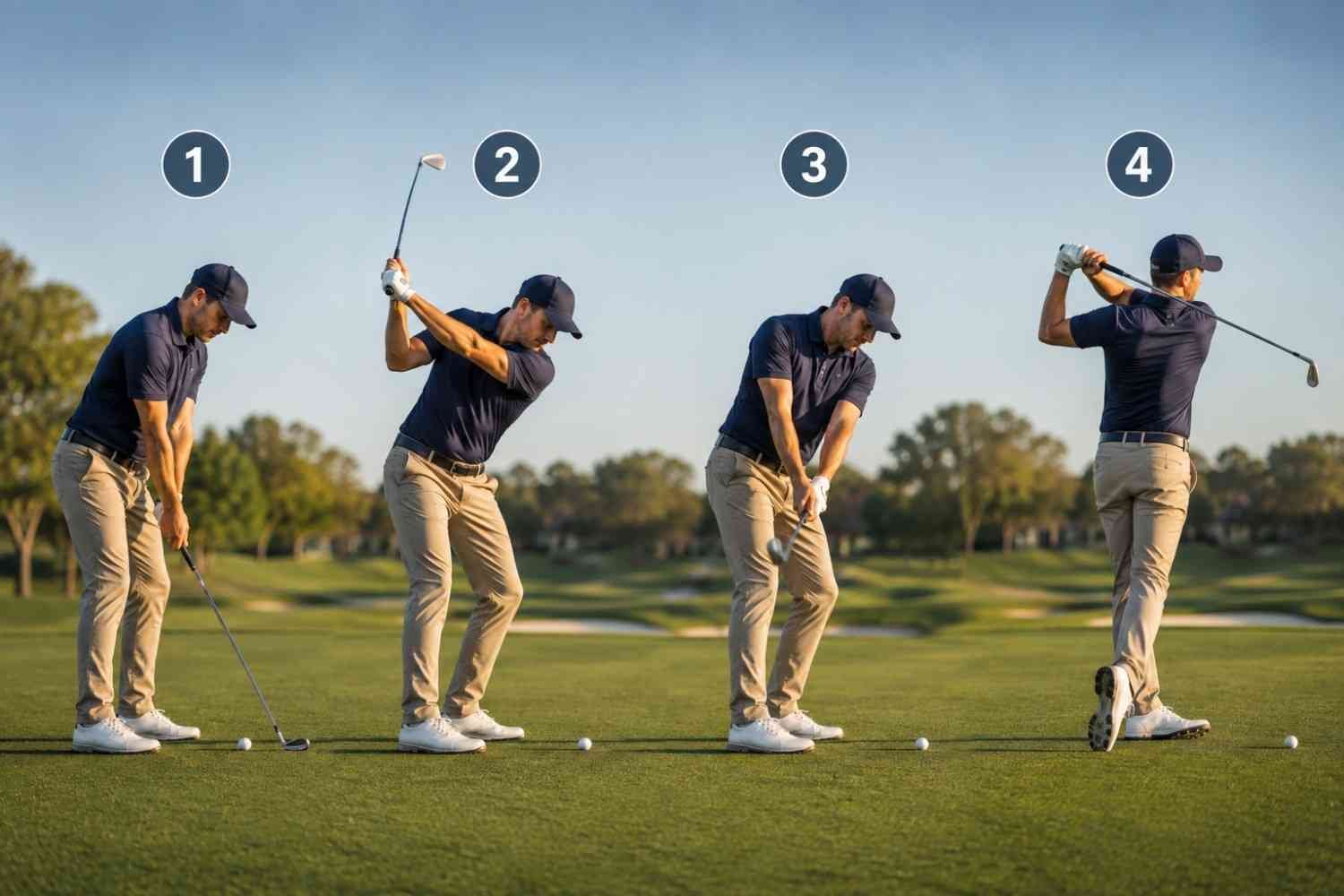
Some golfers become inconsistent because they think about too many technical positions. A simple count gives the mind something neutral to follow.
Find a Repeatable Beat
Use a steady 1-2-3-4 count. Treat the numbers as setup, backswing, transition, and finish, or create a rhythm that matches your natural motion.
PGA instruction uses counting drills to encourage a rhythmic, balanced swing. The goal is not to force everyone into one tempo.
Practice without a ball first. Then hit short shots while maintaining the rhythm.
Train the Clubhead With Three-Swing Weight Feel
A useful consistency drill does not always require hitting a ball. Make three slow practice swings while paying attention to the weight and momentum of the clubhead.
Feel the Bottom of the Arc
Hold the club lightly enough to notice its movement. Make the first swing slowly, the second with more speed, and the third at your normal pace. Notice where the clubhead naturally bottoms out.
Add a Step-Through Drill for Better Sequencing
If your swing feels stuck or your transition becomes abrupt, the step-through drill can help you feel pressure moving toward the target.
Let the Body Start Moving
Begin with your feet close together. As you make the backswing, prepare to step toward the target with your lead foot. Then make the downswing as the step begins.
Step-through variations are also useful when you tend to hang back through impact because they encourage a clearer pressure shift.
Turn Drills Into a Real Practice Session

Drills only matter if their feel transfers to a swing. Start with five slow practice swings, then hit ten feet-together shots, ten short connected swings, and ten shots using your preferred tempo count.
Finish With Normal Swings
After the drill work, hit five to ten normal shots toward different targets.
If the ball starts scattering, return briefly to the drill that addresses your biggest issue.
How to Know Your Swing Is Becoming More Consistent
Better consistency is not simply hitting more perfect shots. Look for smaller signs: tighter dispersion, more centered contact, a steadier finish, and fewer swings that feel completely different.
Your miss matters too. If bad shots become more predictable, you are gaining control.
FAQs: Golf Swing Consistency Drills to Help You Find Your Rhythm
1. Which drill should I start with?
Start with the feet-together drill if balance and contact are inconsistent.
2. How often should I practice these drills?
Use them for 10 to 15 minutes during a range session, then spend time hitting normal shots.
3. Should I swing slowly when practicing consistency?
Begin slowly enough to control the motion, then gradually increase speed.
4. Can drills fix every swing problem?
No. Drills can build useful feels and movement patterns, while persistent problems may need feedback from a qualified golf instructor.
Why Finding Your Rhythm Matters More Than Chasing Perfect Mechanics
The best drills give you a simple sensation you can recognize: balanced feet, connected arms, steady tempo, or a smooth transition. Once that sensation becomes familiar, it becomes easier to carry onto the course when every shot is different.
Practice with a purpose, give each drill enough time to teach you something, and then let the club swing. Your most reliable golf swing may simply be the one you can repeat when it matters.